 Sipu Jha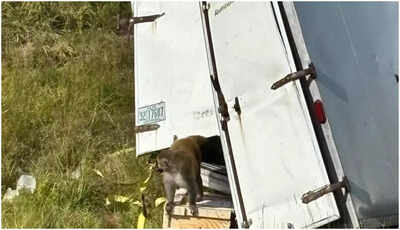
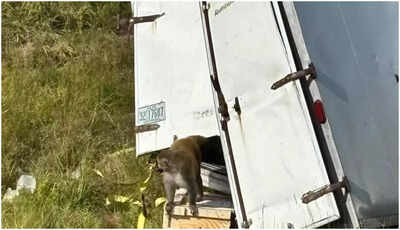
An “aggressive” rhesus monkey infected with COVID, hepatitis C and herpes escaped in Mississippi on Tuesday afternoon after a truck carrying the diseased laboratory primates overturned on an interstate, officials said. The truck, transporting a consignment of rhesus monkeys from a research centre affiliated with Tulane University, careened into a ditch north of Heidelberg, the Jasper County Sheriff’s Department reported. The 40-pound monkeys carry COVID, hepatitis C and herpes and are “aggressive to humans,” the department warned. It added that humans should not handle the animals without PPE, New York Post reported. The crash damaged the cages and allowed the primates to flee into a nearby valley. It is unclear how many monkeys were aboard, but all those who escaped were quickly seized and euthanised except for one still on the lam. The department advised anyone who sees the fugitive monkey to call 911 and stay as far away from it as possible.
Tulane University dismisses claims, says ‘monkeys are not infectious’
Tulane University refuted the sheriff’s department’s claim that the animals were infectious. “Non-human primates at the Tulane National Biomedical Research Center are provided to other research organizations to advance scientific discovery. The primates in question belong to another entity and are not infectious. We are actively collaborating with local authorities and will send a team of animal care experts to assist as needed,” the university said in a statement. As of 2 pm on Tuesday, the sheriff’s office was still scouring the area for the loose monkey with assistance from Mississippi Wildlife and Fisheries and an animal disposal company. An adult rhesus monkey typically weighs between 9 and 26 pounds, depending on its sex. Their genetic similarity to humans makes them common subjects for research. The average mature female rhesus produces at least one offspring per year, National Geographic notes, so the species’ population base is of little concern. Rhesus monkeys have a long history of supporting scientific advancement. Among them was Albert II, the first monkey the United States sent into space in 1948, and rhesus antigens helped doctors identify different human blood groups.







 English
  हिन्दी