 Sipu Jha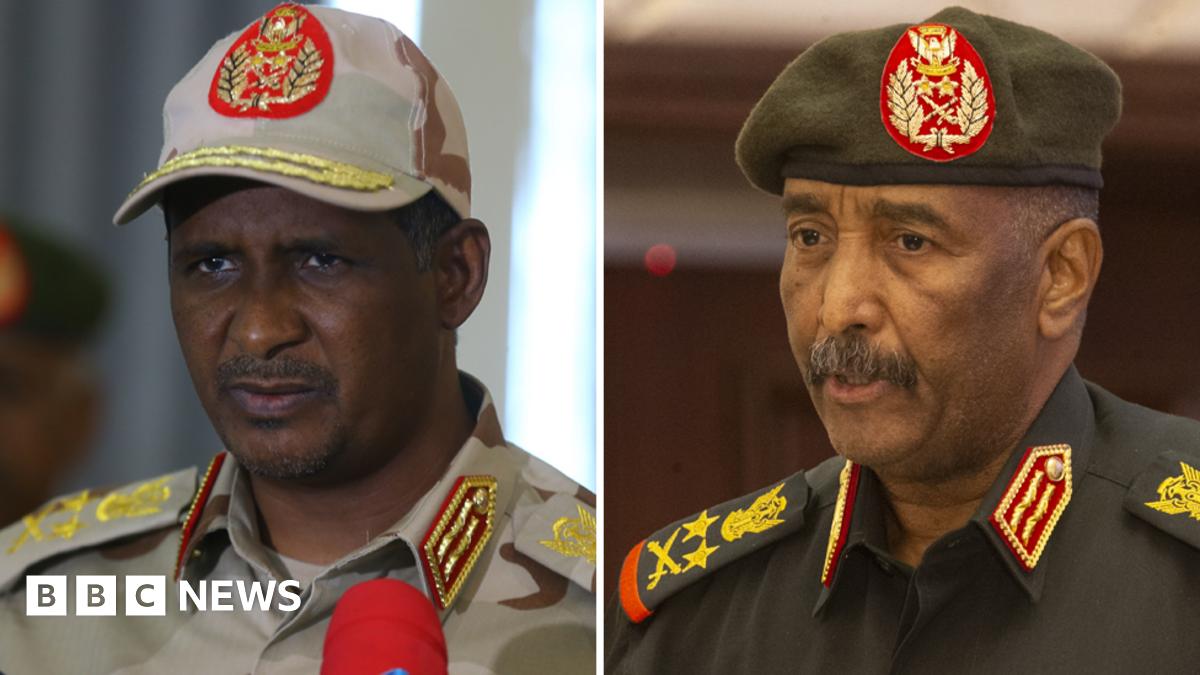
Hemedti’s power grew massively once he began supplying troops to fight for the Saudi-led coalition in Yemen.
Sudan’s then-military ruler, Omar al-Bashir, came to rely on Hemedti and the RSF as a counterweight to the regular armed forces, in the hope that it would be too difficult for any single armed group to depose him.
In the end – after months of popular protests – the generals clubbed together to overthrow Bashir, in April 2019.
Later that year, they signed an agreement with the protesters to form a civilian-led government overseen by the Sovereign Council, a joint civilian-military body, with Gen Burhan at its head, and Hemedti as his deputy.
It lasted two years – until October 2021 – when the military struck, taking power for themselves, with Gen Burhan again at the head of the state and Hemedti again his deputy.
Siddig Tower Kafi was a civilian member of the Sovereign Council, and so regularly met the two generals.
He said he saw no sign of any disagreements until after the 2021 coup.
Then “Gen Burhan started to restore the Islamists and the former regime members to their old positions”, he told the BBC.
“It was becoming clear that the plan of Gen Burhan was to restore the old regime of Omar al-Bashir to power.”
Mr Siddig says that this is when Hemedti began to have doubts, as he felt Bashir’s cronies had never fully trusted him.
Sudanese politics has always been dominated by an elite largely drawn from the ethnic groups based around Khartoum and the River Nile.
Hemedti comes from Darfur, and the Sudanese elite often talk about him and his soldiers in pejorative terms, as “country bumpkins” unfit to rule the state.
Over the last two or three years, he has tried to position himself as a national figure, and even as a representative of the marginalised peripheries – trying to forge alliances with rebel groups in Darfur and South Kordofan that he had previously been tasked with destroying.
He has also spoken regularly of a need for democracy despite his forces having brutally put down civilian protests in the past.
Tensions between the army and the RSF grew as a deadline for forming a civilian government approached, focused on the thorny issue of how the RSF should be re-integrated into the regular armed forces.



 English
  हिन्दी