 Sipu Jha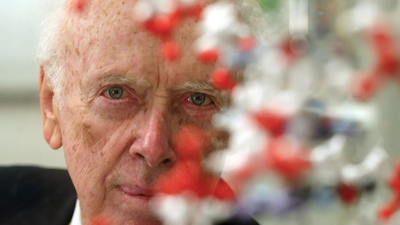
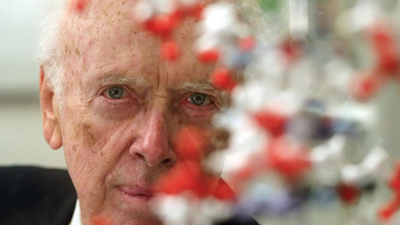
James D Watson, co-discoverer of the DNA double-helix structure, has died at 97.Watson was an American biologist whose work with Francis Crick and Maurice Wilkins in 1953 revealed that DNA is a double helix — two strands that coil around each other like a twisting ladder. The discovery showed how hereditary information is stored and how cells copy DNA when they divide. Watson once said, “Francis Crick and I made the discovery of the century, that was pretty clear,” and later wrote, “There was no way we could have foreseen the explosive impact of the double helix on science and society.”Watson was only 24 when the breakthrough happened. In 1962, he shared the Nobel Prize in Physiology or Medicine with Crick and Wilkins. Their work helped launch modern genetics and later developments such as altering genes, using DNA in criminal investigations, identifying human remains, and tracing ancestry. The double helix became a widely known symbol, appearing in artwork and even on postage stamps.Over the years, Watson also became known for controversial remarks. In 2007, the Sunday Times Magazine quoted him as saying he was “inherently gloomy about the prospect of Africa” because “all our social policies are based on the fact that their intelligence is the same as ours — where all the testing says not really.” He also said that while he hopes everyone is equal, “people who have to deal with black employees find this is not true.” After the statements drew global criticism, Watson apologized. He was suspended from his position as chancellor at Cold Spring Harbor Laboratory and retired a week later.In a 2019 documentary, when asked if he still held those views, he said, “No, not at all.” In response, Cold Spring Harbor Laboratory removed several honorary titles, calling his comments “reprehensible” and “unsupported by science.”Earlier remarks had also caused backlash. In 2000, he suggested that sex drive and skin color were linked. In another interview, he said that if a gene related to sexuality were found and detected during pregnancy, a woman who did not want a gay child should be allowed to choose abortion.In 2014, Watson auctioned his Nobel medal for $4.7 million, a record at the time. The medal was eventually returned to Watson. Crick and Wilkins, who shared the Nobel with him, both died in 2004.






 English
  हिन्दी