 Sipu Jha
In ancient India, knowledge often travelled into the subcontinent, not out of it. Scholars journeyed from China, Korea, Tibet, Central Asia and Persia to study in centres like Takshashila and Nalanda, where mathematics, astronomy, grammar, statecraft and medicine flourished. These were not mere stone structures but the heart of an intellectual civilisation whose instruction was rooted in local languages and knowledge systems. However, over centuries, invasions and later colonial rule thinned this tradition, and by the 20th century, India was no longer exporting knowledge as confidently as it once did.
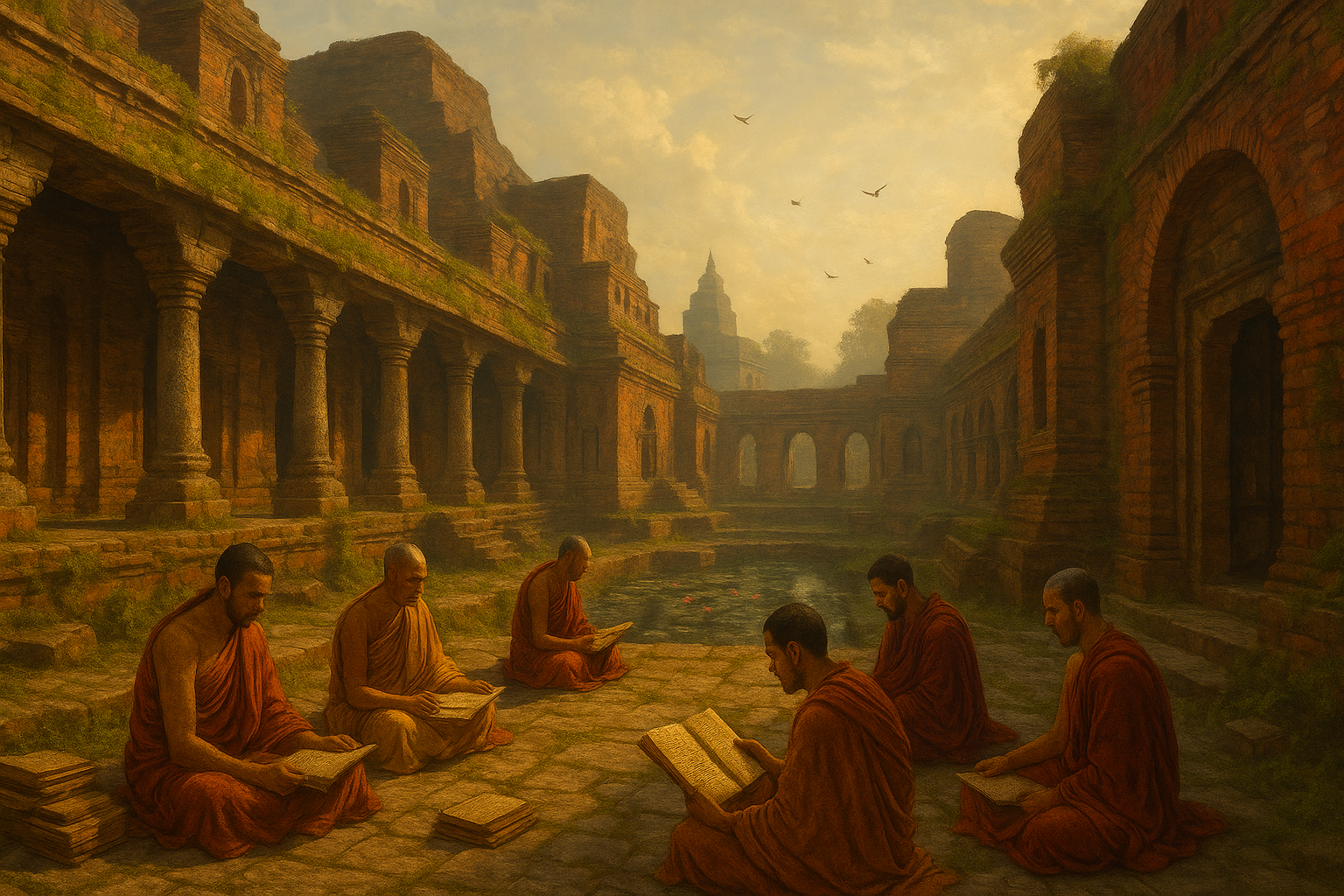
An artistic depiction of Nalanda, once a global centre of knowledge, attracting scholars from Asia.
In modern India, polished English often opened doors. It helped in landing jobs, signalled education, enabled migration and allowed an engineer from Chennai and a banker from Delhi to collaborate without needing a common mother tongue.At the same time, English has long carried a social undertone. A fluent speaker is often assumed to be intelligent, cosmopolitan, and somehow “smarter.” A hesitant speaker may be judged as less capable.

Photo: Generative AI
It is this perception, not the language itself, that lies at the heart of India’s growing conversation on decolonisation, which Prime Minister Narendra Modi called a “Macaulay Mindset” during a Ram Mandir’s Dhwajarohan event in Ayodhya on November 25.How English took root in IndiaEnglish entered India through trade, diplomacy and eventually conquest. The British East India Company and later the Crown used the language for administration and governance. But English did not spread organically. It was strategically introduced to build an intermediary class that would think like the colonial rulers.
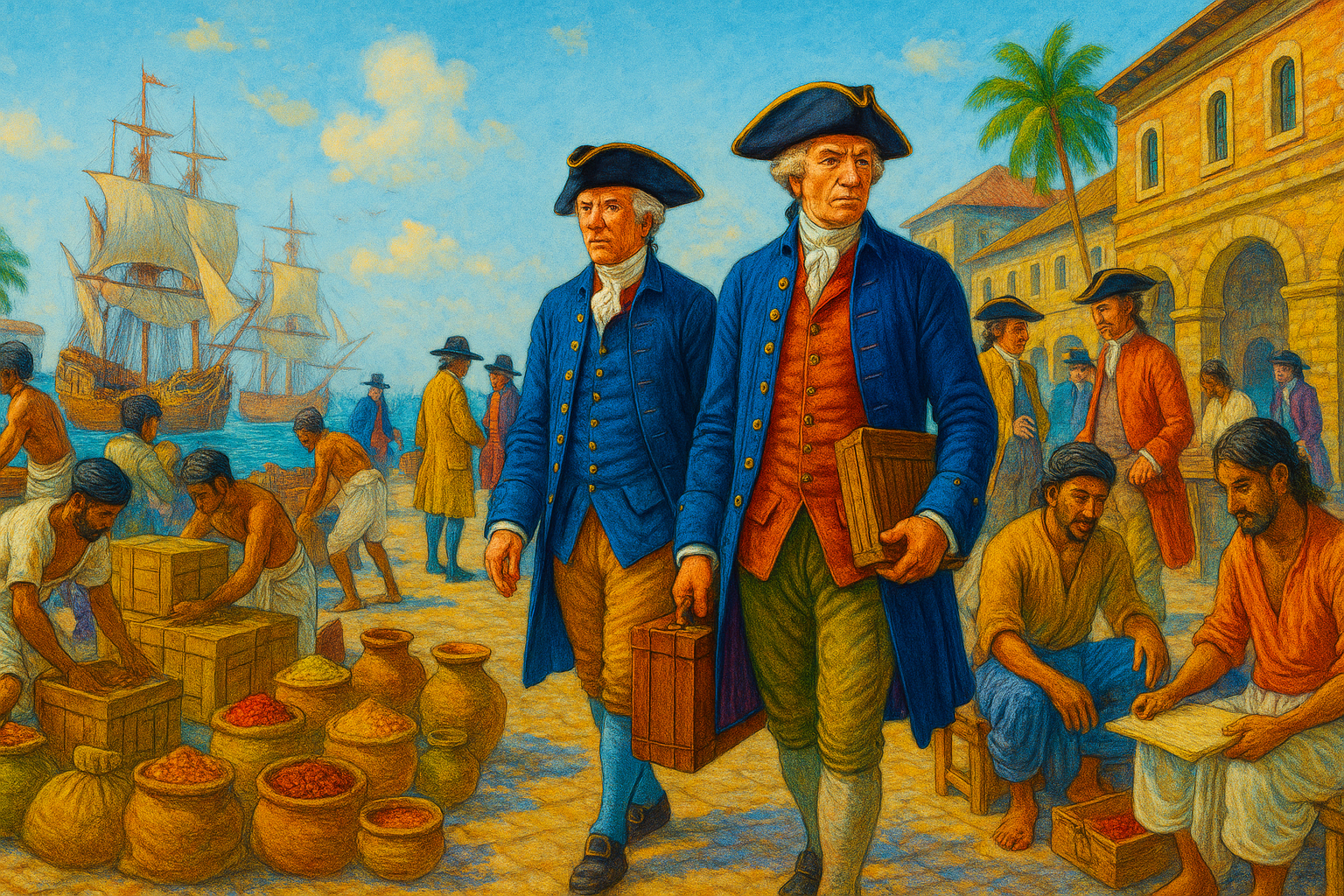
A visual recreation of early East India Company trade, foreshadowing the colonial shift to come.
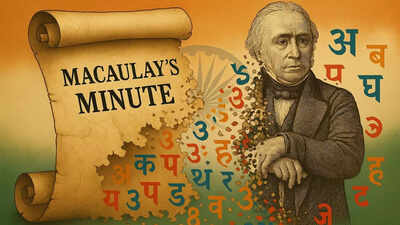
In 1835, Thomas Babington Macaulay, a British historian and politician, famously argued in “Minute on Indian Education” that English would create a class of Indians who were Indian by birth but English in intellect and sensibilities. Macaulay wanted Indians who were, in his words, “Indian in blood and colour but English in tastes, in opinions, in morals and in intellect.”Macaulay and other early British administrators were ignorant of India’s ancient glories — great literature and philosophy (Bhagavad Gita, Upanishads), sophisticated maths and astronomy (Aryabhata, Brahmagupta, Bhaskara), and fabulous architecture (from Mohenjo-daro to Sanchi and Nalanda). This ignorance and racism led Macaulay to say, “A single shelf of a good European library was worth the whole native literature of India and Arabia.”
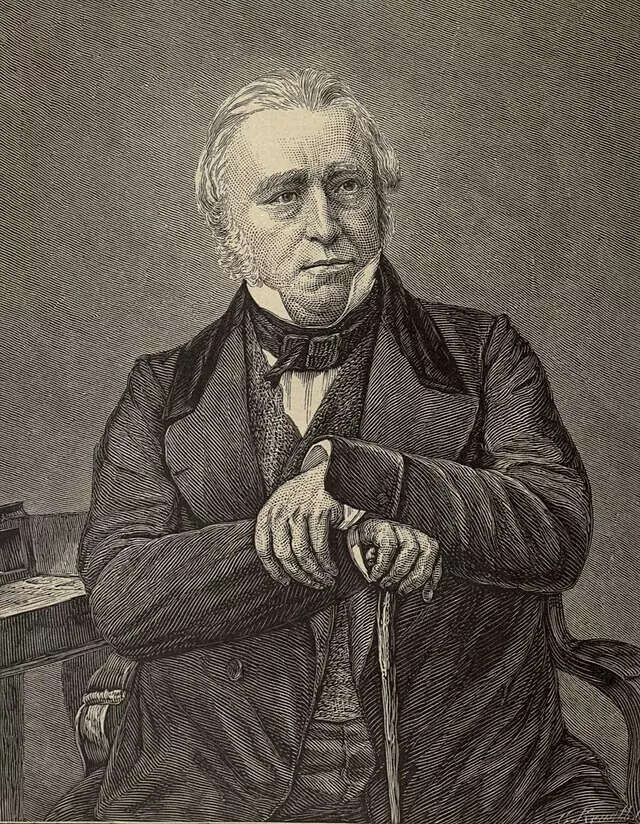
Photo: Thomas Babington Macaulay (Wikicommans)
The plan worked. Knowledge systems rooted in Sanskrit, Tamil, Persian and other languages were slowly sidelined. English became the language of courts, universities and bureaucracy. Access to power became tied to access to English.By the early twentieth century, a new elite had emerged. English-educated and urban, and influential. They authored newspapers, argued in courtrooms, entered civil services and steered nationalist politics. Ironically, the language of colonial control also became the language of resistance, enabling leaders like Nehru and Ambedkar to articulate modern political thought for the world.Decolonisation in actionUnder Prime Minister Narendra Modi, the Sangh’s decolonisation project has widened from language to symbols and institutions. Rajpath was renamed Kartavya Path, the Indian Navy adopted a new ensign inspired by Shivaji Maharaj, and spaces like the National War Memorial, Pradhanmantri Sangrahalaya and Yuge Yugeen Bharat gallery were created to showcase civilisational continuity.The address of the Prime Minister’s official residence at 7, Race Course Road (7 RCR) was renamed Lok Kalyan Marg in 2016 by the New Delhi Municipal Council, replacing a colonial-era name with one that emphasises welfare and public good. PM Modi has also renamed the Prime Minister’s Office (PMO) as Sewa Tirth.
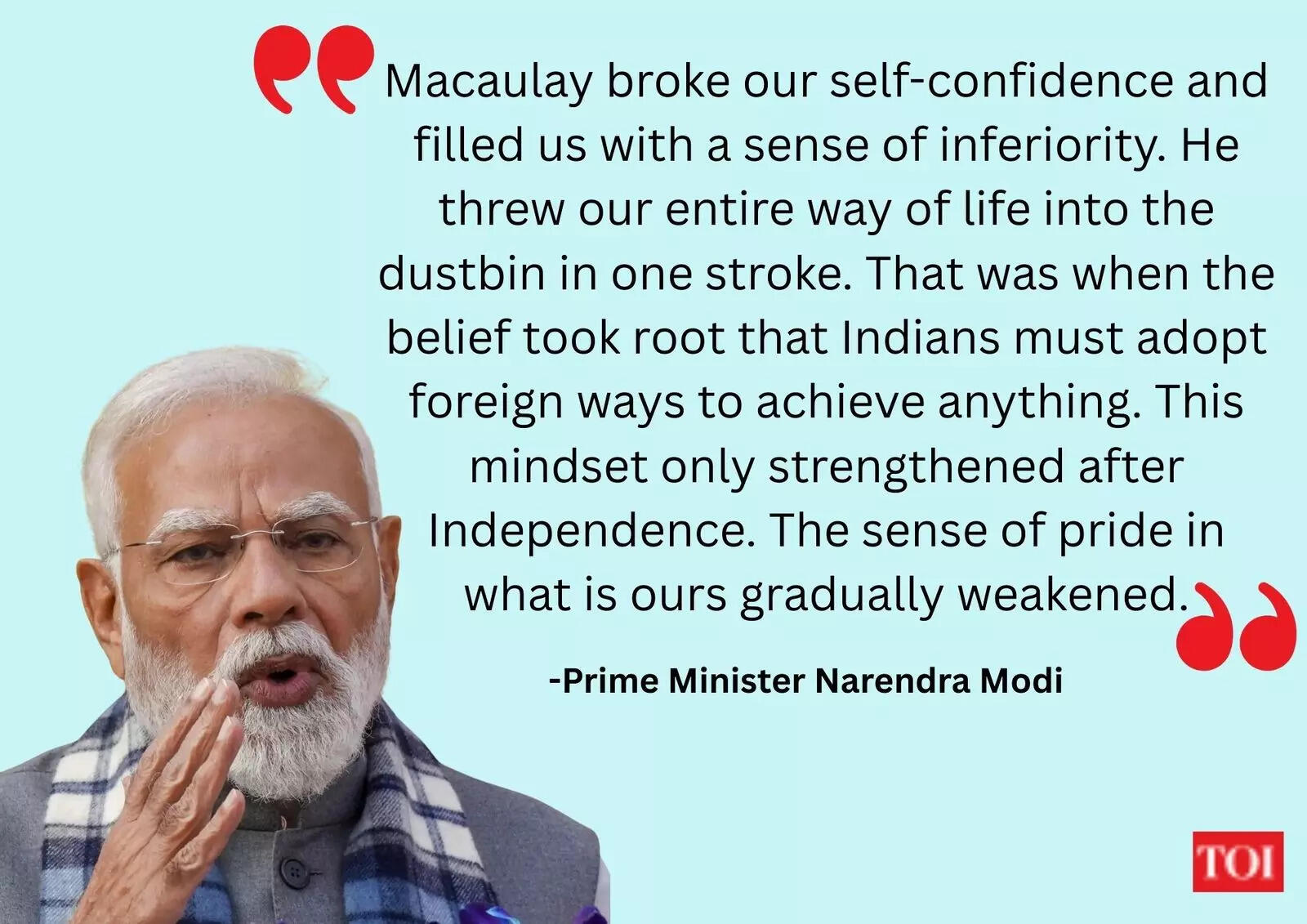
PM Modi on Macaulay imprint
Education reforms through the National Education Policy 2020 encourage mother-tongue learning and allow engineering, medical and law courses in regional languages. Technical textbooks are being translated into Hindi, Tamil, Telugu, Marathi, Bengali and more, with the UGC expanding regional-language undergraduate programmes. The three-language policy promotes Indian languages alongside English.In January 2022, the government installed a 28-foot hologram of Subhas Chandra Bose at India Gate on his 125th birth anniversary, under the canopy where King George V once stood. It served as a temporary tribute before a granite statue replaced it later that year, symbolically shifting the space from colonial memory to the legacy of the freedom struggle.In September 2023, ahead of the G20 Summit in New Delhi, official dinner invitations sent by Rashtrapati Bhavan referred to Droupadi Murmu as the “President of Bharat” instead of the customary “President of India”, marking what was widely reported as the first such instance in an English-language state invite.
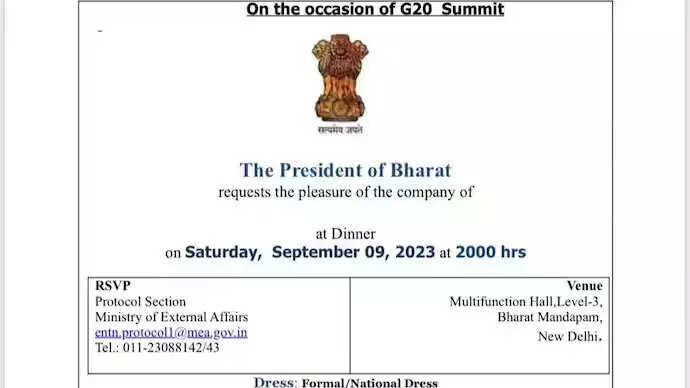
G20 invite
Government vocabulary now includes terms like Seva Saptah, Bharatiya Nyaya Sanhita and Bharat in diplomatic use. Museum projects and tributes to figures like Birsa Munda and Alluri Raju widen the historical lens.Decolonisation a route to Hindi imposition?However, the conversation around decolonisation is not without anxieties. In several non-Hindi speaking states, particularly in the South and the Northeast, language is tied closely to identity, history and political autonomy. Many regional leaders and scholars worry that the push to move away from English might gradually translate into privileging Hindi at the national level. To them, decolonisation could risk becoming centralisation if it does not explicitly protect linguistic diversity. The concern is less about opposing Indian languages and more about ensuring that Tamil, Telugu, Malayalam, Bengali, Assamese and others enjoy equal visibility and policy support. Calling PM Modi’s decolonisation pitch an effort to recognise India’s historical strength and move away from the mindset of a “white man’s burden”, BJP national spokesperson Pradeep Bhandari said, “It has nothing to do with what language you speak. The idea here is to focus on and promote indigenous education and inherent strength”. “If you see the New Education Policy, it focuses on recognising inherent talent in the individual irrespective of the language and the region you come from. If one recalls historically, India was an education capital. Our Vedic rituals, our guru–shishya parampara, were something which the world wanted to emulate. In fact, Nalanda was considered to be a centre of excellence globally, where scholars from across the world used to come, learn, and then try to emulate it in their own countries,” he said.
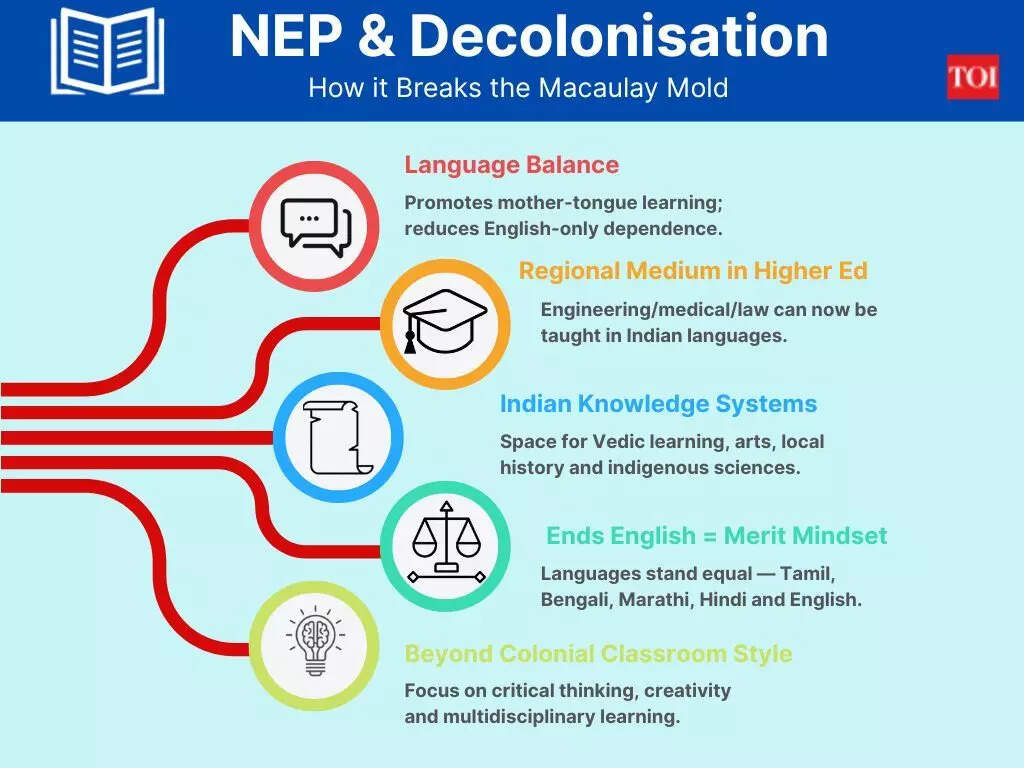
NEP and Decolonisation
The BJP leader also countered the notion that the decolonisation push is a route to Hindi imposition, calling it “unfair and political” criticism. Referring to the New Education Policy (NEP), he said it focuses on promoting education in one’s own language. “Whether one speaks Tamil, Telugu, Kannada or any other language… the idea is to focus and promote education and excellence in any language of choice.”On the question of language hierarchy and how Hindi-speaking states would connect with non-Hindi-speaking ones if English is deprioritised, he added that in the age of technology, linguistic barriers are dissolving.
It depends on every individual what they want to consider as a link language. Many people want Hindi as a link language, and some may prefer another. The objective is not to impose one language over another. It is like an orchestra where everything will go in tandem with each other.
Pradeep Bhandari said
INDIA bloc on NEP and Hindi imposition Chief ministers from the INDIA bloc have repeatedly expressed concerns that the NEP may lead to language centralisation. Tamil Nadu chief minister MK Stalin has been the most vocal, saying, “The Centre knows it cannot directly impose Hindi without facing fierce opposition, so it uses education as a backdoor.” Kerala initially opposed NEP, calling it overly centralised and saffronised, although it later agreed to implement PM-SHRI schools while insisting that state autonomy in education must be respected.PM-SHRI, or Prime Minister’s Schools for Rising India, is a scheme launched in 2022 to upgrade around 14,500 existing government schools into modern model schools that reflect the vision of the National Education Policy.CM Mamata Banerjee-led West Bengal government has chosen not to fully adopt NEP, saying the state will follow its own education model instead. The broader concern among these states is that decolonisation should not turn into Hindi dominance and that regional languages like Tamil, Malayalam and Bengali must be given equal space.In Maharashtra, Uddhav Thackeray and Raj Thackeray have both opposed what they called attempts at “Hindi imposition,” particularly in schools. Uddhav described the move to make Hindi compulsory under the three-language policy as a threat to Marathi identity, saying, “We will not allow the imposition of Hindi.”The Shiv Sena (UBT) and MNS even announced a joint protest in Mumbai, after which the state rolled back the order that proposed to make Hindi compulsory as a third language in Maharashtra schools, for Classes 1 to 5.Undoing Macaulay or reimagining India?Two centuries after Macaulay, India is not trying to erase English. It is trying to recalibrate identity. English no longer needs to sit at the top of an invisible ladder. Tamil, Bengali, Marathi, Manipuri and dozens of other languages do not need to stand below it.If decolonisation means confidence in one’s own language and culture while engaging the world without self-doubt, India might emerge more multilingual, more inclusive and more global than before. The challenge is to ensure that promoting indigenous languages does not turn into replacing one hierarchy with another.Undoing Macaulay will not be about removing English. It will be about removing the idea that language decides intellect. When English becomes one language among many rather than the measure of modernity, India will have truly decolonised.






 English
  हिन्दी