 Sipu Jha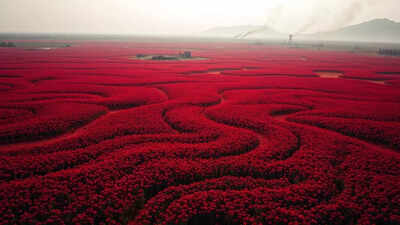
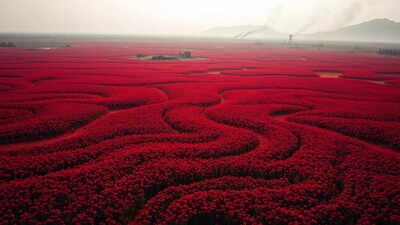
New data on opium and methamphetamine production in Myanmar from the United Nations puts the war-torn country at the epicenter of Asia’s multi-billion-dollar illicit drug trade.Opium poppy cultivation rose 17% to over 53,000 hectares (131,000 acres) over the past year, the most in a decade, according to the latest opium survey of Myanmar by the UN Office on Drugs and Crime (UNDOC), published this week.Most notably, Myanmar is still the world’s top opium producer. The country claimed that spot from Afghanistan in 2023, two years after the Taliban seized control of the country and eradicated the vast majority of its poppy fields.Data published by the UNODC earlier this year also show methamphetamine seizures across East and Southeast Asia in 2024 hitting a record 236 tons.Most of the drug is believed to be produced in Myanmar. According to the UN, the combination of rising seizures and falling street prices suggest that production inside Myanmar continues to grow.Chinese cartels protected in the Golden Triangle“I wouldn’t really say Myanmar as a country is a supplier, but there [are] criminal groups that are engaging in producing and trafficking this meth and heroin,” Inshik Sim, the UNODC’s illicit drugs research officer for the Asia Pacific region, told DW.Myanmar has been a major drug producer for decades, partly due to its geography. The nation, once known as Burma, incorporates one corner of the infamous Golden Triangle, where its rugged, crime-infested borderlands in the east meet Laos and Thailand.In Myanmar’s Shan state, criminal cartels have set up under the protection of warlords who rule over enclaves where the government has little to no sway. Most of the drug cartels now based there have moved in from China.Meth production spurred by civil warThe chaotic civil war triggered by a 2021 military coup has created favorable conditions for the growth of Myanmar’s drug trade, according to the UN. The country’s official economy has collapsed, law enforcement has deteriorated, and warlords needed more money to fund their private armies.“Because of the conflict, there is some need for people to raise money, whether it’s armed groups or farmers, because the conflict disrupts the economy…. And I think opium poppy cultivation is one area that we can see,” said Sim.Methamphetamine production was on the rise well before the coup, but, according to Sim, the civil war has likely boosted this trend as well.Drug-related crisis ‘rapidly expanding’Thailand has borne the brunt of drug boom happening across its border with Myanmar. Last year, Thai officials seized massive amounts of Myanmar methamphetamine, including a record 1 billion meth tablets.“These numbers are a clear warning that the drug problem is not only ongoing but expanding now rapidly,” said Thanapon Thanikkun, head of intelligence at Thailand’s Office of the Narcotics Control Board.He warned that the traffickers are exploiting Thailand’s well-developed transport network to ship their product on land, air and sea, while also leaving a growing drug use problem in their wake.The UNODC confirms meth use in on the rise in Thailand and much of Southeast Asia.Farmers and fighters dependent on drug salesFor the armed groups supplying this regional demand from Myanmar, selling drugs is a quick way of arming up, said Khun Oo, vice chair of the Pa-O Youth Organization, a non-government group tackling social issues across the Shan state. The Pa-O are one of the state’s main ethnic groups.“They [armed groups] need guns, they need … human resources and money, so this is the way that they can get it, from the drug trafficking,” he said.Unlike methamphetamine, which can be churned out of small labs in huge volumes by a few people, opium production also puts many farmers to work.Poppy has long been a go-to cash crop in Myanmar during hard times. Khun Oo says the civil war has made it much harder for farmers to get their usual crops to market, whereas the drug traffickers who buy opium come to them.“In the past, they still could do farming [of] other crops,” he said, but now, “they have no options” except growing opium.Khun Oo said the traffickers are also paying farmers up to $500 (€429) for about a kilogram of raw opium in some areas, at least twice what they paid before the coup, making poppy all the more attractive.Myanmar heroin found in Africa, EuropeProducts from Myanmar’s poppy fields and meth labs travel far and wide across the region and the world.After pouring out of Myanmar into Laos and Thailand, they cascade across the rest of Southeast Asia, and from there may be sold at premium prices in countries like Japan and Australia.Last year, the Australian Federal Police estimated that as much as 70% of the crystal methamphetamine consumed the country came from Myanmar.Sim said China is probably still the main market for Myanmar’s heroin. The latest drug seizures, however, suggest the traffickers are now looking westward as well.The UNODC notes a spate of recent meth and heroin seizures over in northeastern India, which also shares a border with Myanmar.Additionally, a string of relatively small but unusual seizures of Myanmar heroin in Nigeria and parts of Europe, by way of Thailand, may indicate that Myanmar cartels are seeking to expand their markets onto new continents.“We didn’t really see this kind of heroin trafficking flow from this region to others, because the traditional markets of heroin coming out of the Golden Triangle is basically East and Southeast Asia and parts of Oceania. However, we see that more westward flow happens as well,” said Sim.








 English
  हिन्दी