 Sipu Jha
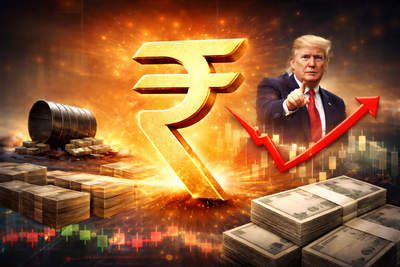
Rupee might be headed in for a volatile ride this week! The currency has remained under pressure for the past year, weakening by nearly 5%, even hitting a record low of 91.14 against the dollar, before recovering. Over the past two weeks, rupee has declined continuously dragged down by strong year-end demand, slipping below the 90-per-dollar mark.This week, bankers expect rupee to be particularly vulnerable, amid the ongoing political uncertainity triggered by the removal of Venezuela’s President Nicolas Maduro by US forces. Volitality in the currency might further increase in case of more US actions in the oil exporting South American nation.Market participants said that sentiment remains weak, particularly as traders assess the overall impact of ongoing global tensions.While Venezuela holds some of the world’s largest oil reserves, its role in global oil trade is limited, and India sources less than 1% of its oil imports from the country. However crude is not the only concerning factor, as bankers are alarmed by the fears of retaliation by other global powers and the broader risk-off environment could weigh on emerging market assets, including rupee. “One can expect that the currency will be the most sensitive to global volatilities and the market is positioned toward a weak rupee, although it is difficult to say by how much or what levels will the Reserve Bank of India (RBI) defend,” Anshul Chandak, head of treasury at RBL Bank told ET.Alok Singh, head of treasury at CSB Bank, also told the financial daily that rupee has already been trading with a weakening bias. “The last two-three trading sessions have had a weakening bias. Although the RBI has announced measures to support the rupee, the next such measure is only on January 13. So, until then it is possible that the rupee may weaken to Rs 90.50 to Rs 91 per dollar,” Singh said.On January 13, the apex bank will be conducting a $10 billion three-year dollar-rupee buy/sell swap. Under this operation, banks will sell dollars to the central bank in exchange for rupees. The dollars will be then swapped back after three years at a higher price, factoring in the forward premium, ET reported. According to bankers, the extent of further weakness in the currency will depend on the central bank’s actions next week, with market positioning currently tilted towards depreciation. Apart from geopolitical risks, sentiment towards rupee have also been hurt by continuous foreign institutional investor outflows, weak export performance contributing to trade deficits, and global economic uncertainty stemming from higher US tariffs.(Disclaimer: Recommendations and views on the stock market, other asset classes or personal finance management tips given by experts are their own. These opinions do not represent the views of The Times of India)


 English
  हिन्दी