 Sipu Jha
For weeks now, Iranians have been risking their lives in the streets. What began as protests over a collapsing currency and soaring food prices has widened into the most sustained challenge to the Islamic Republic in years.Driving the news
- The US is withdrawing some personnel from military bases in the Middle East as tensions spike over the possibility of American strikes.
- The precautionary drawdown came after a senior Iranian official warned that Tehran had told neighbouring countries it would target US bases in the region if Washington attacks. A Western military official described the atmosphere as highly volatile, saying, “All the signals are that a US attack is imminent, but that is also how this administration behaves to keep everyone on their toes. Unpredictability is part of the strategy.”
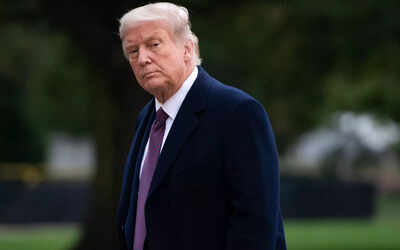
- At the White House, President
Donald Trump suggested he was adopting a wait-and-see approach. Trump told reporters he had been informed the Iranian regime’s violence against protesters was easing, saying: “We’ve been told that the killing in Iran is stopping – it’s stopped – it’s stopping,” and adding there was “no plan for executions, or an execution, or executions — so I’ve been told that on good authority.” Asked about his sources, he said they were “very important sources on the other side.” Still, Trump did not rule out action, saying “we are going to watch what the process is” after receiving what he called a “very good statement” from Iran. - Iran, meanwhile, sent mixed signals – warning retaliation while also dialing down rhetoric publicly. Foreign minister Abbas Araghchi told Fox News: “There is no plan for hanging at all,” adding: “Hanging is out of the question,” and insisted “there is no plan” for executions.
Iranian Patriots, KEEP PROTESTING – TAKE OVER YOUR INSTITUTIONS!!! Save the names of the killers and abusers. They will pay a big price. I have cancelled all meetings with Iranian Officials until the senseless killing of protesters STOPS. HELP IS ON ITS WAY. MIGA!!!
Donald Trump
Why it mattersThe latest Iran uprising is unusual in scale, geography and composition. It spans all 31 provinces and unites bazaar merchants, students, truck drivers, professionals and unemployed youth. The regime looks economically exhausted and politically exposed.
But history shows that foreign military pressure often gives Tehran a lifeline. Even the threat of US or Israeli strikes can shift public focus from regime failure to national survival, fracture protest coalitions and justify a sweeping crackdown. At a moment when Iran’s leaders are struggling to regain control, outside force could hand them their most powerful tool: nationalism.Zoom in: An economy that finally broke the systemThe current protests began on December 28, triggered by a sharp slide in the rial and a rejected budget proposal that would have removed a preferential exchange rate widely seen as a corrupt rent channel. Within days, economic anger morphed into political revolt.
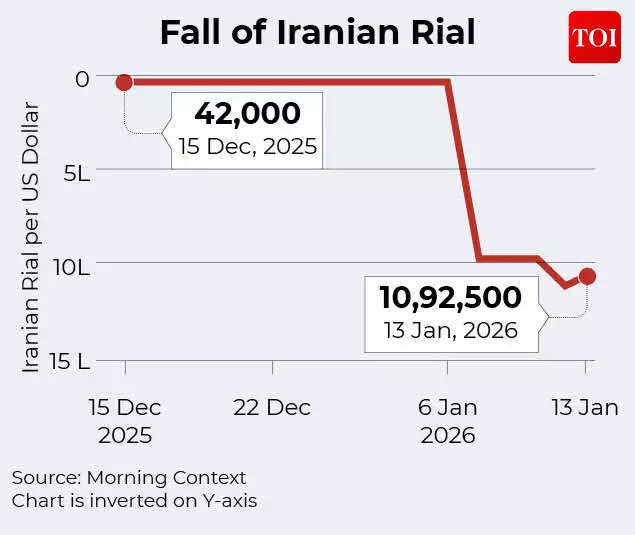
Inflation is surging, food prices have jumped dramatically and water rationing now affects major cities, including Tehran. Bazaar strikes – historically decisive in Iran’s revolutions – have spread from mobile phone and electronics markets to transport and logistics. According to rights groups, hundreds of protesters have been killed and more than 10,000 arrested, though the true toll is likely far higher due to internet blackouts and intimidation.Even senior officials are acknowledging failure. President Masoud Pezeshkian has openly admitted that the government is “stuck,” while parliament rejected his administration’s 2026 budget as inadequate. The regime has rushed to install a new central bank governor and promised massive increases in cash subsidies – pledges economists say Tehran cannot afford without triggering another currency collapse.The big picture: A regime weaker than it looksSupreme Leader Ayatollah Ali Khamenei, now 86, presides over a system battered on multiple fronts. Iran’s economy is stagnant and heavily dependent on oil and gas. Infrastructure is decaying. Environmental mismanagement has left rivers dry and farmland failing. Educated youth face chronic unemployment with little hope of advancement.
Khamenei is now in a Catch-22: he understands that opening Iran’s markets and society enough to fix its economic problems will also speed the end of his rule. So he and some other hard-line leaders have resorted to blaming alleged external instigators. State-controlled media outlets claim that the protests are “manufactured chaos” originating from spy agencies in Israel, Washington, and even the United Kingdom.
An article in Foreign Affairs
Regionally, Iran’s position has deteriorated. Its “axis of resistance” has been weakened, its missile forces damaged in last year’s 12-day conflict with Israel, and its deterrence credibility eroded. Yet none of that has translated into relief for ordinary Iranians – a key reason public anger keeps boiling over.This combination has left the regime exposed but not yet fractured. The security elite remains intact, anchored by the Islamic Revolutionary Guard Corps and allied militias numbering in the hundreds of thousands. Analysts note that no successful uprising in Iran’s modern history has occurred without splits at the top – something that has not yet happened.Why Trump may be tempted
- Iran’s clerical dictatorship has rarely looked this weak – and that vulnerability is exactly why President Donald Trump could be tempted to intervene, as per a CNN report.
- Trump could see a rare opening: A regime weakened internally and constrained externally.
- The economic crunch makes unrest harder to contain and governance harder to sustain.
- A looming succession raises elite infighting risks and institutional uncertainty.
- Iran’s reduced deterrence lowers the perceived cost of US pressure or strikes.
- Ending or crippling Tehran’s Islamic regime would appeal to US hawks given its long proxy war history against Americans.
- It could also fit Trump’s regional vision of a safer Israel and a more stable, economically integrated Middle East – as CNN frames the temptation.
Between the lines: How Trump’s threats help TehranIn a CBS interview, Trump on Tuesday said that the US would act if Iran began hanging protesters.“We will take very strong action if they do such a thing. When they start killing thousands of people — and now you’re telling me about hanging. We’ll see how that’s going to work out for them,” Trump said.“Iranian Patriots, keep protesting and take over your institutions if you can. Save the names of the killers and abusers that are abusing you. You are being very badly abused,” Trump said in a speech at an auto factory in Michigan.Trump’s language is unusually explicit. He has urged protesters to “take over” institutions, warned of strikes if executions occur, and floated measures ranging from tariffs to restoring internet access via Starlink.For Tehran, this is a gift. State media and officials have long claimed protests are “manufactured chaos” orchestrated by Washington and Israel. Iran’s UN ambassador has accused the US of “interventionist rhetoric” and seeking a pretext for military action. Trump’s statements reinforce that narrative at the very moment it was losing credibility at home.Recent history is instructive. Last June, antigovernment protests were building when the 12-day war with Israel and the US erupted. As bombs fell, demonstrations evaporated. Citizens focused on survival, not reform, giving Tehran a crucial reprieve. Analysts say a new round of strikes – even a limited one – would likely produce the same rally-around-the-flag effect.That dynamic is why some Revolutionary Guard commanders have reportedly discussed provoking retaliation. A foreign attack would allow the regime to reframe dissent as treason and justify far bloodier repression.The Venezuela model
- Trump faces a narrow and consequential choice. Non-kinetic pressure – tighter sanctions enforcement, diplomatic isolation, support for human rights monitoring, and expanded access to information – could raise costs for Tehran without handing it a nationalist rallying cry.
- Direct military action, by contrast, risks rescuing a regime that is failing under the weight of its own misrule.
- As per a Reuters report, the idea of a “Venezuela model” is gaining traction in some circles in Washington and Jerusalem, according to a diplomat and three analysts. The concept imagines removing Iran’s top authority while sending a clear message to the rest of the state machinery: remain in place – as long as it cooperates.
- But applying that approach to Iran runs into serious barriers: a security state hardened over decades, strong institutional unity, and a country that is both far larger and far more ethnically complex than Venezuela.
- Two regional officials and two analysts told Reuters that foreign military action could splinter Iran along ethnic and sectarian fault lines – especially in Kurdish and Sunni Balush areas, where resistance movements have a long history.
- For now, practical constraints also shape what’s possible. US military resources are stretched elsewhere, though diplomats noted that deployments could change quickly, the Reuters report said.
Boomerang effect: No saviour waiting in the wingsAs per an article in the Foreign Affairs, one reason foreign intervention is so risky is that Iran’s opposition remains fragmented. There is no unifying figure akin to Ayatollah Ruhollah Khomeini in 1979. Former crown prince Reza Pahlavi has symbolic appeal to some, but decades in exile have left him with little organizational capacity inside the country, and many Iranians recoil at the idea of a US-backed monarchy. The National Council of Resistance of Iran, associated with the MEK, is widely disliked for its past alliances and ideology. Reformist figures from earlier eras are aging, sidelined, or under detention.As one analyst put it, Iranians “share grievances, not a movement.” That fragmentation makes foreign military action especially dangerous: without a credible “day after,” strikes could empower hard-line security actors, trigger ethnic and regional fragmentation, or freeze the system in a more militarized form.
For this sort of thing to succeed, you have to have crowds in the streets for a much longer period of time. And you have to have a breakup of the state. Some segments of the state, and particularly the security forces, have to defect.
Vali Nasr, an Iranian-American academic to Reuters
The bottom lineIran’s clerical system is weaker than it has been in decades, battered by economic collapse, environmental crisis and sustained public anger. It does not need missiles to expose those failures.At this moment, the greatest risk to Iran’s protest movement may not be repression alone – but rescue. A US strike, or even the sustained threat of one, could shift the country’s trajectory from internal reckoning to external confrontation, buying Khamenei time he no longer has on his own.(With inputs from agencies)


 English
  हिन्दी