 Sipu Jha

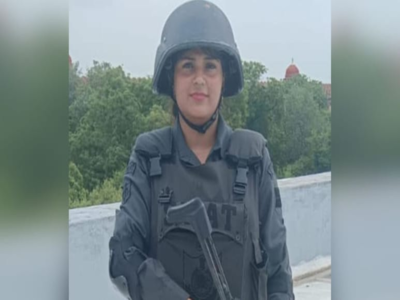
NEW DELHI: Captain Hansja Sharma, 27, has created history by becoming the Indian Army’s first woman pilot qualified to fly the Rudra Armed Helicopter, marking a significant milestone for Army Aviation and the expanding role of women in frontline combat roles. The officer recently led the 251 Army Aviation Squadron during the Army Day Parade 2026 in Rajasthan, where the unit showcased the HELINA anti-tank guided missile system.Captain Sharma, who hails from Jammu, topped her training course at the Combat Army Aviation Training School (CAATS) in Nashik and became the first woman officer to receive the prestigious Silver Cheetah Trophy, awarded to the best combat aviator. Her performance at CAATS marked a first in the history of Indian Army Aviation.Born on March 9, 1998, in Jammu, Captain Sharma completed her schooling at St. Xavier’s Convent School, Barnai. She graduated from Parade College, Jammu, and later joined the Zoology Department at the University of Jammu before being selected into the Indian Army. Her entry into uniform, however, was not without setbacks.During the selection process, she faced a Temporary Rejection on medical grounds, a hurdle that often ends an aspirant’s journey. According to her mother, senior journalist Rashmi Sharma, the rejection became a turning point rather than a deterrent. In interviews, she recalled that her daughter had written the words “Be brutal to yourself” on her room wall and prepared rigorously without coaching to meet the Army’s standards.Within weeks, Captain Sharma cleared the required medical procedures and was inducted into the Army, going on to specialise in combat aviation. Her success at CAATS was followed by further professional recognition when she secured First in Order of Merit in the 107th Air Traffic Management and Air Laws (Basic) Course conducted at the Air Traffic Control Officers Training Establishment at the Air Force Academy.Her leadership role during the Army Day Parade on January 15, 2026, where she led the Rudra helicopter formation, drew attention to the increasing operational responsibilities being entrusted to women officers in high-risk aviation roles.Army officials said Captain Sharma’s achievements reflect the ongoing transformation within the armed forces, where operational competence rather than gender defines combat roles. Her journey from Jammu to the cockpit of an armed helicopter has been widely cited as an example of perseverance, professional excellence and the changing face of India’s military aviation.
Rudra armed helicopter: India’s indigenous battlefield hunter
The Rudra Armed Helicopter, officially designated the ALH-WSI (Weapon System Integrated), represents a major milestone in India’s push for indigenous combat aviation. Developed by Hindustan Aeronautics Limited (HAL) for the Indian Army and Indian Air Force, Rudra is a weaponised variant of the Advanced Light Helicopter (ALH) Dhruv, tailored specifically for high-altitude warfare, counter-terror operations and close air support. Designed to operate in some of the world’s most demanding environments, including the Himalayas and desert terrain, Rudra combines surveillance, precision strike and troop support roles in a single platform.
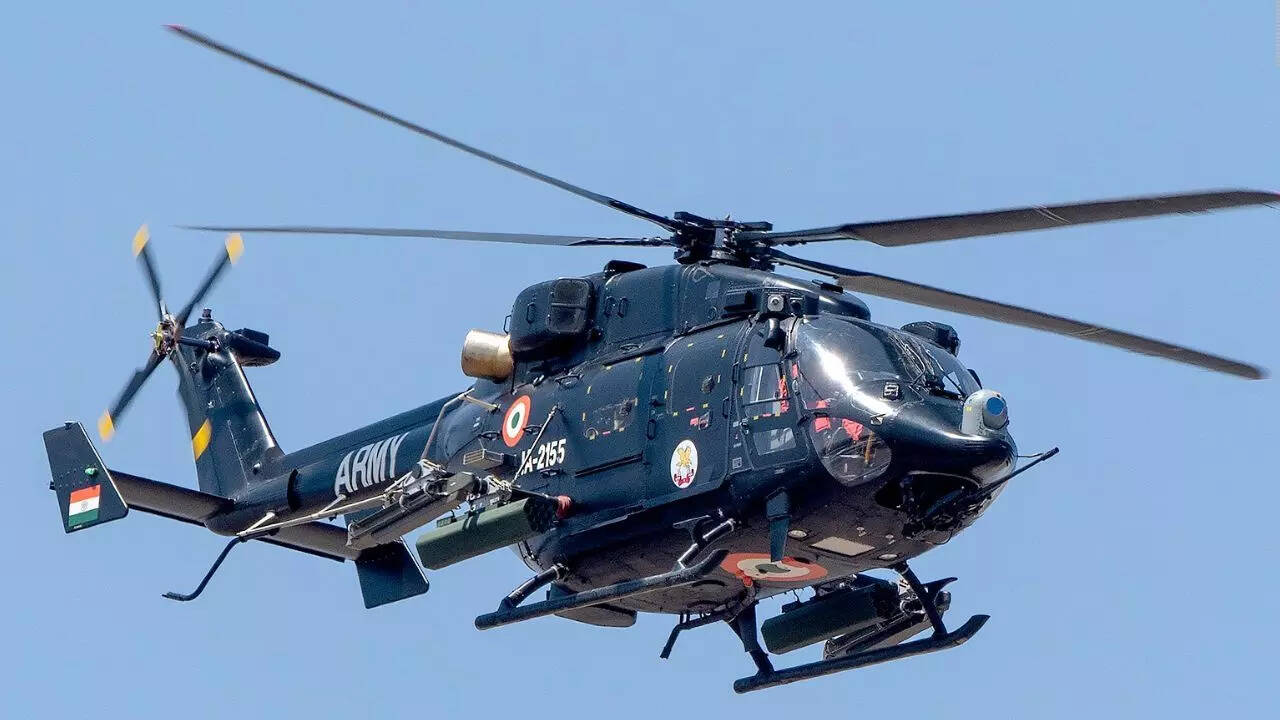
Rudra was conceived in the early 2000s after operational feedback from the Kargil conflict highlighted the need for a light, agile, armed helicopter capable of operating at high altitudes where heavier attack helicopters struggle. HAL adapted the Dhruv platform, integrating weapons, sensors and survivability features without compromising its high-altitude performance. The helicopter was inducted into service in the early 2010s, with both the Army and Air Force deploying Rudra squadrons along the Line of Control, Line of Actual Control and in counter-insurgency theatres.
Weapons and firepower
Rudra’s combat capability lies in its modular weapons suite, allowing it to perform multiple battlefield roles. Key armaments include:
- 20 mm turret gun, capable of engaging ground and aerial targets
- 70 mm rockets, used for area suppression and close air support
- Air-to-air missiles, providing limited aerial combat capability
- HELINA anti-tank guided missile, designed to destroy armoured vehicles and fortified positions with precision
The integration of HELINA, an indigenous fire-and-forget missile, has significantly enhanced Rudra’s strike reach and lethality, allowing crews to engage targets from stand-off ranges.
Sensors and avionics
Rudra is equipped with advanced sensors that enable day and night operations in adverse weather and high-altitude conditions. Key systems include:
- Electro-optical targeting system with thermal imaging
- Laser range finder and designator
- Helmet-mounted sighting system for pilot and gunner
-
Glass cockpit with multifunction displays and navigation aids
These systems allow the helicopter to detect, track and engage targets with precision while maintaining situational awareness in complex combat environments.
Survivability and battlefield resilience
Survivability is central to Rudra’s design. The helicopter features:
- Armoured crew seats and cockpit protection
- Self-sealing fuel tanks
- Radar warning receivers and missile approach warning systems
- Chaff and flare dispensers to defeat enemy missiles
These defensive measures enable Rudra to operate close to hostile zones, supporting ground troops under fire.
High-altitude and all-weather performance
One of Rudra’s defining strengths is its ability to operate at high altitudes above 16,000 feet, a critical requirement for India’s northern borders. Powered by the Shakti engine, jointly developed by HAL and Safran, Rudra retains manoeuvrability and payload capacity even in thin air and extreme cold. This capability has made it a key asset in Ladakh, Siachen and other mountainous regions.
Role in modern Indian Army doctrine
Rudra is not a replacement for dedicated attack helicopters like the Apache or the upcoming Light Combat Helicopter (LCH). Instead, it fills a vital niche as a versatile armed helicopter, capable of rapid deployment, reconnaissance, escort missions and precision strikes. In modern doctrine, Rudra acts as:
- A force multiplier for ground troops
- A quick-reaction platform during counter-terror operations
- An escort helicopter for troop-carrying aircraft
- A surveillance and target acquisition platform
A symbol of indigenisation and transformation
Beyond its technical specifications, Rudra holds symbolic value. It is a visible outcome of India’s indigenous aerospace capability, with high domestic content and integration of Indian weapons and sensors. The qualification of officers like Captain Hansja Sharma to fly the Rudra marks another milestone, reflecting the evolving role of women in frontline combat aviation and the growing maturity of India’s defence ecosystem. As India prepares for technology-driven warfare across multiple domains, the Rudra Armed Helicopter stands as a reminder that indigenisation, adaptability and operational experience together shape battlefield effectiveness.






 English
  हिन्दी