 Sipu Jha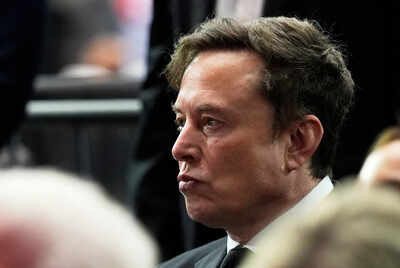
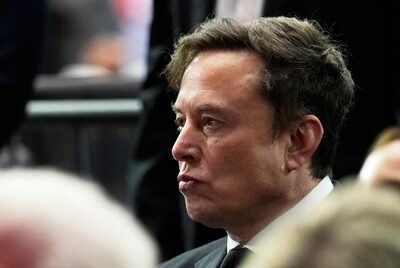
Elon Musk made sure investors knew exactly how he’s been spending his weekends during Tesla’s Q4 2025 earnings call: hunched over chip designs. “I’ve been spending pretty much every Saturday on this, and every Tuesday,” Musk said of the AI5 project. “If I’m spending my Saturdays on something, it’s going to be something pretty important.”The comment was classic Musk — part flex, part reassurance to shareholders that Tesla’s semiconductor ambitions have his full attention. It also underscored a fundamental shift in what Tesla considers its core business. The company that made its name putting batteries in cars now sees custom silicon as the key to its future.The AI5 chip promises a 50x performance leap over its predecessor, achieved through 10x raw compute, 9x memory capacity, and 5x improvement in hardened block quantization and softmax functions. That last bit enables efficient low-precision computing without sacrificing model accuracy — critical for running AI inference in vehicles and robots. Production is scheduled for 2027, with AI6 following within a year if things go according to plan.“I feel quite confident about the design at this point,” Musk added. “We’re not selling the chips outside of Tesla. We need them.”
Tesla’s growth now hinges on silicon, not steel
For a company built on batteries and electric motors, Musk’s message marked a strategic pivot. Chip production, not vehicle manufacturing, will be Tesla’s biggest bottleneck over the next four years.The math is straightforward: robotaxis need onboard AI processing to navigate streets autonomously. Optimus robots need it to perform useful tasks. Tesla’s entire thesis — that it can scale autonomous vehicles and humanoid robots faster than competitors — depends on having enough custom silicon to go around.Right now, Tesla has supply secured for roughly three years. Beyond that window, things get murky. Geopolitical tensions, particularly around Taiwan where most advanced chips are manufactured, could squeeze availability at the worst possible time. Musk didn’t mince words about the stakes.“Securing enough chips is existential,” he said, adding that Tesla needs to “figure out some game plan” before the three-year runway expires.
A Tesla chip factory remains on the whiteboard
To insulate itself from supply chain chaos, Musk revisited an idea he’s floated before: the TeraFab. This would be a Tesla-owned semiconductor facility producing logic chips, memory, and packaging under one roof — essentially vertical integration taken to its logical extreme.“We will be fundamentally limited by supply chain” without domestic chip production, Musk warned.But don’t expect construction crews anytime soon. CFO Vaibhav Taneja clarified that TeraFab development isn’t factored into Tesla’s already substantial capital expenditure plans, which exceed $20 billion for 2026. That money is earmarked for expanding AI training capacity in Texas, ramping Cybercab and Tesla Semi production, and installing Optimus assembly lines.For now, Musk said he hopes more American factories begin producing silicon domestically — a sentiment that aligns with broader US efforts to reshore semiconductor manufacturing but offers Tesla no immediate relief.The company is meanwhile doubling down on what it can control. Tesla plans to more than double its onsite AI training compute in Texas during the first half of 2026, measured in H100 GPU equivalents. The Cortex 2 supercomputer facility at Gigafactory Texas is under construction to support this expansion.Until the chip supply picture clarifies, Musk will keep grinding through weekends. Whether that’s genuinely necessary or strategic theater for investors, the message landed either way: Tesla’s CEO considers AI5 important enough to sacrifice his Saturdays.







 English
  हिन्दी