 Sipu Jha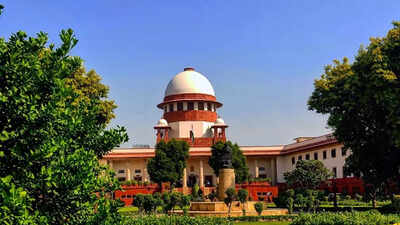
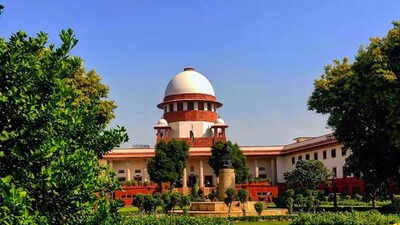
NEW DELHI: The Supreme Court on Thursday put on hold the University Grants Commission’s (UGC) Promotion of Equity in Higher Education Institutions Regulations, 2026, restoring the older 2012 framework for the time being. The court said the new rules suffer from vagueness, particularly in how caste-based discrimination is defined, and warned they could be misused.With the stay in place, universities and colleges across the country will now continue to operate under the 2012 UGC regulations, at least until the legal challenge to the 2026 framework is resolved.So what exactly is the difference between the two regimes, and how will campuses function going forward?What the 2012 regulations providedThe 2012 rules were the UGC’s first formal attempt to address discrimination in higher education. They prohibited discrimination on several grounds, including caste, religion, gender, disability, language and place of birth.Under this framework, institutions were required to appoint an Anti-Discrimination Officer and establish an Equal Opportunity Cell. Complaints were handled internally, with the officer conducting a preliminary inquiry and recommending action under existing service or university rules.However, the system was largely advisory in nature. There were no strict timelines, no external oversight, and no penalties prescribed for institutions that failed to act. The rules also did not explicitly define false or malicious complaints, nor did they spell out safeguards for those accused.What the 2026 regulations sought to changeThe 2026 regulations marked a significant shift in scale and enforcement. They explicitly included Other Backward Classes within caste-based discrimination protections, alongside Scheduled Castes and Scheduled Tribes, bringing a much larger share of the student population under the framework.More importantly, enforcement moved from a single officer to an elaborate institutional system. Universities were required to set up Equal Opportunity Centres, multi-member Equity Committees, Equity Squads, Equity Ambassadors, a 24×7 helpline, and online complaint portals.Timelines were made mandatory. Committees had to meet within 24 hours of a complaint, submit reports within 15 working days, and institutions were required to act within seven days. Non-compliance carried serious consequences, including loss of UGC funding, degree-granting powers, and recognition.While intended to ensure accountability, critics argued that the framework gave wide discretion to internal committees, used broadly worded definitions of discrimination, and lacked safeguards against false or malicious complaints.Why the Supreme Court intervenedThe Supreme Court found prima facie merit in concerns that the 2026 rules, especially the definition of caste-based discrimination under Regulation 3(c), were vague and open to misuse. The bench directed that the 2012 regulations would continue to apply until further orders and issued notices to the Centre and the University Grants Commission.The stay does not strike down the 2026 rules permanently, but pauses their implementation while the court examines their constitutional validity.What applies now on campuses
- Anti-Discrimination Officers and Equal Opportunity Cells will handle complaints
- There are no mandatory timelines prescribed by regulation
- Enforcement remains largely internal and discretionary
- There are no UGC-level penalties linked to equity compliance
- Institutions cannot act under the expanded structures, strict timelines, or punitive provisions introduced in 2026.
“Today, the Supreme Court heard our writ petition challenging the UGC Regulations which have been enacted recently. The Supreme Court has stayed the UGC Regulations and has kept them in abeyance. The Supreme Court has directed that UGC Regulations 2012 will be in operation till further orders. The matter has been posted for hearing on March 19,” Vishnu Shankar Jain told ANI.Meanwhile, petitioner and advocate Vineet Jindal said that the Supreme Court’s decision aligned with the arguments raised before it regarding Clause 3C. He stated that while the clause addressed caste-based discrimination, it included only certain castes and excluded the general category, giving the impression that the general caste was being specifically targeted.Jindal further said that the new rules and regulations appeared to create divisions among students, which runs counter to the constitutional principle of equality. He added that the Chief Justice of India acknowledged shortcomings in the regulations and noted that they need to be reconsidered and reviewed.






 English
  हिन्दी