 Sipu Jha
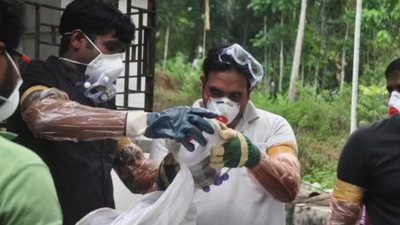
NEW DELHI: The World Health Organisation (WHO) has sought to reassure the public over India’s latest Nipah virus outbreak, saying the risk of spread remains “low” and that there is no need for travel or trade restrictions following the confirmation of two cases in West Bengal.The cases were reported from North 24 Parganas district, an area that has seen Nipah outbreaks in the past.Both patients are 25-year-old nurses—a woman and a man—working at the same private hospital in Barasat. They developed initial symptoms in the last week of December 2025, which rapidly progressed to neurological complications. The two were placed in isolation in early January.In an update shared on its website, following confirmation of the cases, WHO said an extensive public health response was activated. Authorities identified, traced, monitored, and tested 196 contacts linked to the two patients. All contacts were asymptomatic and tested negative for Nipah virus infection. As of 27 January, no additional cases were been detected. “ The likelihood of spread to other Indian states or internationally is considered low.”WHO assessed the risk at the sub-national level in West Bengal as moderate due to the presence of fruit bat reservoirs in border areas and the possibility of sporadic spillover. However, the agency said the national, regional, and global risk remains low.“Based on current evidence, WHO does not recommend any travel or trade restrictions,” said the agency.The national government deployed an outbreak response team to West Bengal to work closely with state authorities. Enhanced surveillance, laboratory testing, infection prevention and control measures, and field investigations are underway. WHO said coordinated efforts between central and state health teams have enabled timely containment of the outbreak.“Nipah virus is a zoonotic disease transmitted mainly from bats to humans, sometimes through contaminated food or close contact. With no licensed vaccine or treatment currently available, early detection, supportive care, and strong infection prevention measures remain essential,” said WHO on it’s website.Historically, Nipah outbreaks in the WHO South-East Asia Region have been limited to Bangladesh and India, occurring sporadically or in small clusters. Human-to-human transmission is rare and usually confined to health-care settings or close family contacts, with no known instances of international spread through travel.This is the seventh documented Nipah outbreak in India and the third in West Bengal, following earlier outbreaks in Siliguri in 2001 and Nadia in 2007. The affected districts border Bangladesh, where Nipah outbreaks occur almost annually.WHO said several vaccine candidates are under development, but early supportive care, including intensive treatment for severe respiratory or neurological complications, remains critical for improving survival.







 English
  हिन्दी