 Sipu Jha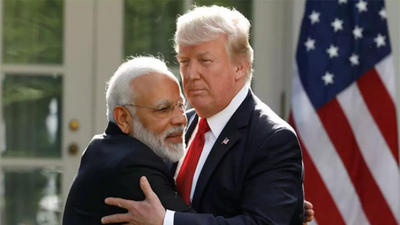
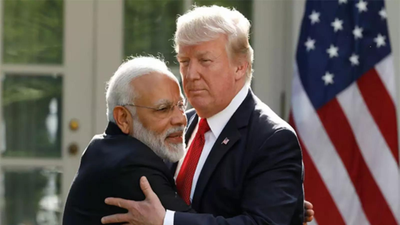
As Washington recalibrates its Indo-Pacific strategy amid intensifying rivalry with China, a key congressional commission will next month examine the larger role India can play in shaping the region’s balance of power.The US-China Economic and Security Review Commission said it will hold its first public hearing of the 2026 reporting cycle on February 17 in Washington, DC, focusing on “India, China, and the Balance of Power in the Indo-Pacific.” The hearing will assess geopolitical, military, economic and technological aspects of India’s relations with both China and the United States, and their implications for US economic and national security interests.
Border tensions, Indian Ocean, security role
According to the Commission’s notice, the hearing will examine India-China tensions over disputed territory, maritime access and competition in the Indian Ocean, and India’s expanding role as an Indo-Pacific security actor.Members are expected to weigh how India’s strategic location, military capabilities and regional partnerships factor into US efforts to limit China’s influence across Asia, at a time when major American partners are reassessing US commitment to alliance and security.It also comes days after India-EU signed a free trade agreement, dubbed “mother of all deals” by both Indian and European officials, which ruffled some feathers in the US. The EU aims to diversify its market dependence from China and India is a perfect counterweight to it.
China ties, trade and critical technologies
The hearing will also probe the economic and technological dimensions of India-China relations, including trade and investment links and India’s drive for self-reliance in critical and emerging sectors such as artificial intelligence, semiconductors and pharmaceutical supply chains – industries Washington views as central to long-term strategic competition with Beijing.This examination comes amid signs of a calibrated easing in India’s posture toward China, reflected in Prime Minister Narendra Modi’s visit to Beijing, for SEO summit, after more than seven years, the reopening of airways suspended for five years, and steps allowing Chinese companies back into Indian investment and government procurement channels following the Galwan standoff.
India-US partnership under review
Beyond Beijing-New Delhi dynamics, the Commission will review US policy efforts to strengthen its strategic partnership with India and assess how India’s engagement with China could affect vital US economic and security interests in the years ahead. Over the past decade, the US has invested diplomatically and militarily in India as a counterweight to China in the Indo-Pacific. But, ever since President Donald Trump’s second term began US-India ties have come under severe strain. From tariffs to Trump’s repeated claims about alleged intervention in the India-Pakistan conflict during Operation SIndoor, the relations have only pushed New Delhi to calibrate its position with the US. At the same time it has raised questions in US policy circles about how firmly India can be anchored within an American-led security framework while maintaining its strategic autonomy.
Why the timing matters
The hearing takes place against a broader geopolitical shift and just weeks before President Donald Trump is scheduled to make a state visit to China in April 2026, accent the delicate balance Washington is seeking between engagement, competition and deterrence.The Commission, created by Congress in 2000 under the National Defence Authorisation Act, is mandated to report annually on “the national security implications of the economic relationship between the United States and the People’s Republic of China.” Its findings are closely watched on Capitol Hill and often influence debates on trade, technology controls and security policy related to China and the region.






 English
  हिन्दी