 Sipu Jha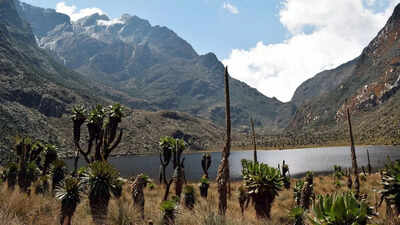
The Rwenzori Mountains rise high. More than 5,000 metres, or around 16,000 feet, above sea level. You can see them for miles if the clouds let you. Some say they’re even visible from orbit. But that depends on the weather. Mist and clouds often hide them.Captured by the Landsat 9 satellite on March 13, 2024, this scene is nearly cloud-free. It’s reportedly one of the clearest natural-colour views in years. The mountains straddle the Uganda–DRC border and lie along the western arm of the East African Rift. Tectonic forces here pull the land apart. Some blocks sink. Others, like the Rwenzori, rise. Unlike Kilimanjaro and Mount Kenya, these aren’t volcanic.
The Rwenzori Mountains’ historic importance and natural treasures
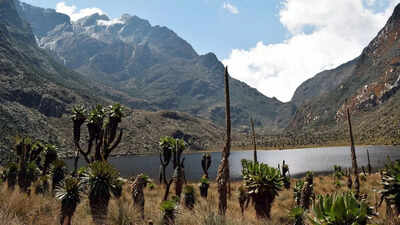
Rwenzori became a national park in 1991. UNESCO recognised it in 1994. Unique plants grow here. Giant lobelias and groundsels seem almost unreal. Forests shelter animals too. African forest elephants roam. Eastern chimpanzees swing through trees. Rwenzori duikers dart among the undergrowth.Water matters here. Streams feed rivers like the Semliki and Nyamwamba. These eventually reach Lake Albert and Lake George. Ptolemy, the 2nd-century astronomer, called them the “Mountains of the Moon.” He thought they fed the Nile. Experts say the reality is more complex, but the Rwenzori remain an important water source. The three highest mountains dominate the scene. Their peaks are capped with snow. Mount Stanley shows a mix of glacial ice and snow. Between 2020 and 2024, researchers say the Stanley Plateau glacier shrank by nearly 30%. Mount Speke reportedly no longer supports a glacier.Tropical glaciers like these exist because of elevation, not latitude. Even near the equator, cold climates allow ice to persist. But warming temperatures are catching up. Glaciers shrink. Some stop flowing and turn into stagnant ice fields.
Shrinking glaciers in Rwenzori and surrounding mountains
Glaciers in East Africa are declining fast. Kilimanjaro’s ice has retreated dramatically. Mount Kenya shows similar patterns. Puncak Jaya in Indonesia. Sierra Nevada de Mérida in Venezuela. Same story. The ice persists, but not as it once did but it seems fragile, delicate, and increasingly at risk.The white caps are beautiful from a distance. But up close, scientists see shrinking areas and thinning ice. It’s a reminder that even towering, rugged peaks are not immune to climate change. The Rwenzori Mountains aren’t just scenic. They’re ecological, cultural, and hydrological treasures. Plants and animals here exist nowhere else. Rivers and streams support millions of people downstream. Their retreating glaciers might affect water flow. Experts warn that local communities could feel it first.Looking at the Rwenzori, you can see history, geology, and life all in one. It’s awe-inspiring, humbling. The mountains hold stories from Ptolemy to modern researchers. And it seems, despite climate pressures, they still dominate the landscape.







 English
  हिन्दी