 Sipu Jha
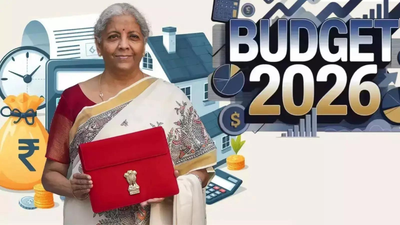
As Union finance minister Nirmala Sitharaman prepares to present the Union Budget 2026–27 tomorrow (February 1), tax data from the past five years highlights the evolving revenue base of the government. Both direct and indirect taxes have grown steadily, reflecting changes in economic activity, compliance and policy design. A closer look at the data shows how the balance between taxing incomes and taxing consumption has shaped the government’s fiscal strategy.
Direct taxes: A steady climb driven by income and profits
Direct taxes are those paid directly by individuals and businesses to the government, mainly through income tax, corporate tax, and capital gains tax. Over the past five years, collections from direct taxes have risen sharply.In FY21, direct tax collections stood at Rs 9.44 lakh crore, a year heavily impacted by the pandemic, when incomes and corporate profits were under pressure. The recovery began in FY22, with collections jumping to Rs 14.08 lakh crore as economic activity picked up and companies returned to profitability. This momentum continued in FY23, with direct taxes touching Rs 16.59 lakh crore, followed by Rs 19.55 lakh crore in FY24.For FY25, the revised estimate places direct tax collections at Rs 22.37 lakh crore, while Budget 2026 projects this figure to rise further to Rs 25.20 lakh crore.This near three-fold increase from FY21 to FY26 (BE) underlines the growing role of direct taxes in funding government expenditure.Direct taxes are progressive in nature, meaning those with higher incomes pay a larger share. This makes them an important tool for redistribution and social equity, while also providing the government with a relatively elastic source of revenue that grows as the economy expands.
Indirect taxes: Consumption-led revenue gains
Indirect taxes, unlike direct taxes, are levied on goods and services and are paid by consumers as part of the price they pay. These include GST, excise duties, and customs duties. Data over the same five-year period shows a steady rise here as well.In FY21, indirect tax collections were Rs 10.82 lakh crore. Despite pandemic disruptions, consumption recovered faster than expected, pushing collections to Rs 13.01 lakh crore in FY22. The upward trend continued with Rs 13.95 lakh crore in FY23 and Rs 15.09 lakh crore in FY24.For FY25, the revised estimate stands at Rs 16.16 lakh crore, while Budget 2026 pegs indirect tax collections at Rs 17.50 lakh crore. This growth reflects rising consumption, better GST compliance, and improved tax administration.However, indirect taxes are generally regressive, as they apply equally to all consumers regardless of income. This means lower-income households tend to spend a higher proportion of their earnings on such taxes. As a result, policymakers often face the challenge of balancing revenue needs with concerns around affordability and inflation.
How the direct–indirect tax mix is changing
Looking at the numbers together, one key trend stands out: direct taxes are growing faster than indirect taxes. In FY21, indirect taxes were higher than direct taxes. By FY24 and FY25, direct taxes had clearly overtaken indirect taxes as the government’s largest revenue source.Hence, this five-year data suggests that India’s tax system is gradually becoming more reliant on direct taxes, while indirect taxes continue to grow steadily alongside consumption. For taxpayers, this could mean a continued focus on compliance, simplified filing and possibly further tweaks to tax slabs or rates to maintain buoyancy.For consumers, GST and other indirect taxes will remain a key factor influencing prices and spending decisions. How the government balances revenue needs with inflation control will be crucial, especially in a global environment marked by uncertainty.


 English
  हिन्दी