 Sipu Jha
New Delhi: Pakistan will not play their group-stage match against India at the T20 World Cup on February 15, the Pakistan government announced in a social media post on Sunday. However, clearance has been granted for the tournament, which begins on February 7. Pakistan will play all their matches in Sri Lanka, and not India, as per terms agreed between the two neighbours in 2024.Former Pakistan captain Rashid Latif, in an exclusive interview with TimesofIndia.com, has offered a blunt assessment, saying Pakistan’s boycott of the India clash is a calculated move aimed squarely at the ICC’s financial and governance structure.
Latif links the escalation to Bangladesh’s removal from the tournament, the shifting political climate in South Asia, and the enormous financial stakes attached to India-Pakistan cricket.Go Beyond The Boundary with our YouTube channel. SUBSCRIBE NOW!“Till now, everything was going well. Pakistan and India both agreed that we would play in a hybrid model for the next three years. The Asia Cup happened in Dubai. Pakistan’s women’s team played in Sri Lanka in the Women’s ODI World Cup. Everything was going well, but things have changed since the Bangladesh episode happened,” says Latif from Islamabad.
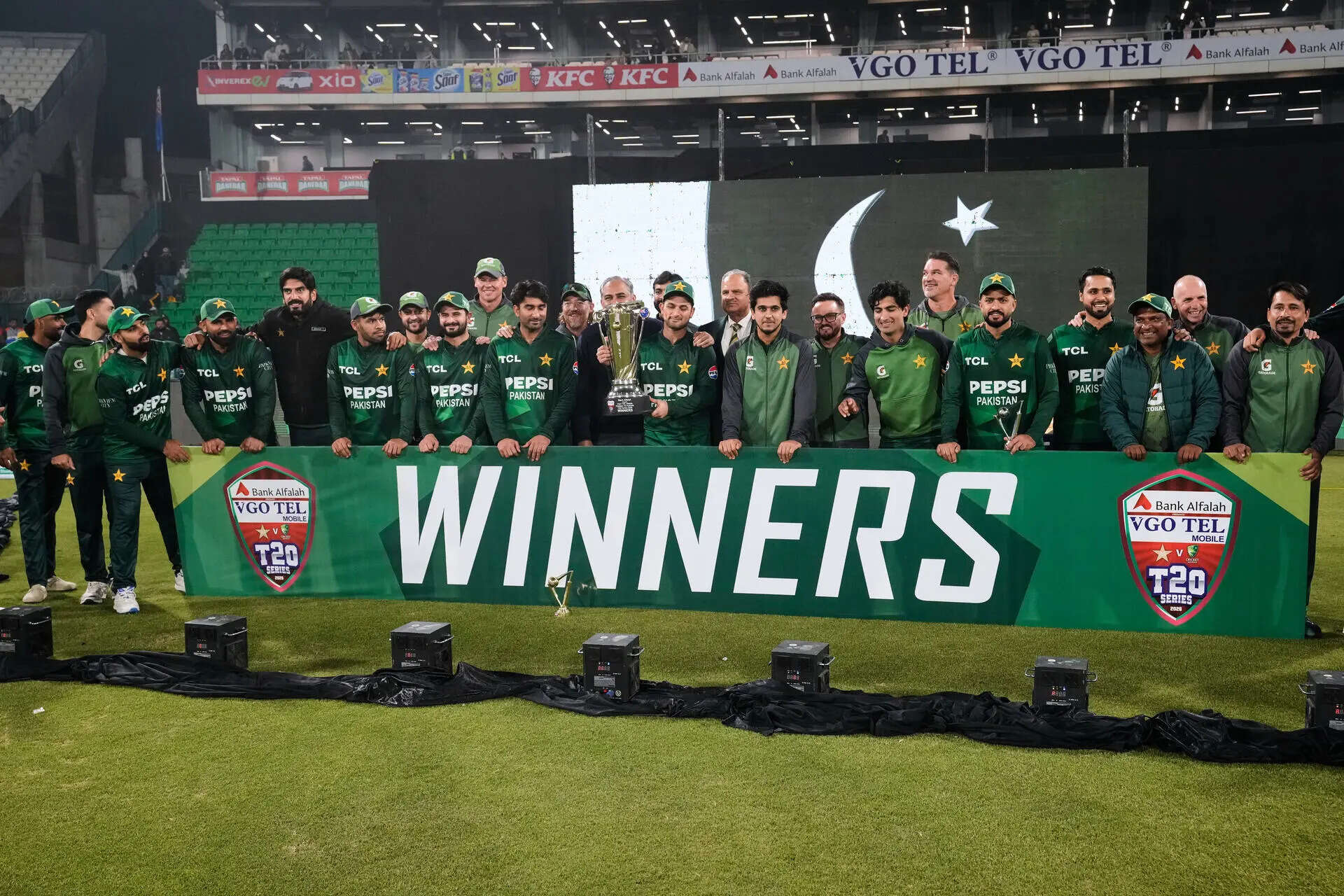
Pakistani players and official pose for photograph with the trophy after winning the T20 series against Australia on the end of the third T20 cricket match between Pakistan and Australia, in Lahore, Pakistan. AP/PTI(AP02_01_2026_000664A)
After Bangladesh unsuccessfully sought to shift its matches from India to Sri Lanka over security concerns, Pakistan began protesting the decision. In a show of support for the Bangladesh Cricket Board, Pakistan voted in favour of the request at the ICC board meeting, with chairman Mohsin Naqvi even threatening a boycott. When Bangladesh ultimately declined to play in India, they were replaced by Scotland.“Pakistan is standing with Bangladesh. It was not like this in the past,” Latif says.
Whether it is in India or Pakistan, 60–70 percent of people watch the World Cup because of India-Pakistan matches.
Rashid Latif | Former Pakistan captain
Despite Pakistan’s recent struggles on the field, Latif argues that their importance to global cricket remains undiminished. India-Pakistan matches, he says, are the engine that drives World Cup viewership.“Whether it is in India or Pakistan, 60–70 percent of people watch the World Cup because of India-Pakistan matches,” he says.Latif points out that even matches involving Australia draw packed stadiums, but when India and Pakistan are both involved, the scale is unmatched. Viewership runs into the millions, sponsorship valuations spike, and broadcasters plan entire commercial strategies around these fixtures.
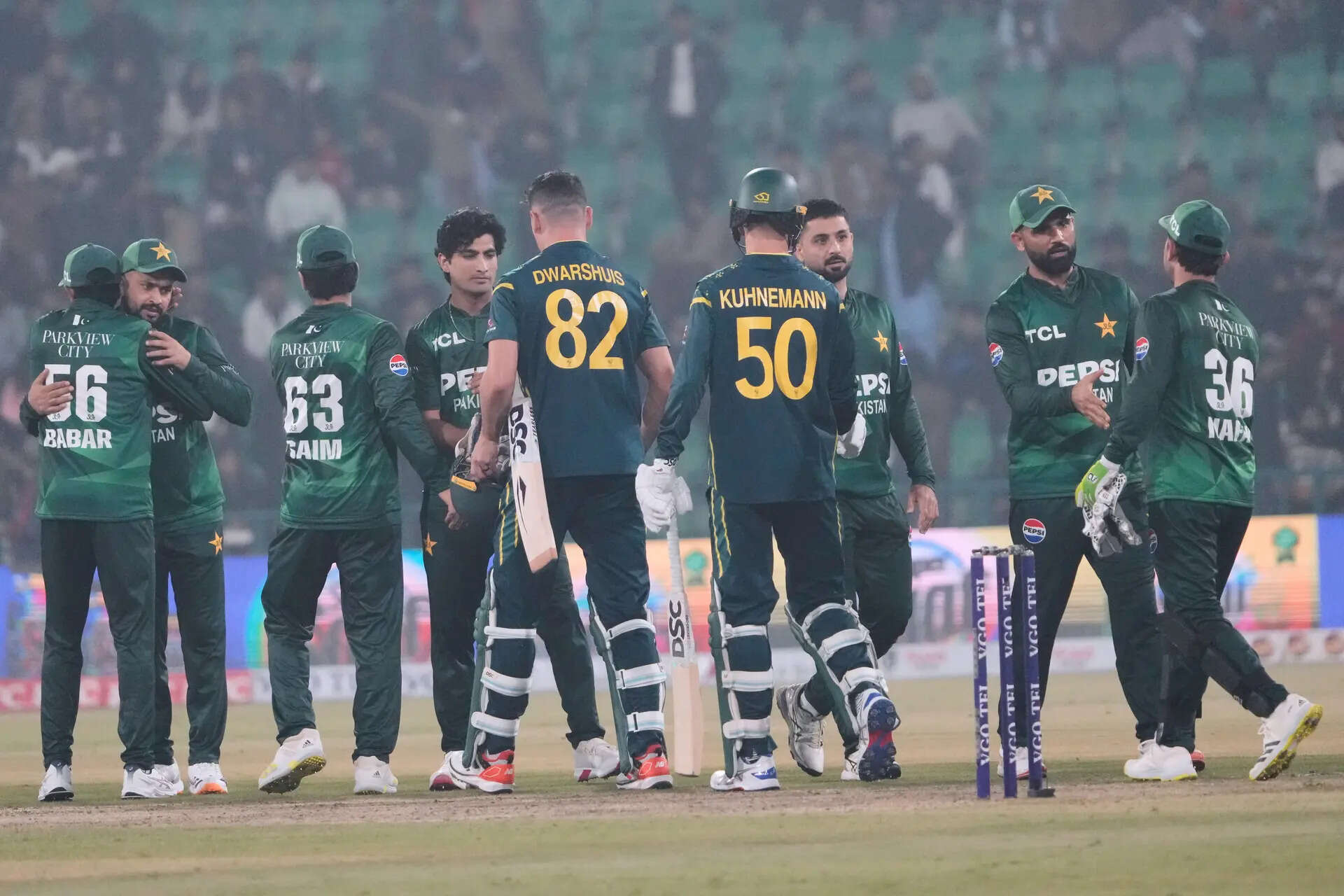
Australia’s Ben Dwarshuis, center, and Matthew Kuhnemann shake hand with Pakistani players on the end of the third T20 cricket match between Pakistan and Australia, in Lahore, Pakistan, Sunday, Feb. 1, 2026. (AP Photo/K.M. Chaudary)
In case Pakistan do not take the field against India on February 15, they will lose two points, and there could be sanctions from the ICC as well.Latif claims that Pakistan’s move is not aimed at India directly, but at the ICC itself.“This decision is not on India. It is hitting the ICC directly,” he says.
Pakistan generally don’t take such decisions. The PCB is not even scared of sanctions. It will have a big impact.
Rashid Latif | Former Pakistan captain
“Pakistan generally don’t take such decisions. The PCB is not even scared of sanctions. It will have a big impact. There is a Women’s T20 World Cup in England this year, and Pakistan might play India there as well. Then there is a Champions Trophy in 2028, hosted by India. So this will not end here. It seems that Pakistan has taken this step after a lot of thought,” he says.Latif dismissed the idea that Pakistan is worried about sanctions. He says that if Bangladesh had acted alone, punitive measures might have followed. With Pakistan involved, the equation changes dramatically.“Now that Pakistan has joined, it will impact Australia and England financially as well,” he explains.
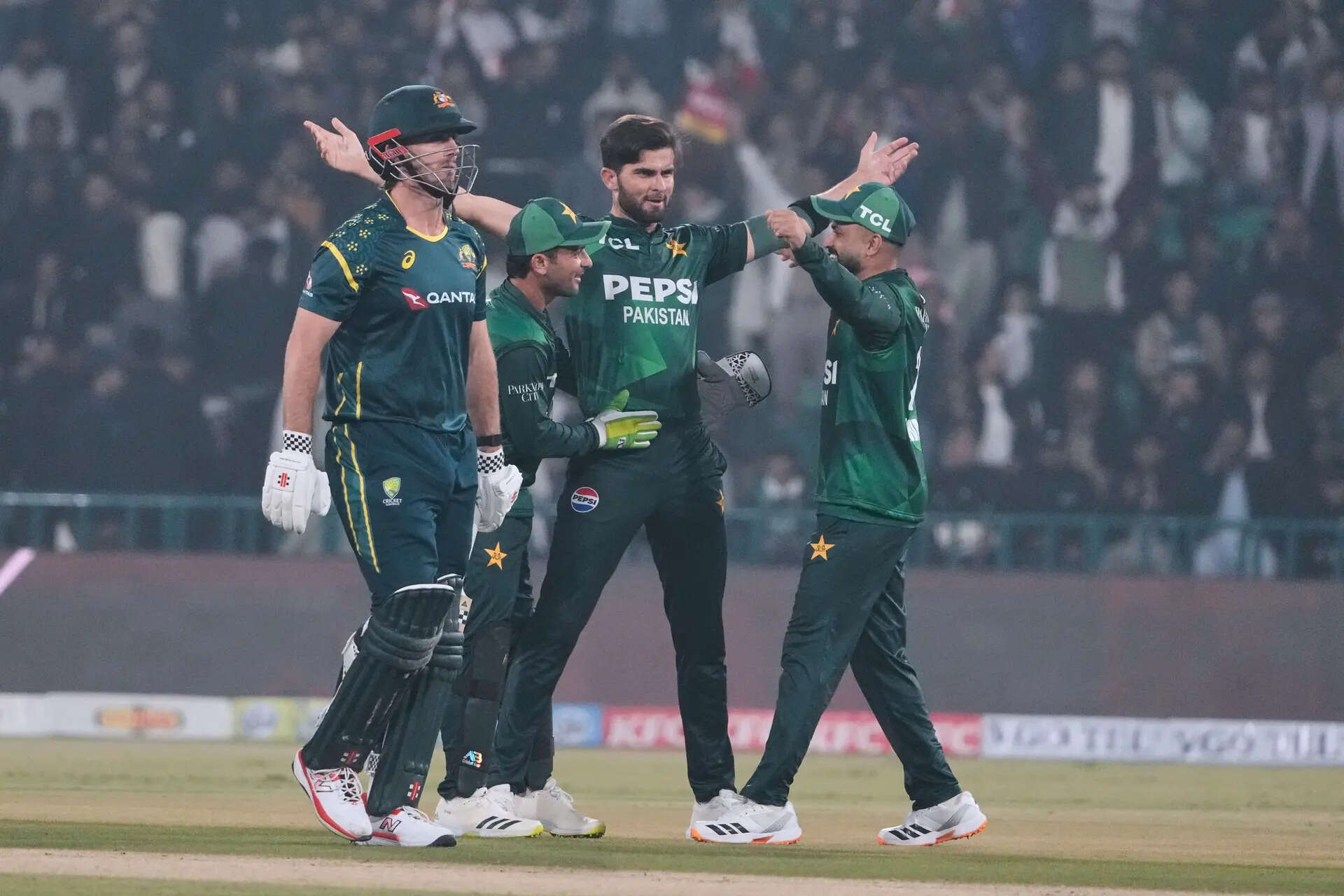
Pakistan’s Shaheen Shah Afridi, second right, celebrates with teammates after taking the wicket of Australia’s Mitchell Marsh, left, during the third T20 cricket match between Pakistan and Australia, in Lahore, Pakistan, Sunday, Feb. 1, 2026. (AP Photo/K.M. Chaudary)
The ripple effect would not stop at one tournament. The ACC calendar, future Asia Cups, and even ICC events would feel the strain. Latif estimates the India-Pakistan cricket economy as a billion-dollar business across formats and tournaments.“The businessmen are above our governments,” he says bluntly. “Now the game has gone out of their hands.”Latif places significant faith in the power of broadcasters. He believes they will not allow a prolonged standoff that threatens their investments.“You know how powerful broadcasters are. They will find some solution,” he says.
There is always backdoor diplomacy. In 24 hours, anything is possible.
Rashid Latif | Former Pakistan captain
Drawing parallels with how previous Asia Cup deadlocks were resolved, Latif suggests similar behind-the-scenes negotiations are inevitable for the World Cup. Without compromise, he warns, the consequences could be disastrous for world cricket.“If not, then it is a disaster for world cricket,” he adds.Teams opting not to play matches is not unprecedented in ICC tournaments. At the 1996 World Cup, Australia and the West Indies declined to travel to Sri Lanka over security concerns. In the 2003 edition, England refused to face Zimbabwe for political reasons, while New Zealand did not travel to Nairobi for their group match against Kenya.
Poll
Should Pakistan proceed with their boycott of the T20 World Cup match against India?
However, Latif does not rule out a reversal of stance. “There is always backdoor diplomacy,” he says.With Pakistan taking nearly a week to arrive at this position, Latif believes the timing has been carefully calculated. The Australia series has just ended, both teams are set to travel to Colombo, and the spotlight is firmly on the ICC.“In 24 hours, anything is possible,” he concludes.







 English
  हिन्दी