 Sipu Jha
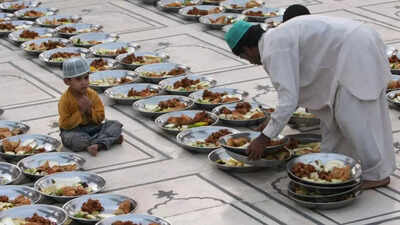
With just weeks to go before the holy month of Ramadan 2026 in Saudi Arabia, Qatar, the United Arab Emirates and much of the Islamic world, Muslims are closely watching the skies and the lunar calendar to answer the question many are asking: Will Ramadan begin on Wednesday, February 18 or Thursday, February 19 this year? All eyes are on trusted astronomical calculations and crescent-sighting criteria to know which of the two dates this month is the most likely first day of Ramadan in the UAE and several other countries, depending on local moon sightings and weather conditions.
Why 2026’s Ramadan start date matters
Unlike the Gregorian calendar, the start of Ramadan in the Islamic lunar calendar is determined by the sighting of the new crescent moon (hilal) at the end of the month of Sha’ban. Cultural and religious traditions still place emphasis on visual sighting for the official declaration, even as modern astronomical calculations provide increasingly precise predictions.Every year, communities across the Middle East, Asia and Africa look to the western sky just after sunset to spot the youngest visible crescent moon, an event that traditionally marks the beginning of Ramadan. It is the ninth month of the Islamic lunar calendar and is dedicated to fasting, prayer, charity and reflection.
Astronomy behind Ramadan 2026 timing debate
Astronomical calculations from regional experts, including the International Astronomy Centre (IAC) and the Emirates Astronomy Society, explain why this year could see a debate between Wednesday and Thursday:On Tuesday, February 17, 2026, the new moon is expected to be born late in the afternoon but conditions for seeing the crescent just after sunset are extremely unfavourable across most of the Arab and Islamic world. This is because the moon will set too close to, or even before, the sun in many regions, providing a very brief or non-existent window for visibility.
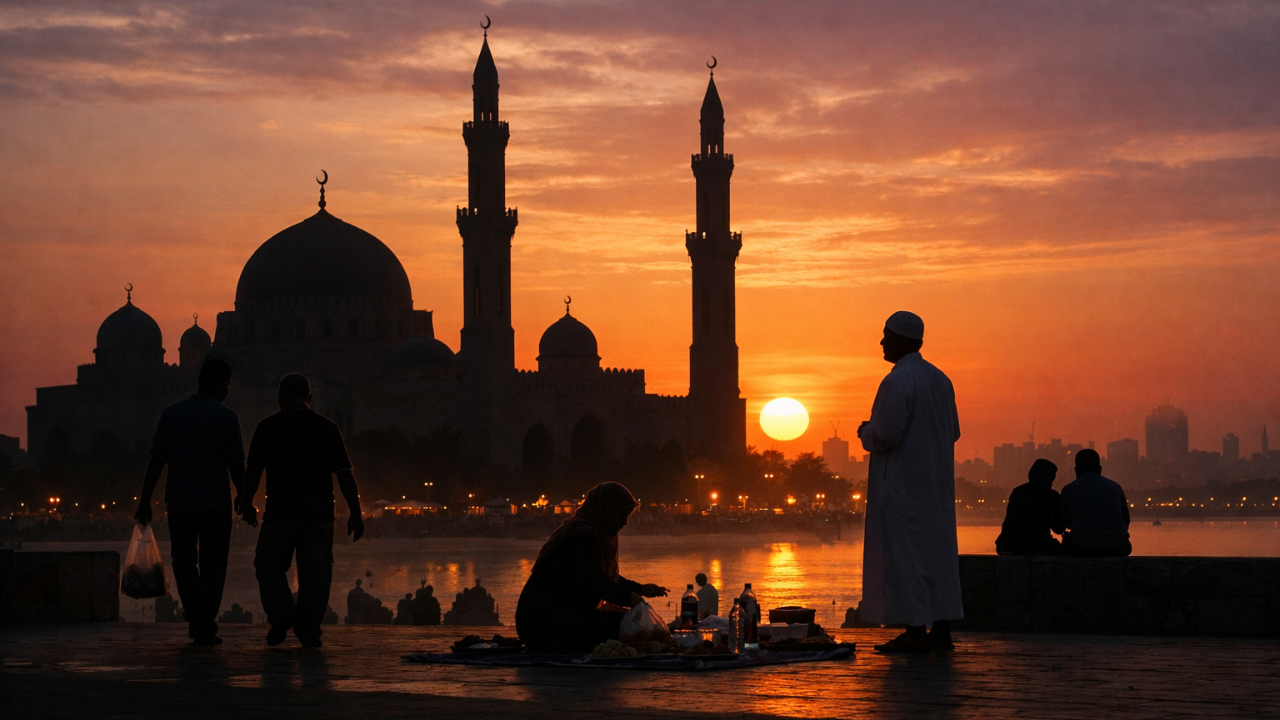
Ramadan 2026 Start Date: UAE and Islamic World Await Moon Sighting
Scientific algorithms show that in the UAE the moon is likely to set one minute before sunset on February 17, making a reliable sighting virtually impossible even with optical aids. Due to this challenge, astronomers say that Wednesday, February 18, 2026, will most likely be the 30th and final day of Sha’ban in the region and that Thursday, February 19 will be observed as the first day of fasting for Muslims in the UAE and several neighbouring countries.This calculation-based approach where moon age, angular separation and horizon visibility are taken into account, aligns with international crescent visibility criteria developed by astronomers and scholars over the decades.
Who might start Ramadan 2026 earlier?
While astronomical analysis strongly points to Thursday, February 19, some countries and communities that apply different sighting standards could declare Wednesday, February 18, as the start of Ramadan if the crescent is sighted that evening. Regions such as parts of South Asia or North Africa may follow local sightings and weather conditions that differ slightly from Gulf forecasts. Whatever the result, the final decision will be made based on confirmed moon sightings.The moon sighting practice is rooted in centuries-old tradition. This dual-possibility pattern has occurred in past years, with crescent visibility and local interpretation influencing whether regions begin Ramadan together or a day apart.
What happens after the Ramadan 2026 crescent is sighted
Once the new crescent is sighted, whether on February 17 or February 18, religious authorities and moon-sighting committees in the UAE will make an official announcement, after which mosques, schools and government bodies will publish the confirmed Ramadan schedule. This includes prayer times, fasting guidelines and any adjustments to work and school hours throughout the holy month.
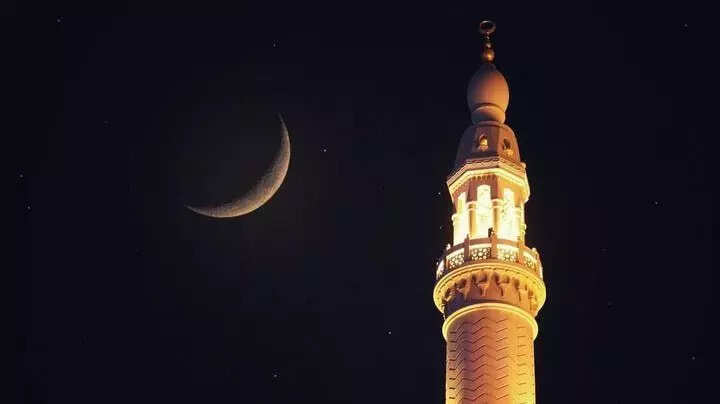
When is Ramadan 2026 moon sighting and when is the month of fasting expected to begin this year?
Ramadan’s beginning also signals the start of several related preparations. Families plan for fasting routines, mosques arrange special Taraweeh prayers and charitable initiatives ramp up to support those in need.
Ramadan 2026 expected duration and Eid 2026 dates
Astronomers and Islamic calendar experts also use moon-sighting projections to estimate the Eid al-Fitr holiday, which marks the end of Ramadan. Eid 2026 is anticipated to fall around March 20, 2026 in the Middle East if the month completes 30 days.However, like the start of Ramadan, Eid’s exact date will be confirmed only after the Sha’wal crescent moon is sighted at the end of the fasting month.
Why this year’s Ramadan start date is being closely watched
This year’s Ramadan timing is attracting particular attention for several reasons. It falls earlier in February than in some previous years, a reflection of the Islamic lunar calendar’s shift relative to the Gregorian calendar. The proximity of the crescent moon to the sun on February 17 has made scientists and moon-sighting communities cautious about predictions and claims, reinforcing the role of scientific calculation in supporting traditional sighting methods.Arab and Islamic countries including Saudi Arabia, the UAE, Jordan, Egypt and others, are poised to coordinate their crescent sighting efforts, often deferring to science-based criteria when visibility conditions are marginal. This unfolding lunar observation process shows how ancient religious practices and modern astronomical science intersect in today’s world.
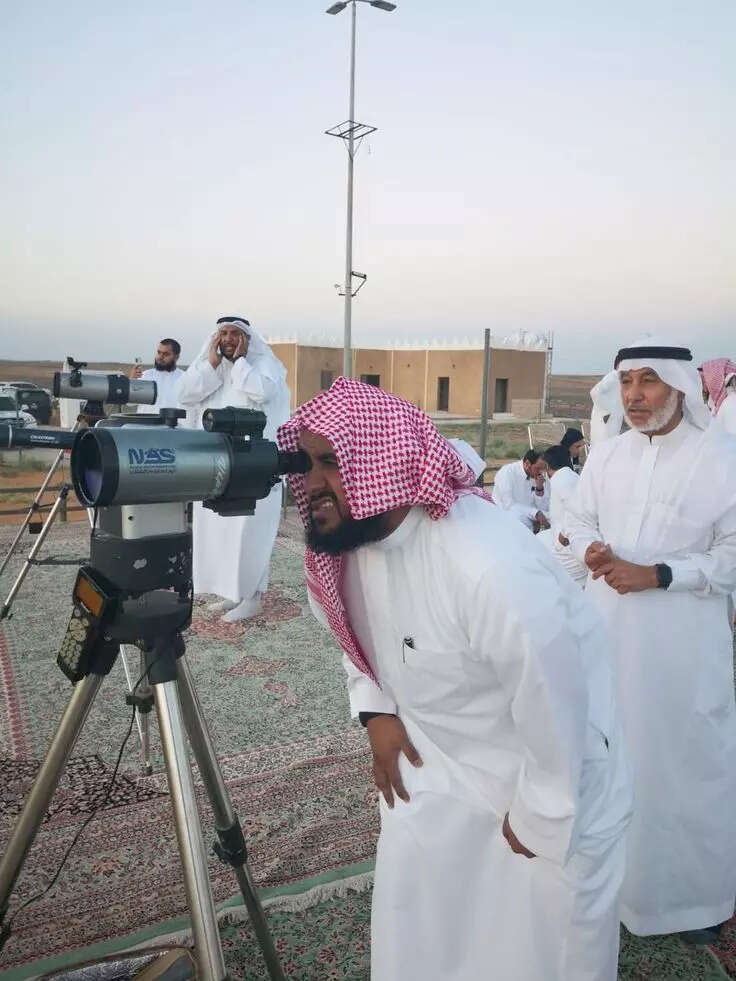
Ramadan 2026: February 18 or 19? The Lunar Calendar Debate Begins
While some Muslims prefer traditional visual moon sightings as the ultimate authority, astronomers argue that when visibility is virtually impossible, scientific calculation should guide decisions, a view reflected in 2026’s predictions. Local scholars and astronomers have advocated this blended approach, observing that in cases where visibility is highly unlikely, “attempting to sight the crescent serves no practical or religious purpose.” This perspective respects tradition while acknowledging the precision of contemporary astronomical models.For millions of Muslims in the UAE and around the world, Ramadan 2026 is most likely to begin on Thursday, February 19, based on a combination of moon-sighting tradition and scientific prediction. While Wednesday, February 18 remains a possibility in some regions if sighted earlier, astronomers and calculators widely agree that Thursday will be the first fasting day in the Middle East and much of the Arab world. The moment will mark the start of a spiritually rich and deeply observed month.








 English
  हिन्दी