 Sipu Jha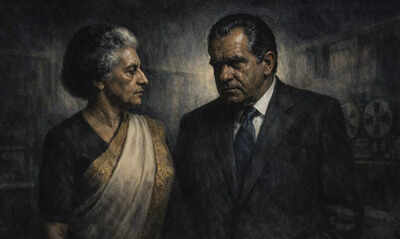
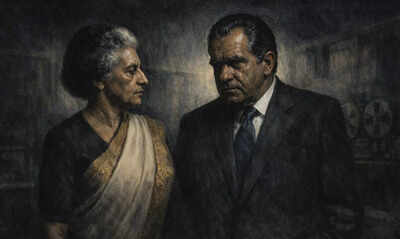
At the height of the 1971 India–Pakistan war, as Indian forces moved decisively in East Pakistan and the creation of Bangladesh became inevitable, US President Richard Nixon privately assured China that Washington would support Beijing if it chose to attack India.The disclosure emerges from seven pages of Richard Nixon’s sworn testimony that remained sealed for nearly five decades as part of the Watergate grand jury record. The testimony offers the clearest evidence yet that the US was prepared to widen the South Asian war into a larger conflict involving China.
What exactly did Nixon say?
In his grand jury testimony, Nixon described a secret assurance given to Beijing during the war. His full statement reads: “The Russians were supporting India. … Nobody was supporting Pakistan because there was an embargo on the shipment of arms. … But we were giving moral support to them, and also we gave to the Chinese an assurance privately that if India jumped Pakistan and China decided to take on the Indians that we would support them.”Nixon made clear that this was not a bureaucratic decision or one taken by his advisers. He described it as “my decision, not Kissinger’s.”
Why was this testimony kept secret?
The seven-page section was deemed so sensitive that it was withheld even from most Watergate prosecutors and the grand jury itself. It was classified and sealed separately, with explicit instructions that it not be disclosed. They were recently revealed by the New York Times. The concern was that the testimony exposed Cold War-era contingency planning that could have had explosive consequences. It revealed that the US had privately contemplated Chinese military action against India during an active war, a fact that would have been deeply destabilising if revealed at the time.Nixon himself urged prosecutors not to pursue the line of questioning further, warning them not to “open that can of worms.”
What was the geopolitical context?
Nixon viewed the 1971 war almost entirely through a Cold War prism. Earlier that year, India had signed a treaty of friendship with the Soviet Union, reinforcing US suspicions that New Delhi was aligned with Moscow.Pakistan, despite its military’s brutal campaign in East Pakistan, was seen in Washington as strategically indispensable. Islamabad had served as the secret back channel for Nixon’s diplomatic opening to China, culminating in his historic 1972 visit to Beijing.In his testimony, Nixon said the US felt a “great obligation” to Pakistan because of this role and feared that abandoning it would undermine US credibility with China.
A Walk Down Memory Lane
The 1971 war was triggered not by territorial ambition but by a humanitarian and strategic crisis unfolding in East Pakistan. After Pakistan’s military launched a brutal crackdown following the 1970 election verdict, millions of Bengali civilians fled into India, creating an unsustainable refugee burden and a direct security challenge. New Delhi initially sought international pressure on Islamabad, but with the US and China backing Pakistan, India signed a treaty of peace, friendship and cooperation with the Soviet Union in August 1971 to secure strategic cover before turning to military action, only after Pakistan’s pre-emptive air strikes on December 3. The conflict in the east ended in just 13 days, with Indian forces, alongside the Mukti Bahini, securing the surrender of Pakistan’s Eastern Command in Dhaka and leading to the creation of Bangladesh — a decisive outcome that reshaped South Asia’s strategic balance.
Did China act on the US assurance?
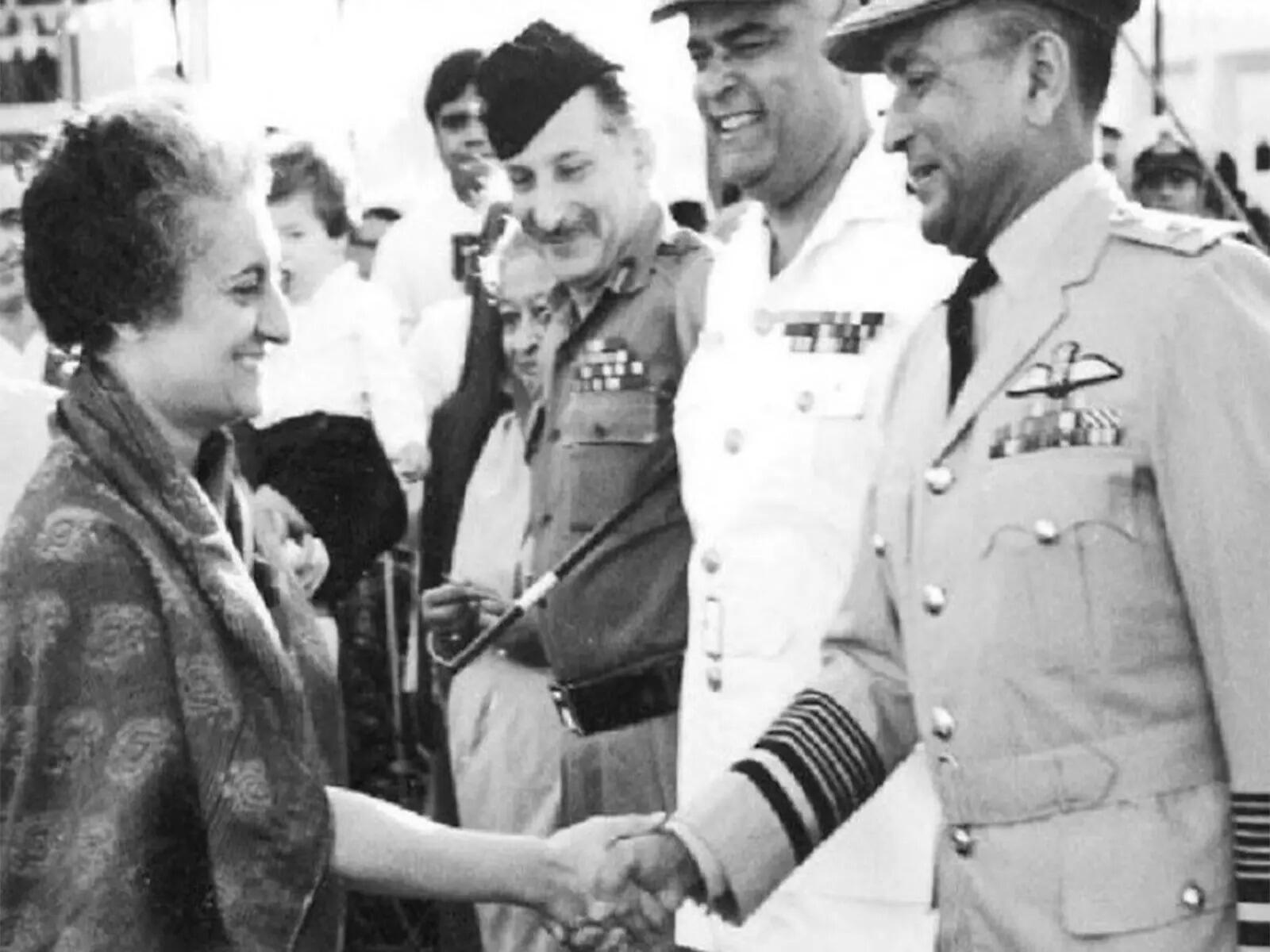
Vijay Diwas
China did not intervene militarily. The war ended on December 16, 1971, with Pakistan’s surrender in Dhaka and the birth of Bangladesh. However, the testimony confirms that the US was prepared for Chinese intervention and had privately aligned itself against India, even as it publicly claimed neutrality. This sits alongside other actions taken during the war, including the movement of a US naval task force into the Bay of Bengal, widely seen as a signal aimed at India.
Why does this matter now?
For India, the disclosure validates long-standing claims that the US actively opposed Indian objectives during the Bangladesh Liberation War. It also shows how close the region came to a far wider conflict involving multiple great powers. Historically, the episode underscores the degree to which Cold War calculations overrode humanitarian considerations. While the war ended quickly, the newly revealed testimony shows that decisions taken behind closed doors could have dramatically altered South Asian history. It also serves as a reminder that some of the most consequential moments in international politics remain hidden for decades — until archives finally speak.





 English
  हिन्दी