 Sipu Jha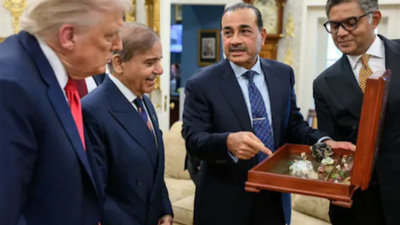
Minerals, militants, US-made guns: Why Trump’s bet on Munir is set to fail
The blast that tore through a Shia mosque on the edge of Islamabad on Friday was not only an act of mass murder. It was also a reminder of the limits of power in a country whose generals speak confidently about security, minerals, and strategic partnerships, even as the ground beneath them remains unstable.
Driving the news
A suicide bombing at a Shia mosque on the outskirts of Islamabad that killed more than 30 has jolted Pakistan’s capital and underscored a deeper problem for the country’s leadership: the state’s inability to guarantee security even at the heart of power.The Islamic State claimed responsibility for the attack, which Pakistani authorities say involved a bomber who opened fire before detonating an explosive vest. Interior minister Mohsin Naqvi said four suspects- including an alleged mastermind – were arrested after raids in Peshawar and Nowshera, adding at a press conference, “Yesterday’s suicide attack has rattled us.”
A quick catch up on Munir’s minerals
Pakistan has offered Washington a glittering bargain: access to some of the world’s richest untapped deposits of copper and other critical minerals at a moment when the United States is desperate to loosen China’s grip on the global supply chain.
Yet the promise that Field Marshal Asim Munir carried into the Oval Office is colliding with a brutal reality on the ground – an insurgency in Balochistan and the western borderlands that is increasingly better armed, better coordinated, and, paradoxically, equipped with weapons originally supplied by the United States.In December, the US Export-Import Bank approved $1.25 billion in financing to support development of the Reko Diq project in southwestern Balochistan, described by Canadian miner Barrick as the world’s largest undeveloped copper reserve. Reko Diq, one of the world’s largest undeveloped gold-copper deposits, is structured as a joint venture: Barrick holds 50%, three Pakistani federal state-owned enterprises collectively own 25%, and the remaining 25% belongs to the Government of Balochistan.In parallel, Pakistani officials have been touting up to $8 trillion in potential reserves of copper, lithium, cobalt, gold, antimony and other strategic minerals. For President Donald Trump, who has placed resource acquisition at the center of US foreign policy, the pitch has been compelling.But just as Washington leans in, Pakistan’s security environment is deteriorating. Along the Afghanistan border and across Balochistan’s mineral belt, militants are operating with US-made rifles, night-vision equipment, and long-range capabilities left behind after the chaotic 2021 withdrawal from Kabul, a CNN report said. The result: a resource opportunity that looks transformative on paper but increasingly untenable in practice.
The big picture
Pakistan’s mineral diplomacy collides with a deteriorating security environment on three fronts:Urban vulnerability: Bombings in Islamabad are rare, which is precisely why this attack reverberates. It was the second suicide attack in the capital in three months, triggering fears of a return to violence in major cities.Peripheral insurgency: Balochistan and the western borderlands – where the most valuable mineral deposits lie – are experiencing some of the deadliest militant activity in years.Militant capability: Security officials and analysts say insurgents are increasingly equipped with US-made rifles, machine guns, and night-vision devices left behind after the 2021 Afghanistan withdrawal.Together, these dynamics weaken Munir’s central argument to Trump: that Pakistan can secure large-scale extraction projects critical to US supply chains.
Why it matters
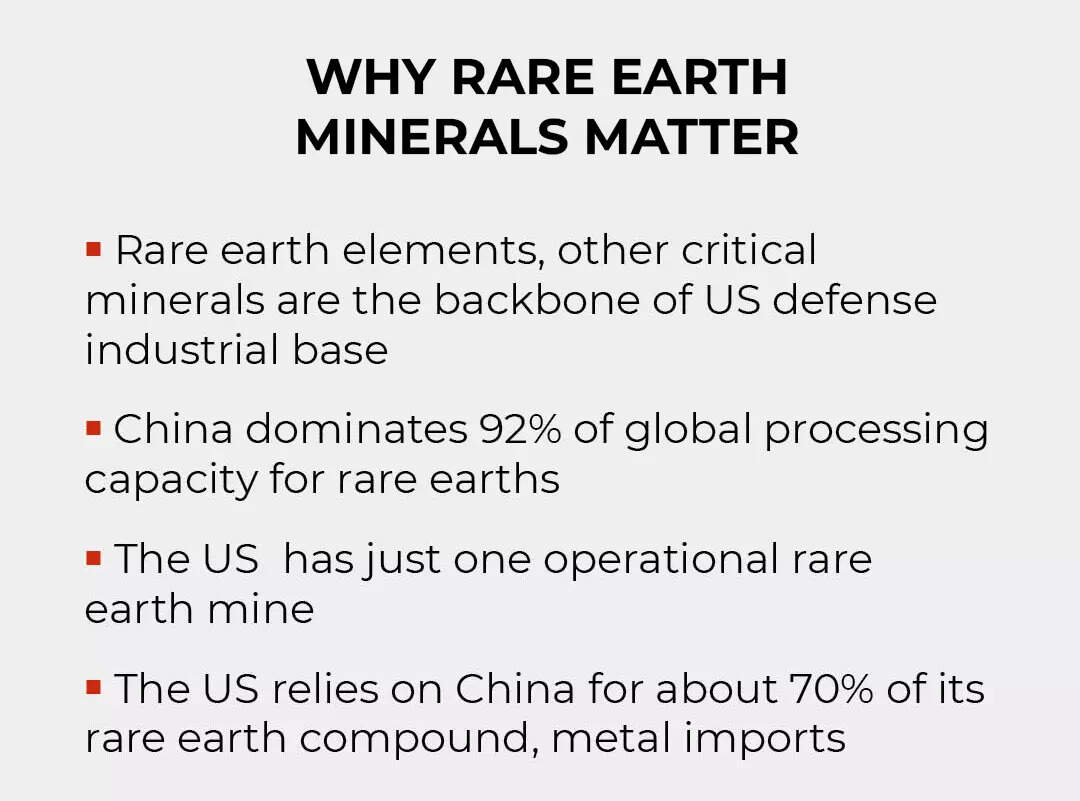
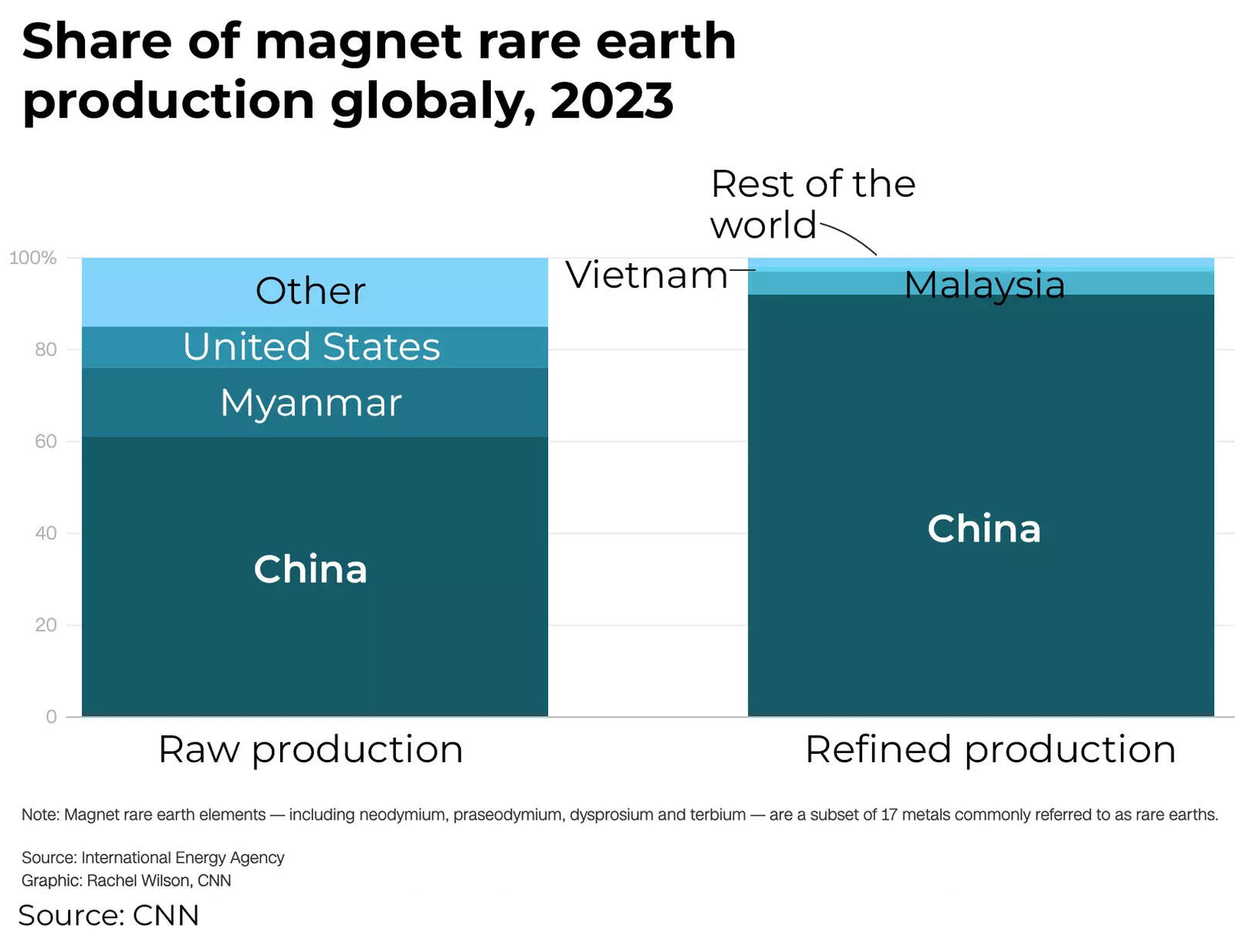
The stakes extend far beyond Pakistan. More than 90% of the world’s refined rare earths are processed in China, giving Beijing leverage over everything from smartphones to electric vehicles and advanced defense systems.
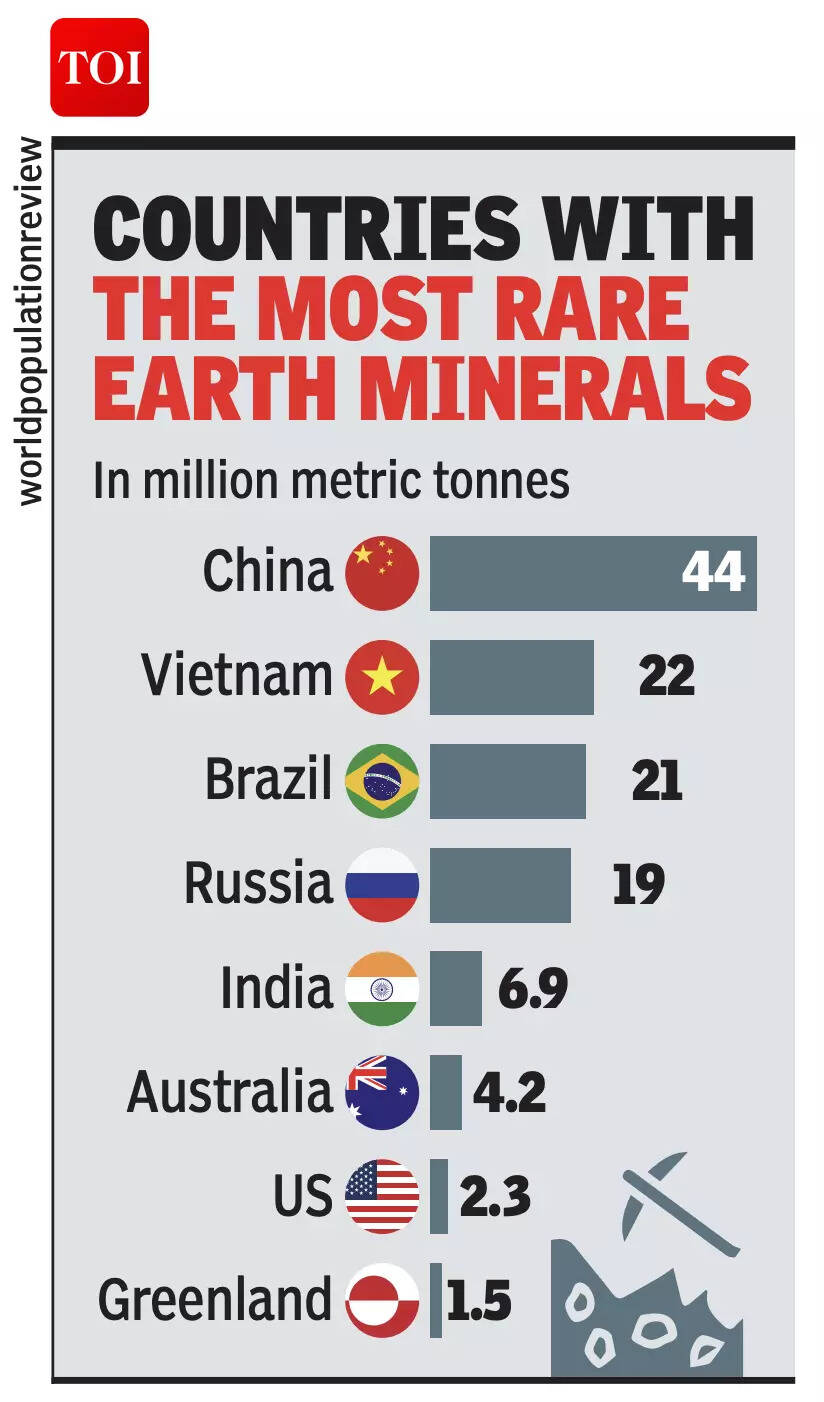
Trump has made breaking that near-monopoly a strategic priority, signing deals with Australia, Cambodia, and Thailand and vowing to secure “more than you’ll know what to do with.”Copper is emerging as just as critical. Global demand is projected to surge from roughly 30 million tons today to around 50 million tons by 2050 as economies electrify and digitize.As Dr Gracelin Baskaran, director of the Critical Minerals Security Program at the Center for Strategic and International Studies, told CNN, “Copper will fuel every part of our modern economy, and we’re at a structural shortage.” She added that this shortage undermines US competitiveness in processing rare earths as well.
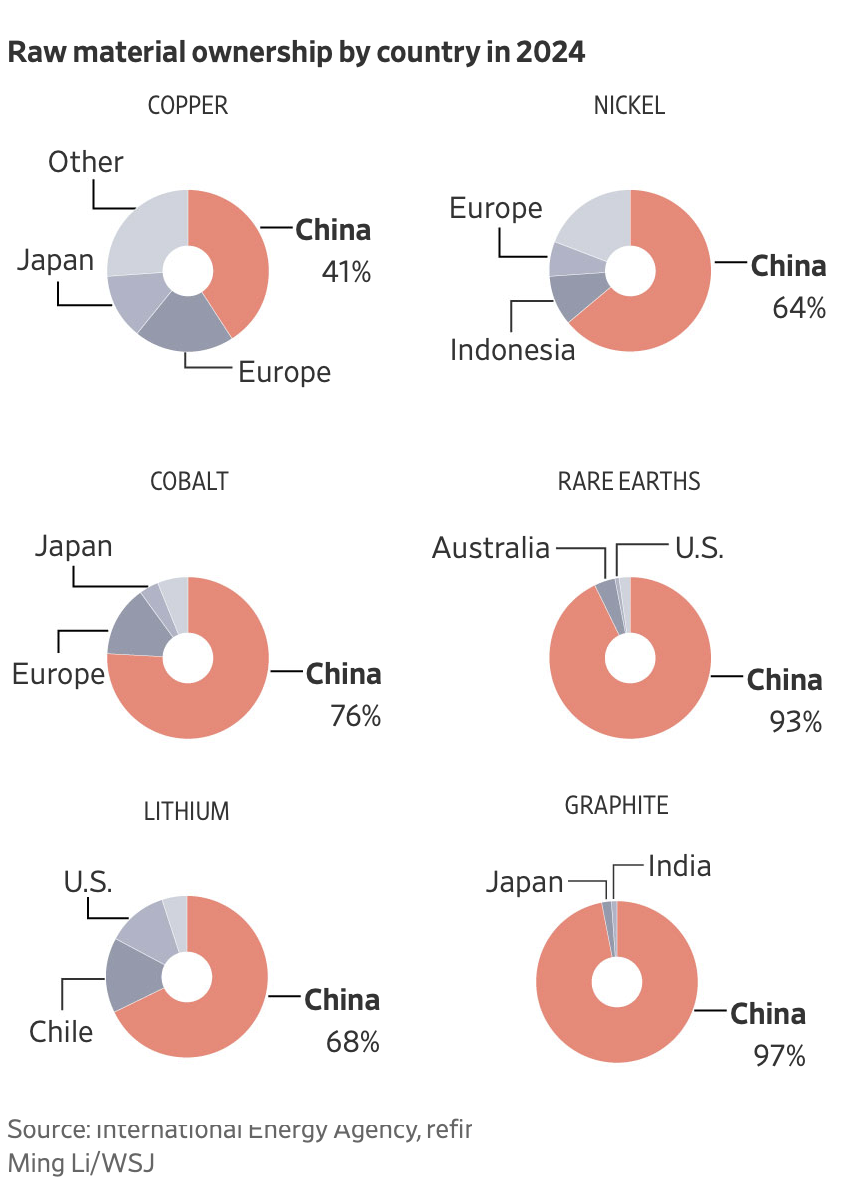
Pakistan’s deposits – particularly Reko Diq and Muhammad Khel – therefore look like a geopolitical prize. Yet they sit in territory that has been wracked by decades of insurgency, now intensified by the unintended consequences of America’s own war in Afghanistan.
Zoom in: The mines and the money
The Muhammad Khel copper mine, tucked into the rugged Hindu Kush near the Afghan border, produced hundreds of millions of dollars’ worth of copper last year, much of it shipped to China. Nearby, Reko Diq in Balochistan holds far greater promise, with reserves that could equal roughly a fifth of annual US copper consumption.These sites are not just commercial projects; they are potential pillars of Pakistan’s economic recovery in a country that has turned to the International Monetary Fund 24 times since 1958. For Islamabad, minerals are a lifeline. For Washington, they are a strategic hedge against China.
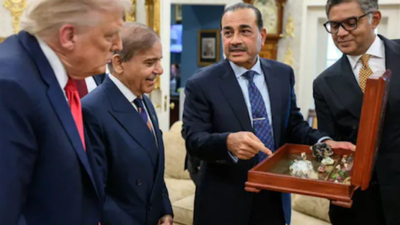
That alignment helped produce an unusual diplomatic moment in September, when Prime Minister Shehbaz Sharif and Field Marshal Munir arrived at the White House carrying a chest of rare earth samples. Trump was reportedly delighted, later calling Munir “My favorite field marshal.”Yet the optics of partnership mask a harsher truth: the roads to these mines run through some of the most dangerous terrain in South Asia.
Between the lines: America’s weapons, Pakistan’s war
What is increasingly shaping events is not geology but weaponry.On a recent visit to Pakistan’s border regions, CNN was shown more than 100 seized firearms – M-16s, M-4 carbines, M249 machine guns, and Remington sniper rifles – all stamped “Property of US Govt. Manufactured in Columbia, South Carolina.” These were not isolated finds. According to defense analyst Muhammad Mubasher, US-made weapons have become routine in clashes with militants since 2022–23.At Wana, near Muhammad Khel, Pakistani officers displayed three M-16s recovered after a suicide attack on a military cadet college. CNN traced their serial numbers through a Freedom of Information Act request to US Army Material Command at Redstone Arsenal, which confirmed that the rifles had been supplied to Afghan security forces years before the 2021 withdrawal. The Pentagon declined to comment further.The impact is visible in Pakistan’s hospitals. Colonel Bilal Saeed, the military’s general surgeon in Peshawar, told CNN that instead of primarily treating IED blast injuries, his teams are now “receiving patients with long range gunshot wounds, (or) sniper hits.” He added that the wounded increasingly arrive at night because insurgents now possess “night vision devices.”For 30-year-old Allah Uddin, a soldier guarding a convoy near Muhammad Khel, that technological edge proved devastating. After losing both legs in an ambush, he told CNN: “I don’t know where they were from but the weapons that they had… were different and better.” Later, reflecting on his condition, he said, “I am very angry, have you seen my condition?… I’ve seen my wounded companions around me, and it makes me even angrier.”
What they are saying
As per a Reuters report, Barrick Gold’s leadership says it is taking a hard look at its flagship Reko Diq mine in Balochistan as the security environment deteriorates. Chief executive Mark Hill said on a recent post-earnings call that the company’s board is “reviewing all aspects” of the project – including how much money it is willing to commit – after a sharp rise in militant violence. Barrick noted that the review was triggered by a recent escalation in security risks in the province.The company said its reassessment will cover the project’s security arrangements, construction timeline and overall capital budget, and that this process would start immediately, with a public update once the review is complete.Pakistani officials, however, publicly project confidence. Army spokesperson Lt General Ahmed Sharif Choudhry told CNN that the United States “has lot to offer for the people and stability and prosperity of Pakistan.” He insists Islamabad will secure mining areas and make infrastructure “world class,” adding bluntly, “We will resolve it. We have no other option.”But retired US Air Force Colonel Scott Yeatmen, who advised the Afghan Air Force until weeks before Kabul fell, offered a different perspective on how this situation arose. “You are not planning for a collapse. You’re planning to continue to execute operations and prevent the collapse,” he told CNN, underscoring how little the US anticipated the rapid disintegration of Afghan forces.John Sopko, former Special Inspector General for Afghanistan Reconstruction, has been even more stark. He estimates that roughly 300,000 US small arms were left behind in 2021, along with “communication stuff, rocket launchers, grenade launchers, mortars, cannons, heavy machine guns, surveillance equipment (and) night vision equipment.” In his words, Afghanistan is now “effectively… the world’s largest arms bazaar,” and “If you want … to outfit your terrorist or insurgency organization, Afghanistan is the place to go.”Afghan Taliban officials told CNN that all leftover weapons are under their “control and protection,” but Islamabad has long accused Kabul of providing sanctuary to militants – a charge Kabul denies.
The Balochistan front
The problem is not limited to the Pakistan Taliban (TTP). US-made weapons have also appeared in the hands of the Balochistan Liberation Army (BLA), which has fought for decades for greater autonomy and a larger share of the province’s resource wealth.Michael Kugelman of the Atlantic Council told CNN that Balochistan is both “ground zero for critical mineral opportunities, but it’s also ground zero when it comes to militant threats.” That duality now defines Pakistan’s dilemma.In late January, the BLA launched coordinated attacks across Balochistan, killing 33 people according to the Pakistani military. Islamabad responded with “Operation Radd-ul-Fitna-1,” claiming 216 militants were killed. In a press release, the Inter-Services Public Relations (ISPR) said operations were “intelligence-driven” and had “significantly degrad[ed] the leadership, command-and-control structures and operational capabilities of terrorist networks,” while acknowledging 36 civilian deaths and 22 security personnel killed. Balochistan chief minister Sarfaraz Bugti later wrote that the operation sent “a clear message to those committing acts of bloodshed in Balochistan,” calling the BLA “a fitna targeting innocent civilians and labourers” and warning that any hand raised against Pakistan “will not only be dealt with law and full force but will be broken.”Yet the violence has not abated. Dawn reports that 2025 was Balochistan’s deadliest year on record, with at least 254 attacks – a 26% increase – and more than 400 deaths. Militants have begun briefly seizing territory, storming district headquarters, blocking highways, and even hijacking passenger trains.
Between Trump, Beijing and Kabul
All of this complicates Washington’s mineral strategy.Beijing has watched developments closely, insisting that its “all-weather” partnership with Islamabad remains intact despite Pakistan’s courtship of Trump. China already dominates rare-earth processing and remains deeply invested in CPEC. Any large-scale US-backed mining push in Balochistan would therefore play out against a backdrop of US-China rivalry.At the same time, Trump has publicly demanded that the Afghan Taliban return abandoned US weapons – so far unsuccessfully. In August, his administration designated the BLA as a terrorist organization and held a Counterterrorism Dialogue with Pakistan focused on the BLA, TTP, and Islamic State Khorasan (ISKP). In January, US and Pakistani forces completed joint infantry and counterterrorism training.Yet none of this changes the basic arithmetic: as long as militants are well-armed and local grievances remain unaddressed, securing mines like Reko Diq will be extraordinarily difficult.
What’s next
Field Marshal Munir faces three simultaneous tests.First, he must fight a better-equipped insurgency along Pakistan’s western frontier – one increasingly using American-made weapons and night-fighting capabilities.Second, he must persuade skeptical Baloch communities that mining projects will genuinely benefit them, not just Islamabad, Beijing, or Washington.Third, he must balance Pakistan’s deep ties with China against a new, Trump-driven courtship from the United States – all while keeping the country stable enough for investors.So far, Islamabad is doubling down on security. Internet shutdowns, sweeping military operations, and high-profile offensives like Radd-ul-Fitna-1 suggest little appetite for political compromise.But without a parallel strategy of dialogue, development, and genuine power-sharing in Balochistan, the very minerals Trump wants may remain buried – not because they are inaccessible, but because Pakistan cannot safely reach them.Munir may have the minerals Trump wants. He does not yet control the ground they lie in.







 English
  हिन्दी