 Sipu Jha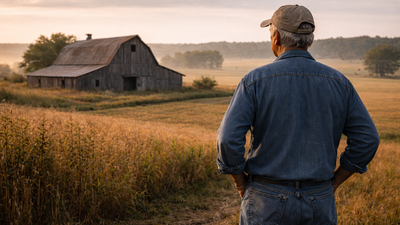
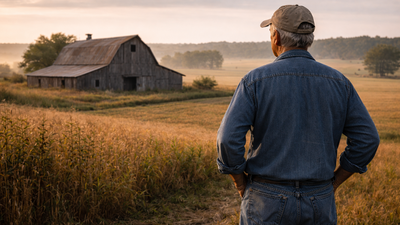
A Pennsylvania farmer has turned down a reported $15 million data centre offer, choosing instead to permanently protect his family’s land through a conservation easement, a decision that has struck a chord as AI-driven infrastructure pushes deeper into rural America. Mervin Raudabaugh, a lifelong farmer in Cumberland County, sold the development rights on his 261-acre property for about $2 million, ensuring it can never be commercially developed. The land, farmed for decades and bound up with personal loss and memory, will remain agricultural even as demand for power-hungry data centres accelerates nationwide.
Why the farmer rejected the data centre deal
Raudabaugh finalised the conservation easement on December 30, 2025, placing the farm in Silver Spring Township under permanent protection. The agreement compensates him for surrendering development rights while he retains ownership of the land. News of the decision began circulating widely in late January 2026, prompting renewed attention in early February.The choice was not purely financial. Raudabaugh has farmed the property for more than five decades, and the land carries deep family significance, including the barn where his mother passed away. He has described the farm as a legacy rather than a commodity, something to be stewarded for the future rather than sold to the highest bidder.The deal was enabled by Silver Spring Township’s voter-approved farmland preservation programme, launched in 2013 and funded by a $120 annual household tax. To date, the programme has helped preserve 21 properties, offering farmers a viable alternative to selling to developers. The easement on Raudabaugh’s farm is held by Lancaster Farmland Trust, which is responsible for enforcing the long-term restrictions.
Developer pressure and near-legal action
As demand for sites with access to power, water and transport infrastructure has surged, Raudabaugh faced persistent approaches from data centre developers. Township officials have said the pressure became intense enough that it nearly escalated into legal action, highlighting how aggressively companies are competing for rural land suitable for large-scale facilities.The case highlights a widening land-use conflict. According to Lawrence Berkeley National Laboratory, AI-driven data centres could occupy up to 1,000 square miles of land in the United States by 2030. At the same time, Pennsylvania is losing an estimated 1,200 acres of farmland each week to development, losses that are often irreversible once land is converted.Most landowners confronted with eight-figure offers choose to sell. Raudabaugh’s refusal has therefore become emblematic of a broader debate over local control, conservation funding and the long-term costs of the AI infrastructure boom. It also underscores the importance of preservation programmes in giving farmers meaningful alternatives when major developers come knocking.As AI adoption accelerates, similar conflicts are expected to multiply across rural America. Raudabaugh’s farm will remain agricultural in perpetuity, standing as a reminder that not every parcel of land is for sale, even in an era of unprecedented technological expansion.








 English
  हिन्दी