 Sipu Jha

Magnesium is an important mineral that helps muscles work, nerves send signals, the heart beat, and the skin stay healthy. When the body doesn’t get enough magnesium, small changes can show up on the face and around the eyes. Before you read this, it’s crucial to know that changes on the face or around the eyes alone don’t mean anything. Several things can lead to such changes, like irregular sleep cycle, stress levels, allergies, or a shift in routine. When even self-care and lifestyle changes lead to no visible results, people often wonder if nutritional deficiency, including magnesium, is a factor in play.We reached out to Dr. Mohit Sharma, Senior Consultant, Internal Medicine, Amrita Hospital, Faridabad to understand the impact of magnesium deficiency. “Magnesium is not a nutrient that makes a big deal out of not being there. It helps with nerve signaling, relaxing muscles, regulating sleep, breaking down glucose, and repairing cells. When intake or absorption is insufficient, the body frequently adapts instead of signaling distress, and the initial observable indicators, if there, may be mild,” he said.Dr. Mohit Sharma further outlined the facial and eye-related signs that may be linked to magnesium deficiency.
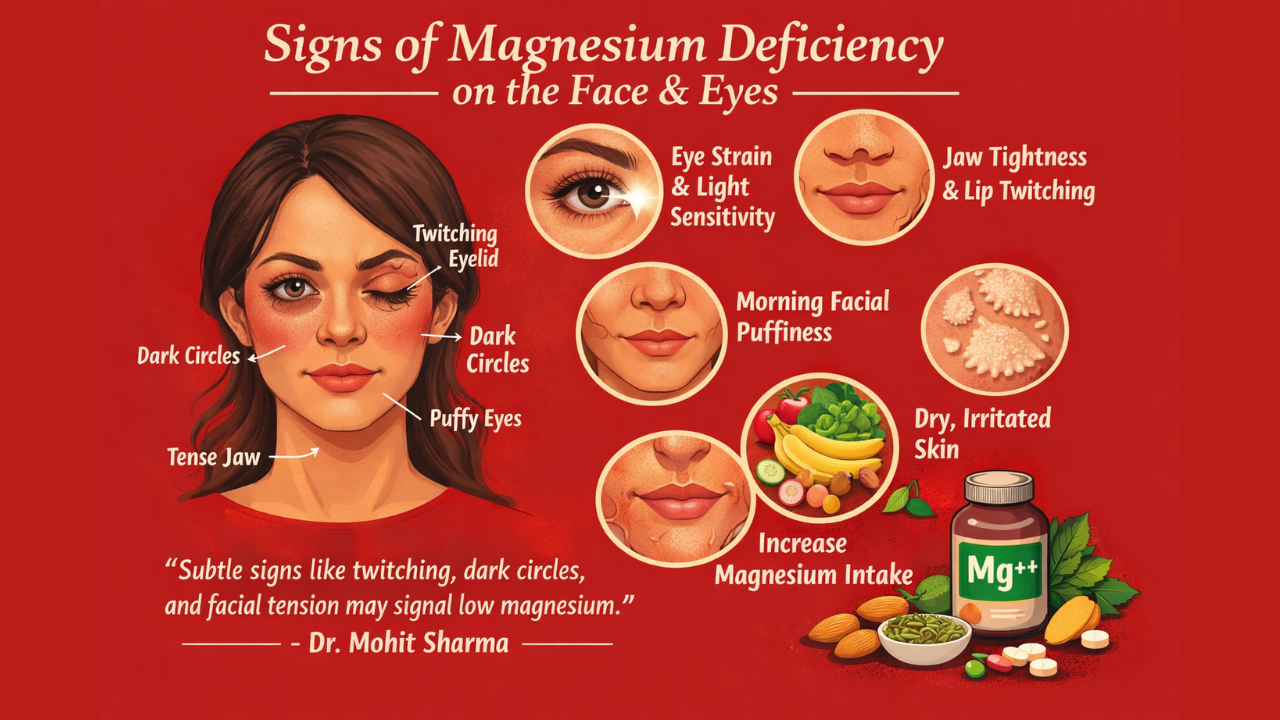
The eyelid twitch that keeps bothering you
One of the most common complaints in clinics is an eyelid twitch that happens from time to time. Most episodes are harmless and have to do with being tired, spending too much time in front of a screen, drinking too much caffeine, or being stressed.Magnesium, on the other hand, helps keep the nerve-muscle connection stable. Low levels can make neuromuscular excitability go up, which can make tiny muscles, especially those surrounding the eyes, more likely to twitch. If this twitching happens a lot, lasts for a long time, or happens on both sides, it needs more than just reassurance.
Dark circles that don’t get better as you sleep
People frequently think of dark circles as a cosmetic problem, but there’s more to them than what meets the eye. They can also be a sign of a number of medical issues. Long-lasting dark circles under the eyes could be caused by not getting enough sleep, having allergies, not getting enough iron, or occasionally not getting enough of a wider range of nutrients. Thin skin, blood vessels that are easy to see, and changes in fluid all play a part, which is why creams alone don’t always work.Some people see an improvement as their diet gets better and they fix any deficiencies, but this varies greatly from person to person.
Tightness in the jaw, tension in the face, and small twitches
Patients frequently report an unusual sensation of face tightness, characterized by jaw clenching, cheek stiffness, or lip twitching, especially during stressful intervals.Magnesium is a natural muscle relaxant. Low availability can make muscles a little too active, which can lead to tension headaches, jaw pain, or tired facial muscles. These symptoms don’t usually happen on their own; they commonly happen alongside anxiety or troubled sleeping.
Dullness of skin
Magnesium helps cells turn over and fix barriers. Low levels may be linked to skin that looks dull, dry, or takes a long time to heal, especially around the eyes and lips.
Swelling of the face and eyes in the morning
People often blame periorbital puffiness on eating too much salt, staying up late, or having allergies, and they are accurate. At the same time, magnesium also helps keep inflammation in check and fluids in balance.Low magnesium levels may make fluid retention worse in certain people, which can make morning puffiness more evident, especially when accompanied by poor sleep or excessive stress.
Strain on the eyes and sensitivity to light
Some patients experience ocular fatigue or photophobia without a definitive ophthalmic etiology. Magnesium shortage has been linked to neurons becoming more excitable, which may help explain why these symptoms are more common in persons with migraines, chronic stress, or sleep cycles that are out of whack.
When we asked about the tests that can help people know about magnesium deficiency, Dr Mohit emphasised, “A lot of people don’t know how complicated magnesium testing is. The serum magnesium test is the most popular one, but it only shows a small part of the body’s total magnesium. Levels can look “normal” even when intracellular storage are low. RBC magnesium may provide further insight, but it is flawed and lacks global standardization. Because of these limits, test findings should never be looked at on their own. Instead, they should always be looked at with symptoms, dietary history, and risk factors.”He further added, “The face doesn’t tell you if you have a deficiency, but it can show patterns that are worth paying attention to. Common lifestyle variables usually explain why your eyelids twitch, your face is tense, puffy, or has dark circles under your eyes. Sometimes, they make you think more about your diet and your general metabolic health. Magnesium shortage doesn’t usually make a big deal out of itself. When it matters, it usually does so discreetly, with little signs that only make sense when you look at the whole clinical picture.“Dr. Shifa Yadav, Consultant, Dermatology, Artemis Hospitals, said, “Magnesium is an important mineral that helps muscles work, nerves send signals, the heart beat, and the skin stay healthy. When the body doesn’t have enough magnesium, small changes can show up on the face and around the eyes. Eyelid twitching is one of the most common signs. Doctors say that low magnesium can change how nerves send signals and how muscles work, which can cause the eyelids to spasm a little bit over and over again. It’s normal to twitch sometimes, but if you twitch a lot or all the time, it could mean you’re lacking something. Dark circles and eyes that look tired are other signs. Magnesium helps you relax and sleep. Low levels of magnesium can make it hard to sleep and raise stress, which can make the eyes look dull and puffy. Some people may notice that their skin is dry, sensitive, or inflamed. Magnesium helps keep the skin barrier working and lowers inflammation.”“You should eat foods that are high in magnesium, like nuts, seeds, leafy greens, whole grains, and legumes. If the symptoms don’t go away, a blood test and a doctor’s visit can help confirm the deficiency and safely guide treatment,” she added.Dr. Manjusha Agarwal, Senior Consultant Internal Medicine, Gleneagles Hospital, Parel, Mumbai, said that just like iron, vitamin B12, and vitamin D, magnesium deficiency has become common in a large number of people. A large number of people are unaware of magnesium deficiency and fail to seek timely help. There are many symptoms of magnesium deficiency that are missed by people.“Pay attention to eye twitching. Puffy eyes and under-eye bags are also a common occurrence. Low levels of magnesium can make the face appear dull and tired. Skin sensitivity, dry skin, and acne are some of the signs that are linked to magnesium deficiency. Moreover, some may also have headaches, migraines, jaw tightness or discomfort, general facial weakness, droopy eyelids. Headaches and migraines, which affect the eye area, can also indicate magnesium deficiency. Twitching at the corner of the mouth and face will also needs expert’s attention, who will confirm the magnesium deficiency and then initiate prompt intervention by advising supplements and foods. The expert can ask you to focus on the diet, have nuts, seeds, leafy greens, and whole grains to improve magnesium levels and manage these symptoms. Muscle cramps, leg pain, and insomnia are the other symptoms,” Dr. Manjusha Agarwal added.Dr. Priyanka Hemrajani, Senior Consultant – Dermatology, Marengo Asia Hospitals, Gurugram, said that many people spend a fortune on beauty products for dull skin or dark circles, unaware that the real issue might be a lack of magnesium. “The secret to great skin lies in the ‘Beauty Triangle’ of magnesium, sleep, and gut health. Magnesium helps you fall into a deep sleep, which is the only time your skin truly repairs itself and builds collagen. It also keeps your digestion moving; a “clogged” gut often leads to a “clogged” face filled with acne. To fix this, aim for 310–420 mg daily. Fill your plate with Indian staples like palak (spinach), pumpkin seeds, almonds, and bananas.”“If you choose supplements, Magnesium Glycinate is the best for sleep and skin, while Magnesium Citrate helps if you have a sluggish gut. For best results, take your supplement in the evening to help your body relax. While generally safe, too much can cause a loose stomach, so start slow. If you want to be sure, ask your doctor for an RBC Magnesium test, which is a simple way to see if your body’s “battery” is actually full,” she concluded.
Who should think about having a doctor-led evaluation
A doctor should be in charge of testing and supplements, especially if symptoms last a long time or if there are risk factors, such as:
- Chronic gastrointestinal illness or malabsorption
- Long-term usage of diuretics or proton pump inhibitors (PPIs)
- Addiction to alcohol
- Diabetes that isn’t under control
- Being older
- Repeated muscle cramping, tiredness, or unexplained neuromuscular complaints
- Taking supplements without supervision isn’t always safe, especially for people with kidney illness.
Medical experts consulted This article includes expert inputs shared with TOI Health by: Dr. Priyanka Hemrajani, Senior Consultant – Dermatology, Marengo Asia Hospitals, GurugramDr. Manjusha Agarwal, Senior Consultant Internal Medicine, Gleneagles Hospital, Parel, MumbaiDr. Shifa Yadav, Consultant, Dermatology, Artemis HospitalsDr. Mohit Sharma, Senior Consultant, Internal Medicine, Amrita Hospital, FaridabadInputs were used to explain how important magnesium is, what are the symptoms when the body doesn’t have enough of it and few preventive tips.







 English
  हिन्दी