 Sipu Jha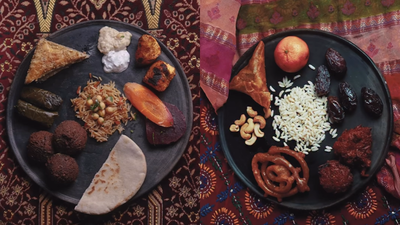
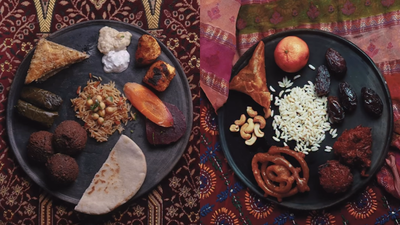
More than half a million Muslims across New York City are observing Ramadan this year. For the first time, they are doing so with a Muslim mayor in office, Zohran Mamdani.To mark the beginning of the holy month, Mamdani posted a video on his official Instagram account showing his iftar plate, a spread that travelled across geographies and class histories, blending Middle Eastern staples with South Asian street food and everyday Ramadan comforts.The platter featured pita bread, falafel, kebabs, hummus, dolmas, spiced rice and baklava alongside muri (puffed rice), pakoras, jilipi (jalebi), Persian-style samosas or samuchas, shingara, dates, cashews and tangerines.The post drew attention not simply because it marked the start of Ramadan, but because of what it seemed to say. The plate did not look curated for spectacle. It looked familiar. Recognisable. It smelled of home, nothing too fancy, yet it did the job of fulfilling the soul after fasting for the day. To understand that message, it helps to understand the meal.
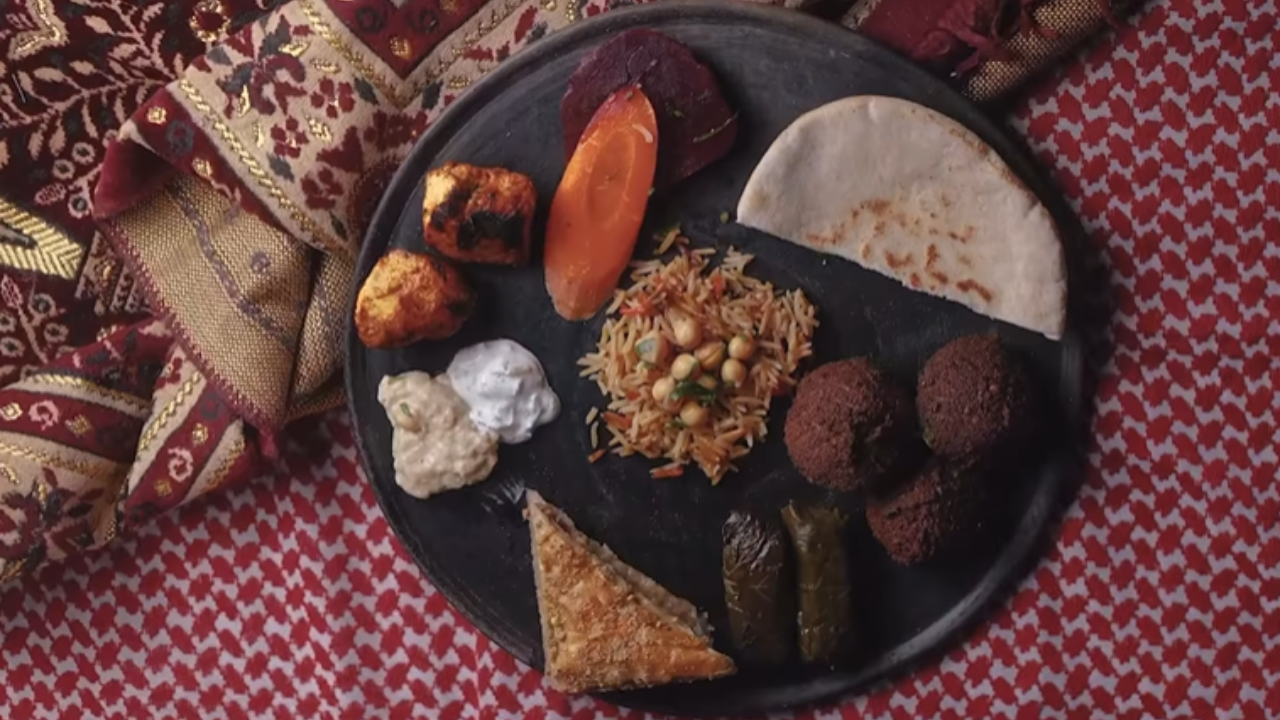
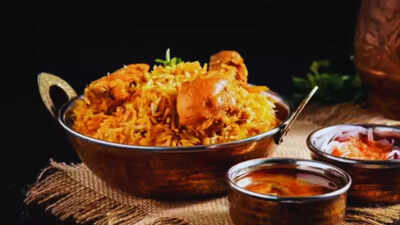
Pita breadA soft, round flatbread central to Middle Eastern and Mediterranean cuisines, pita dates back thousands of years to ancient Mesopotamia and the Levant.FalafelDeep-fried balls made from ground chickpeas or fava beans, falafel is widely associated with Egypt and the Levant. It evolved as an inexpensive, plant-based protein and remains a street-food staple across the Middle East.HummusA smooth blend of chickpeas, tahini, olive oil and lemon, hummus traces its documented history to 13th-century cookbooks from the Levant region. It has since become a global symbol of Middle Eastern cuisine.Dolmas (Stuffed grape leaves)Originating in the Ottoman Empire, dolmas are grape leaves stuffed with rice, herbs and sometimes meat. Variations exist from Turkey to Greece to the Arab world.BaklavaA layered pastry of filo dough, nuts and syrup, baklava developed in imperial Ottoman kitchens, though similar desserts existed earlier in Central and West Asia.ID@undefined Caption not available.PakorasCrispy fritters made by dipping vegetables in spiced gram flour batter and frying them, pakoras originate in the Indian subcontinent and are common during monsoon evenings and Ramadan iftars alike.Jilipi (Jalebi)A bright orange, spiral-shaped sweet soaked in sugar syrup, jalebi has roots in medieval West Asian sweets that travelled to South Asia through trade and empire. It became deeply embedded in South Asian food culture.Muri (Puffed rice)Light, airy puffed rice widely eaten in Bengal and parts of eastern India and Bangladesh. It is inexpensive, filling and often mixed with spices or nuts for quick street snacks.ShingaraThe Bengali cousin of the samosa, shingara typically contains spiced potatoes, peas or lentils. It reflects Mughal-era culinary exchanges that shaped South Asian savoury pastries.Persian samosas (Samuchas)Small, triangular pastries believed to have originated in medieval Central Asia and Persia before spreading to South Asia and beyond through trade routes.Dates and nutsDates hold particular religious significance in Ramadan; it is customary in many Muslim traditions to break the fast with dates, following prophetic tradition. Nuts and fruits provide quick energy after a day of fasting.
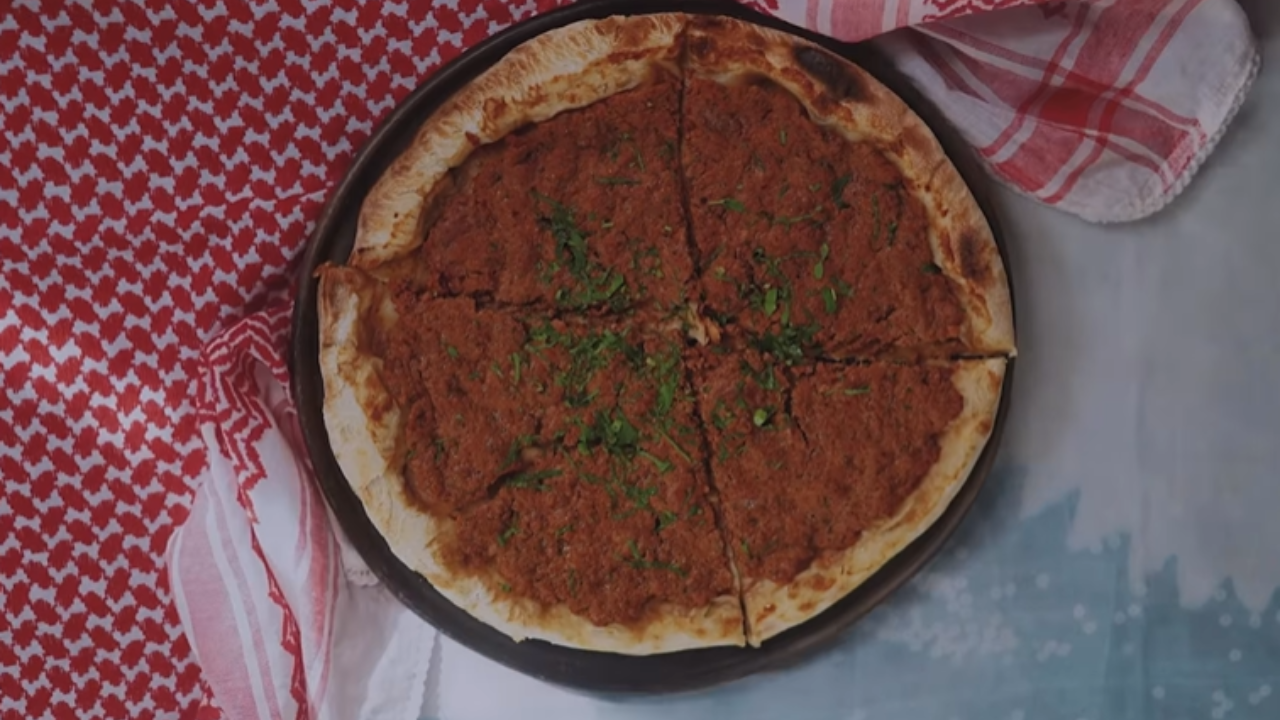
Taken together, the spread reads like a map, the Levant, Persia, the Indian subcontinent, all meeting on one table. It mirrors the way New York itself works: layered, migratory, constantly shaped by movement.The symbolism becomes clearer when placed alongside Mamdani’s own story.Born in Kampala, Uganda, Mamdani’s early life was shaped by movement. His family left East Africa during political upheaval and later settled in New York when he was seven. His mother is Indian filmmaker Mira Nair and his father is scholar Mahmood Mamdani, giving him a personal connection to South Asian and African histories, and through them, a broader global lens.That upbringing, growing up across continents, cultures and languages, is not separate from his politics. It is central to it. In his mayoral victory speech, he said:“New York will remain a city of immigrants: a city built by immigrants, powered by immigrants, and, as of tonight, led by an immigrant.”The iftar plate sits comfortably within that narrative.If we are not reading too much into it, it appears to gesture toward two things at once.First, it resonates with the everyday New Yorker observing Ramadan. There was nothing extravagant about the spread. These were foods found in neighbourhood bakeries, street stalls and family kitchens. It felt accessible, a meal that could belong to a delivery driver, a nurse finishing a long shift, or a firefighter breaking fast between calls.Second, it signals that Mamdani is not distancing himself from identity but foregrounding it. He is not presenting a flattened, neutral version of leadership. He is presenting himself, shaped by migration, informed by multiple cultural inheritances — as fully part of the city’s fabric.New York has long described itself as a city of immigrants. According to city data, roughly 36 percent of New York City’s population is foreign-born, representing millions of residents who trace their roots outside the United States. That reality is visible in neighbourhoods, languages, storefronts, and, in this case, on the mayor’s iftar plate.Ramadan, for Mamdani, will not be confined to social media. According to The New York Times, his senior aide Zara Rahim said the mayor will host iftar dinners with firefighters, delivery drivers and other working Muslims across the city. Rahim also confirmed that Mamdani will continue fasting while working, giving speeches, travelling across boroughs and meeting residents.




 English
  हिन्दी