 Sipu Jha

A cholesterol report marked “normal” brings relief to anyone waiting for it. Many people read it as a clean bill of heart health. But doctors say this comfort can be misleading. A routine cholesterol test is useful, but it does not always show what is really happening inside the blood vessels. Heart risk is shaped by various silent factors that numbers might not be able to capture.Dr Vivek Kumar, Director, Interventional Cardiology & Head of Structural Heart Program at Max Super Speciality Hospital, Vaishali, explains that cholesterol is only one piece of a much larger puzzle. Looking at it in isolation can hide early danger signs.
Why ‘normal’ cholesterol numbers can mislead
A standard report mainly shows whether cholesterol values fall within a set range. It does not reveal the actual condition of the arteries. Cholesterol can still build up on vessel walls, even when numbers look fine.According to Dr L K Jha, Associate Director and Head of Unit-II, Cardiology, Asian Hospital, factors like stress, smoking, obesity, high sugar intake, and family history can damage arteries without pushing cholesterol beyond the “normal” mark. The report reflects numbers, not vessel health.
LDL quality matters more than LDL quantity
LDL is known as “bad” cholesterol, but not all LDL behaves the same way, according to a study published in the Oxidative Medicine and Cellular Longevity. Some LDL particles are small and dense. These particles enter artery walls more easily and form plaque faster.Dr Vivek Kumar points out that a person may have acceptable LDL levels but still carry these harmful particles. Poor diet, excess sugar, lack of exercise, and insulin resistance often drive this hidden risk.
When good cholesterol doesn’t protect enough
HDL is called “good” cholesterol, but its job matters more than its count. HDL should help remove excess cholesterol from arteries, as also mentioned in Harvard Health. Sometimes it fails to do this effectively.Smoking, diabetes, obesity, and chronic stress can weaken HDL function. Dr LK Jha notes that even with normal HDL numbers, the heart may not be well protected if lifestyle and metabolic issues are present.
Inflammation: The silent contributor
One major gap in routine cholesterol testing is inflammation. Chronic, low-grade inflammation plays a key role in artery damage and plaque growth.Dr Vivek Kumar explains that inflammation often links to stress, unhealthy diet, smoking, and excess weight. Since standard tests do not measure this, artery damage can progress unnoticed. This explains why some people with “good” reports still suffer heart attacks.
Triglycerides can flag deeper problems
Triglycerides are another blood fat that often gets overlooked. Cholesterol may look fine, but high triglycerides raise heart risk according to the Journal of Clinical Lipidology.Dr L K Jha highlights that elevated triglycerides point to metabolic trouble such as diabetes, fatty liver, or abdominal obesity. They signal that the body is struggling with sugar and fat balance, even if cholesterol seems controlled.
Genetics can change the whole picture
Family history matters more than many realise. As per the British Heart Foundation, people with close relatives who had early heart attacks may be at higher risk despite normal cholesterol.In such cases, doctors advise closer monitoring or advanced tests. Genetics can influence how cholesterol behaves inside arteries.
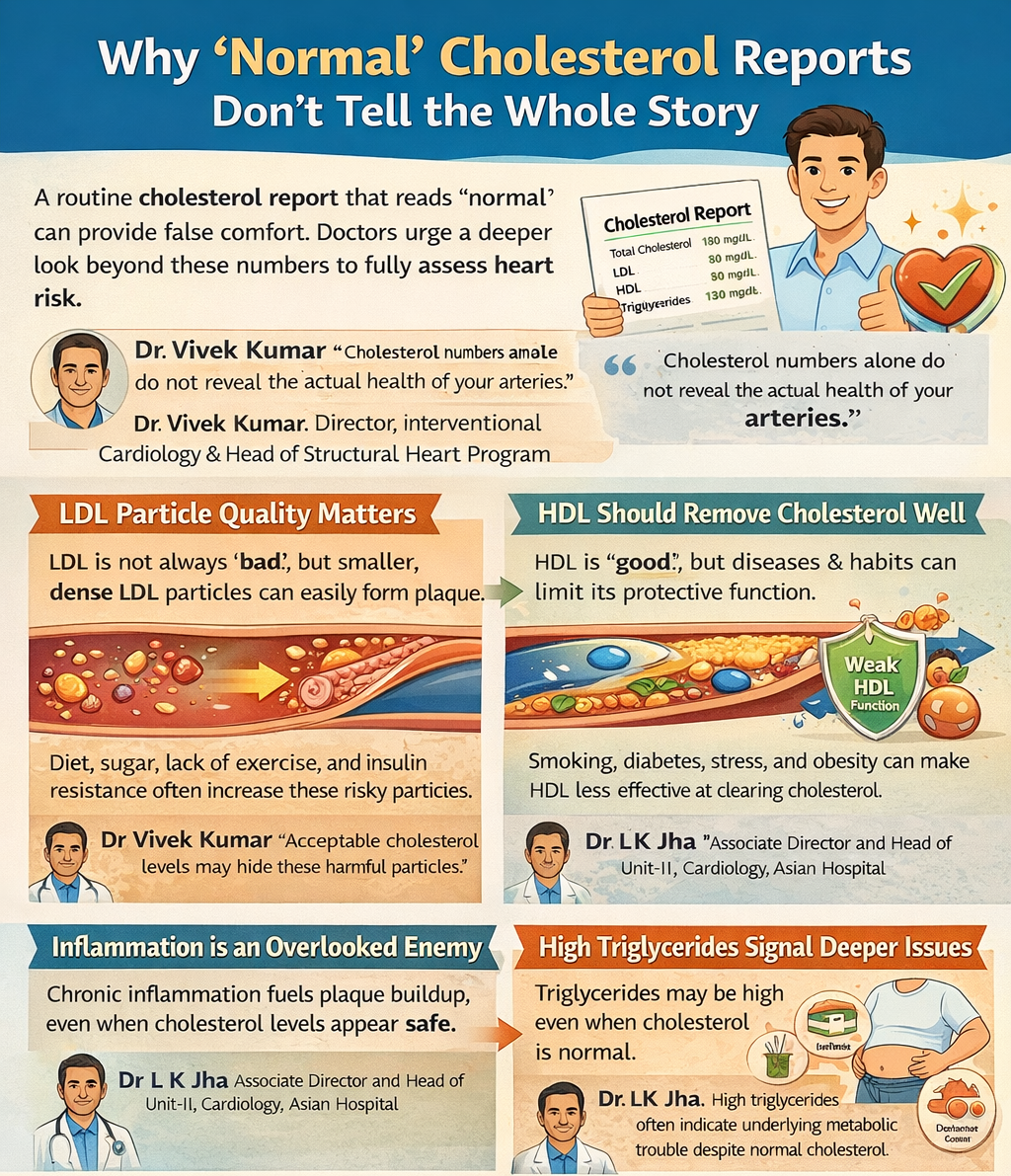
A routine cholesterol test is useful, but it does not always show what is really happening inside the blood vessels
Lifestyle factors don’t show up on reports
A cholesterol test does not reflect sleep quality, stress levels, physical activity, or daily food choices. Yet these factors strongly affect heart health.Doctors look at waist size, blood sugar, blood pressure, and activity patterns alongside cholesterol. Belly fat and metabolic syndrome can raise risk even when reports look reassuring.
Heart health needs a wider lens
Both experts agree that cholesterol testing is a starting point, not the final word. True risk assessment combines cholesterol with inflammation markers, sugar control, blood pressure, family history, and habits.A “good” report is comforting, but it should not stop regular check-ups or lifestyle care.Medically experts consultedThis article includes expert inputs shared with TOI Health by:Dr Vivek Kumar, Director, Interventional Cardiology & Head of Structural Heart Program at Max Super Speciality Hospital, VaishaliDr L K Jha, Associate Director and Head of Unit-II, Cardiology, Asian HospitalInputs were used to explain why a normal cholesterol report does not always rule out cardiovascular risk and why a deeper metabolic evaluation may sometimes be necessary.







 English
  हिन्दी