 Sipu Jha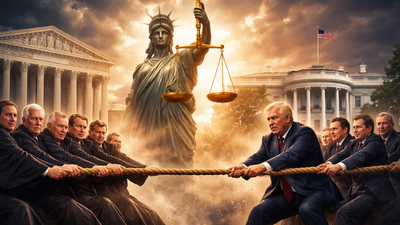
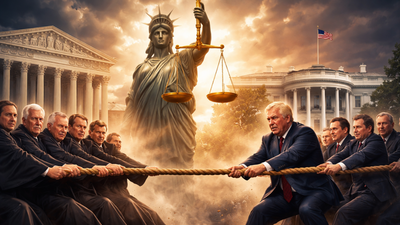
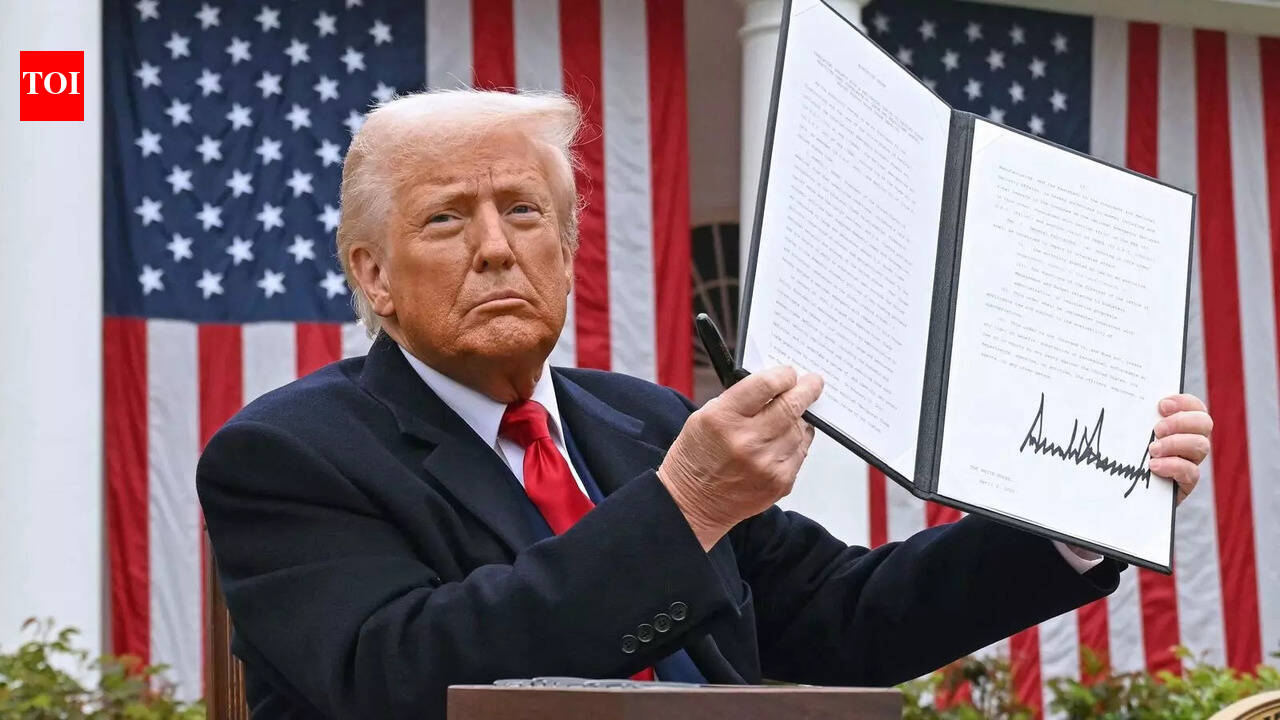
‘You can’t always get what you want … ‘These lines from Rolling Stones song land differently in Washington. Presidents push. Courts push back. And sometimes the lyrics fit a little too well.After the Supreme Court struck down his earlier sweeping tariffs, ruling he had exceeded his authority, US President Donald Trump did not hold back. He blasted the justices as “fools” and “lapdogs,” dismissed the ruling as “ridiculous” and “extraordinarily anti-American,” and moved quickly to rework his approach. On Friday, he imposed a 10 per cent global tariff for 150 days starting February 24. By Saturday, he raised it to 15 per cent, calling it “fully allowed, and legally tested.”It is the latest chapter in a long American pattern. From Andrew Jackson ignoring a ruling to Richard Nixon surrendering tapes, from wartime steel seizures to post 9 11 detentions, presidents have repeatedly tested the limits of their power, and the Supreme Court has repeatedly answered. The clash between executive ambition and judicial authority is not new. It is woven into the constitutional story that follows.
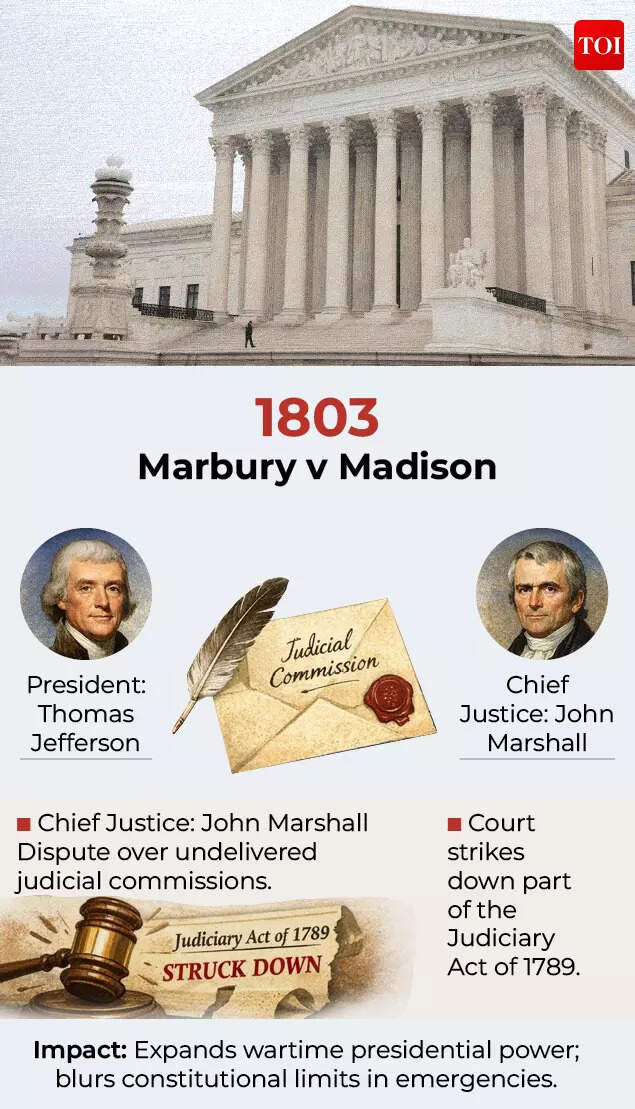
Marbury v Madison: Jefferson’s standoff that defined judicial power
The 1803 decision in Marbury v Madison reshaped American constitutional history. It was not a dramatic showdown in the streets, but it quietly redrew the balance of power in Washington. Chief Justice John Marshall used the case to firmly establish the Supreme Court as the final interpreter of the Constitution.After losing the bitter Election of 1800, President John Adams rushed to appoint loyal Federalists to judicial posts. One of them was William Marbury. But when Thomas Jefferson took office, he ordered Secretary of State James Madison not to deliver several of those commissions. Marbury sued, asking the Supreme Court to force Madison to hand over his job.Marshall’s opinion was a masterclass in strategy. He ruled that Marbury deserved his commission but declared that the Court lacked authority to issue it because part of the Judiciary Act of 1789 conflicted with the Constitution. By striking down a federal law for the first time, the Court claimed the power of judicial review. Jefferson avoided a direct defeat, but the judiciary walked away stronger than ever. From that moment on, the Supreme Court could invalidate acts of Congress and actions of the executive branch, permanently altering the separation of powers.
Andrew Jackson vs the Court: When a president ignored a ruling
Nearly three decades later, the Court faced a president who simply refused to play along. In Worcester v Georgia in 1832, the justices ruled that the state of Georgia had no authority to impose its laws on Cherokee lands. Marshall affirmed that Native American tribes were distinct political communities protected by federal treaties and the Constitution’s Indian Commerce Clause.President Andrew Jackson had other priorities. A strong supporter of Indian removal and westward expansion, he sided with Georgia. In a private letter he wrote, The decision of the Supreme Court has fell still born, and they find that they cannot coerce Georgia to yield to its mandate. His message was clear. Without executive enforcement, the ruling had no practical force.Georgia ignored the decision. Missionary Samuel Worcester remained imprisoned until eventually pardoned. Meanwhile, federal policy continued pushing Native Americans westward, culminating in the Trail of Tears. The episode exposed a blunt constitutional reality. The Court can interpret the law, but it relies on the executive branch to enforce it. When a president refuses, judicial authority can look fragile.
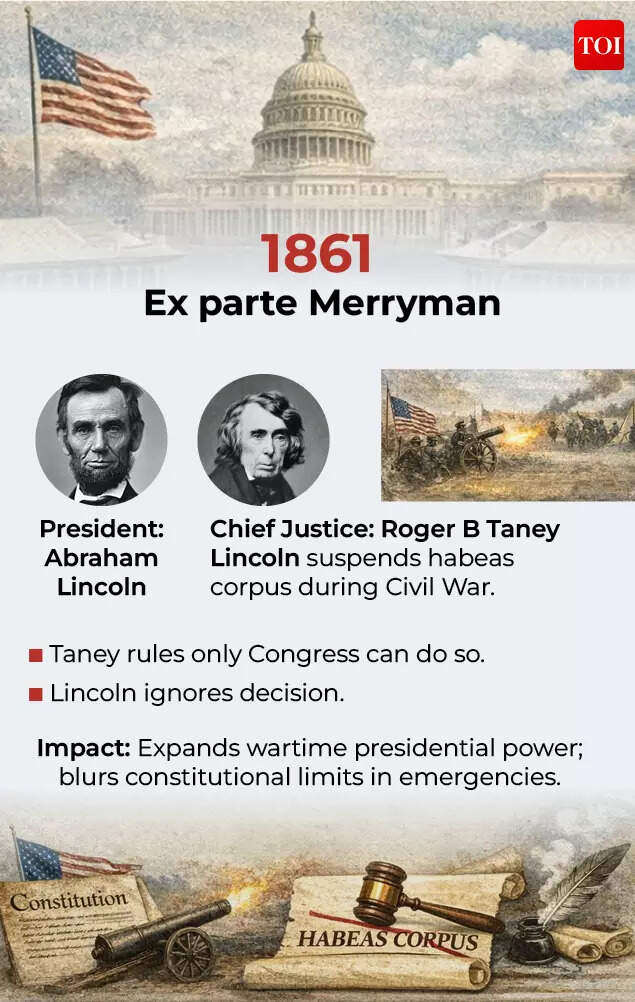
Lincoln vs Taney: Civil war powers on trial
The Civil War created a different kind of constitutional stress test. President Abraham Lincoln believed extraordinary rebellion required extraordinary measures. To prevent Confederate sympathizers from disrupting Union troop movements, he suspended the writ of habeas corpus, allowing military authorities to detain individuals without immediate court review.In Ex parte Merryman, Chief Justice Roger B Taney, sitting as a circuit judge, ruled that only Congress had the constitutional authority to suspend habeas corpus under Article I. He declared Lincoln’s unilateral action unconstitutional and ordered the release of John Merryman, a Maryland secessionist.Lincoln ignored the ruling. In his July 4 1861 address to Congress, he defended his decision with a pointed question. Are all the laws but one to go unexecuted, and the Government itself go to pieces lest that one be violated. He argued the Constitution was silent about which branch could suspend the writ and insisted that waiting for Congress could endanger the Union itself. Eventually Congress authorized the suspension, but the confrontation revealed how blurry constitutional lines can become during national emergencies. The presidency had expanded in wartime, and the balance between liberty and security became a lasting debate.
FDR vs the Supreme Court: The court-packing power play
During the Great Depression, President Franklin D Roosevelt launched the New Deal to revive the economy. But the Supreme Court repeatedly struck down key programs. In Schechter Poultry Corp v United States, the Court unanimously invalidated the National Industrial Recovery Act, ruling that Congress had exceeded its Commerce Clause authority. Other decisions followed, blocking reform efforts.Frustrated and fresh off a landslide reelection in 1936, Roosevelt proposed a bold solution. When a Judge reaches the age of seventy, a new and younger Judge shall be added. He framed it as a measure to improve efficiency, but critics immediately labeled it court-packing. Roosevelt pushed back. If by that phrase packing the Court it is charged that I wish to place on the bench spineless puppets no President fit for his office would appoint that kind of appointees.The proposal triggered political backlash, even within his own party. Congress rejected the plan. Yet soon after, in West Coast Hotel Co v Parrish, the Court upheld a state minimum wage law, signaling a shift away from strict limits on economic regulation. The episode preserved the Court’s structure but expanded federal regulatory power. It also demonstrated how political pressure and constitutional interpretation can intersect without formally changing the number of justices.
Truman vs the justices: When wartime power hit a wall
In 1952, during the Korean War, President Harry S Truman feared that a nationwide steel strike would cripple military production. He issued Executive Order 10340 directing the federal government to seize and operate steel mills. He did so without explicit authorization from Congress.The dispute reached the Supreme Court in Youngstown Sheet & Tube Co v Sawyer. In a 6 to 3 decision, the Court ruled against Truman. Justice Hugo Black wrote that the President’s power must stem either from an act of Congress or from the Constitution itself, and neither supported the seizure.Justice Robert H Jackson provided the opinion that would echo for decades. Presidential powers are not fixed but fluctuate, depending upon their disjunction or conjunction with those of Congress. He outlined three zones of executive authority, placing Truman in the lowest ebb because he acted against Congress’s will. The ruling firmly limited unilateral emergency powers and reinforced that even wartime presidents must respect legislative authority.
Nixon vs the rule of law: The tapes that toppled a president
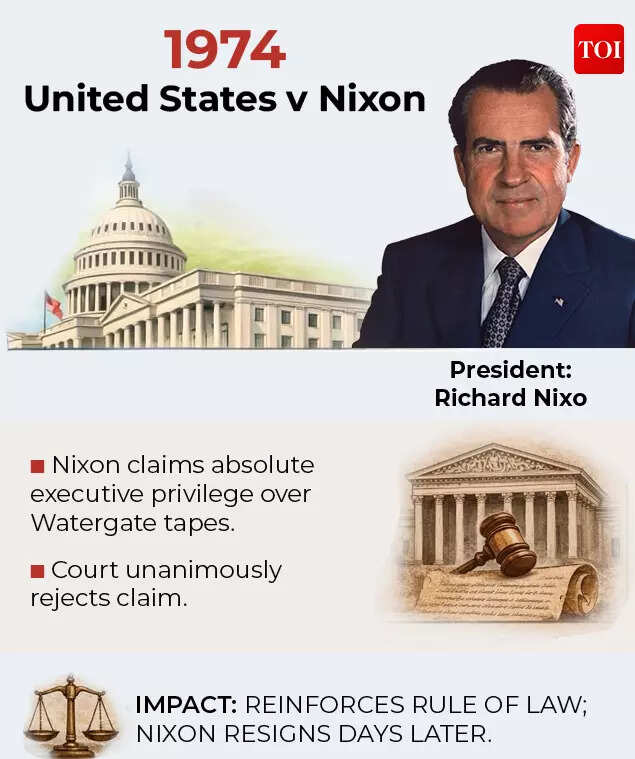
The Watergate scandal produced one of the most dramatic presidential showdowns in history. President Richard Nixon claimed absolute executive privilege when a special prosecutor demanded Oval Office recordings as evidence in a criminal trial. The case reached the Court in United States v Nixon.In a unanimous decision, Chief Justice Warren E Burger rejected Nixon’s claim. Neither the doctrine of separation of powers, nor the need for confidentiality can sustain absolute unqualified Presidential privilege. The Court recognized a limited executive privilege but ruled it must yield to the specific need for evidence in a criminal proceeding.Nixon complied and released the tapes. They revealed his involvement in obstructing justice. Facing certain impeachment and removal, he resigned days later. The decision reinforced a powerful constitutional principle. Not even the President stands above the rule of law, and the judiciary can compel evidence from the executive branch.
Bush vs the Court: War on terror powers under scrutiny
After the attacks of September 11 2001, President George W Bush authorized military commissions at Guantánamo Bay to try suspected terrorists detained abroad. The administration argued that national security demands gave the executive wide latitude.In Hamdan v Rumsfeld, the Supreme Court ruled that the commissions lacked proper authorization and violated both the Uniform Code of Military Justice and Common Article 3 of the Geneva Conventions. Two years later, in Boumediene v Bush, the Court held that detainees at Guantánamo retained the constitutional right to challenge their detention through habeas corpus.These decisions made clear that geography does not place executive actions beyond judicial review. Even during the War on Terror, constitutional safeguards and congressional authorization remained essential. The Court reaffirmed its role as a check on executive power in matters of national security.
Biden vs the Supreme Court: Big policy meets big limits
President Joe Biden faced a Supreme Court increasingly skeptical of broad agency action. In West Virginia v EPA, the Court curtailed the Environmental Protection Agency’s attempt to reshape national energy policy, invoking the major questions doctrine. The justices held that agencies must have clear congressional authorization to decide issues of vast economic and political significance.The same principle surfaced in Biden v Nebraska, where the Court struck down the administration’s student loan forgiveness program. Chief Justice John Roberts wrote that transformative economic policies require explicit statutory language, not creative interpretation of older laws.Together these rulings signal a modern shift. The Court is demanding clearer lines between legislative authority and executive implementation. Big policy choices, the justices insist, belong to Congress. Once again, the constitutional tug of war continues, reminding the nation that presidential power, however energetic, operates within limits defined and enforced by the judiciary.




 English
  हिन्दी