 Sipu Jha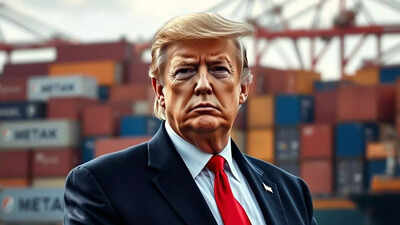
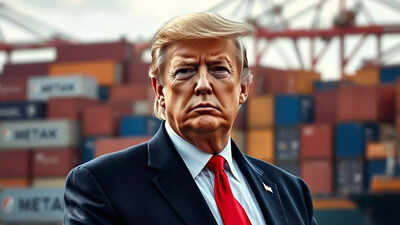
Donald Trump tariffs (AI image)
US President Donald Trump is livid and his fresh tariff warnings after announcing a 15% global tariff are signs of the global economic turbulence that may unfold in the coming days. The US Supreme Court has struck down Trump’s reciprocal tariffs, prompting the American president to first levy a 10% tariff on its trading partners and then within a day raise it to 15%. The revised tariffs are based on a different and largely untested legal provision, Section 122.US Trade Representative Jamieson Greer has said that none of the nations which had concluded trade agreements with Washington had indicated any intention to reconsider or withdraw from those arrangements in the wake of the court’s decision.However, for countries facing steeper US tariff rates, the tariff being brought down to 15% is particularly significant. In the cases of China, Brazil and India, the US Supreme Court ruling translates into reductions measured in double-digit percentage points, though overall tariff levels remain high.All major trading partners are evaluating both the verdict and Trump’s tariff moves to better understand the implications. We take a look at how major countries have reacted:IndiaIn the wake of uncertainty stemming from the US Supreme Court’s decision to nullify former President Trump’s tariffs, the government has opted to defer the planned trip of its delegation to Washington, DC, which was intended to finalize the legal wording of the interim trade agreement framework.Officials from the commerce department indicated that both sides felt it would be prudent to postpone the visit by chief negotiator Darpan Jain and his team until the recent developments and their potential consequences are fully assessed. Jain had been scheduled to engage in three days of discussions beginning Monday, ahead of US Trade Representative Jamieson Greer’s proposed visit to India to formally sign the pact.According to a TOI report, there are suggestions within certain sections of the government that the Modi administration may be open to examining whether the Supreme Court ruling has created additional flexibility to negotiate more favorable terms.ChinaChina has urged the US to do away with what it has called ‘unilateral tariffs’. In a statement issued on Monday, China’s commerce ministry said it was conducting a comprehensive review of the US Supreme Court’s ruling on tariffs. It called on the Donald Trump administration to remove what it described as ‘relevant unilateral tariff measures’ affecting its trade partners.The ministry said that US unilateral tariffs breach both international trade norms and domestic US law. It added that the tariffs do not serve the interests of any party. It added that China would continue monitoring developments closely and take firm steps to protect its own interests.European Commission & European Central BankEurope has a clear message for the US: ‘A deal is a deal’. The European Commission urged the US to adhere to the commitments outlined in the EU-US trade agreement concluded last year.In a statement, the Commission said the current situation does not support the objective of achieving “fair, balanced, and mutually beneficial” transatlantic trade and investment, as set out in the joint declaration accompanying last year’s agreement. Emphasizing the need for compliance, it said that an agreement must be honored.On Monday, the European Parliament once again deferred a planned vote on the European Union’s trade agreement with the United States, marking the second postponement after President Donald Trump introduced the 15% tariff on imports.Meanwhile, the European Central Bank President Christine Lagarde cautioned that ongoing turbulence in US trade policy could once again unsettle the business environment. She expressed hope that any tariff measures would be carefully considered so that companies have clarity about what lies ahead.Speaking on CBS’ “Face the Nation,” Lagarde said that reopening trade tensions would likely trigger fresh disruptions. She noted that businesses prefer stability and commercial engagement over legal battles, adding that she hopes the situation will be clarified and any proposals will be well thought out and consistent with the US Constitution, thereby avoiding further complications.JapanIn Japan, a government spokesperson said on Saturday that Tokyo would closely review both the court’s ruling and the Trump administration’s response before determining its next steps.On Sunday, Itsunori Onodera, a senior figure in Prime Minister Sanae Takaichi’s Liberal Democratic Party and a former defence minister, criticized the new tariffs as “outrageous.” Speaking on a Fuji Television programme, Onodera — who serves as the LDP’s tax policy chief but does not hold a government position — expressed concern that such measures could prompt more countries to distance themselves from the United States, even among allies.TaiwanTaiwan’s government said it is keeping a close watch on developments, pointing out that Washington has yet to clarify how it intends to fully carry out its trade arrangements with several countries. In a cabinet statement, officials noted that although the immediate effect on Taiwan appears limited, authorities will continue monitoring the situation carefully and stay in close contact with the United States to better understand the specifics of implementation and respond as needed.Taiwan has recently concluded two agreements with the US: a memorandum of understanding signed last month committing the island to invest $250 billion, and another pact finalized this month to reduce what Trump has described as “reciprocal” tariffs.ThailandNantapong Chiralerspong, head of Thailand’s Trade Policy and Strategy Office, said the ruling could, in fact, temporarily support Thai exports. He explained that ongoing uncertainty may trigger another wave of “front-loading,” with exporters accelerating shipments to the US out of concern that higher tariffs could be imposed later.SwitzerlandHelene Budliger Artieda, who heads Switzerland’s State Secretariat for Economic Affairs, said the country should be prepared for the possibility that US tariffs could become a lasting feature. In remarks to Swiss newspaper SonntagsBlick, she indicated that Switzerland may need to adjust to the continuation of such tariffs.She observed that the US administration remains focused on its core trade objectives, including narrowing the American trade deficit, ensuring greater reciprocity in global commerce, and encouraging the return of manufacturing activity to the United States.







 English
  हिन्दी