 Sipu Jha
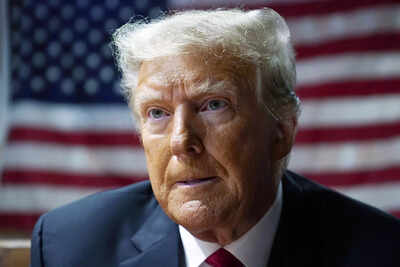
Washington’s new import duties of 10% took effect on Tuesday, after the US Supreme Court dismantled President Donald Trump’s illegal tariff framework, last week. Introduced under Section 122 of the Trade Act of 1974, Trump has threatened to further raise the tariffs to 15%. The administration has labled the move as a measure to tackle what it describes as a significant US balance of payments deficit.Economists, however, have begged to differ.Former IMF first deputy managing director Gita Gopinath told Reuters, “we can all agree that the U.S. is not facing a balance of payments crisis, which is when countries experience an exorbitant increase in international borrowing costs and lose access to financial markets.” She dismissed White House claim that the negative primary income balance, first seen since 1960, constituted evidence of a major payments problem, attributing it instead to increased foreign investment in US equities and other risky assets over the past decade.
Mark Sobel, a former US treasury and IMF official, also said that the balance-of-payments crises generally occur in countries with fixed exchange rates. He noted the floating-rate dollar has remained stable, 10-year Treasury yields are steady, and stock markets have performed well. Josh Lipsky, chair of international economics at the Atlantic Council, added that a trade deficit differs fundamentally from a balance-of-payments crisis: “A balance of payments crisis occurs when a country cannot pay for what it is importing or is unable to service foreign debt.”Meanwhile, some experts also see merit in the administration’s argument. Brad Setser, a currency and trade expert at the Council on Foreign Relations, wrote on X that the current account deficit is larger than when President Nixon implemented tariffs in 1971 and the US net international investment position is weaker. “This gives the administration a real argument,” he said.Legal questions surround the use of Section 122. The Justice Department previously stated the statute was not appropriate for addressing trade deficits, observing in court filings that it has “no obvious application here, where the concerns the president identified in declaring an emergency arise from trade deficits, which are conceptually distinct from balance-of-payments deficits.”Neal Katyal, who represented plaintiffs challenging the previous IEEPA tariffs at the Supreme Court, told CNBC, “I’m not sure it will necessarily even need to get to the Supreme Court, but if the president adheres to this plan of using a statute that his own Justice Department has said he can’t use, yeah, I think that’s a pretty easy thing to litigate.”It remains unclear who might lead any legal challenge to the new tariffs. Sara Albrecht, chair of the Liberty Justice Center, which represented small businesses against the IEEPA duties, said her group will monitor developments closely. “Our immediate focus is simple, making sure the refund process begins and that checks start flowing to the American businesses that paid those unconstitutional duties,” she said as cited by Reuters.Trump’s latest 10% tariff took effect just after midnight on Tuesday, according to customs authorities. The US President’s executive order so far only formalises the initial rate. Section 122 allows the president to impose tariffs of up to 15% for 150 days on imports from any country to tackle “large and serious” balance-of-payments issues.






 English
  हिन्दी