 Sipu Jha

For many people, obesity begins quietly. The weighing scale shows a few extra kilograms. Clothes feel tighter. Climbing stairs becomes slightly harder than before. At first, it may seem like a cosmetic issue. But doctors say the real story lies deeper inside the body.Fat does not simply sit under the skin. It behaves like an active tissue that influences hormones, blood vessels, organs, and metabolism. Over time, excess fat begins to place pressure on nearly every system in the body. The heart works harder. Joints carry extra strain. Blood sugar becomes unstable. Sleep gets disturbed.That is why obesity today is not viewed merely as a weight problem. It is a full-body health condition that requires attention, care, and long-term lifestyle changes.As Dr Kiran KJ, Senior Consultant, Minimal Access GI & Bariatric Surgery, Apollo Hospitals Bannerghatta Road, explains, “For many people, obesity begins quietly — as a number that slowly creeps up on the weighing scale. At first, it may not feel alarming. But over time, that number begins to show up in daily life: breathlessness after a short flight of stairs, knee pain that makes simple walks uncomfortable, restless nights, rising blood sugar levels, and medical reports that become harder to ignore. Obesity is not about appearance. It is about what excess weight steadily and silently does to the body.”Understanding this connection is the first step toward protecting long-term health.

Medical experts emphasize that obesity should be treated as a chronic health condition rather than a cosmetic concern.
Obesity is excess body fat, not just extra kilos
Doctors define obesity by looking at body fat in relation to height. One simple measure used globally is Body Mass Index (BMI).BMI 18-24: Healthy rangeBMI 25-30: OverweightBMI Above 30: ObesityBMI Above 40: Morbid obesityAt higher levels, the risks to health rise sharply.The National Family Health Survey (NFHS-5) found that obesity among Indian adults has increased significantly in the past decade.What makes obesity dangerous is not the weight alone. It is the biological effect of excess fat stored around organs such as the liver, heart, and pancreas. This fat interferes with normal metabolic processes.
The heart often suffers first
The heart is one of the organs most affected by obesity.Excess body fat raises blood pressure and disrupts cholesterol levels. Over time, fatty deposits can build inside blood vessels. This makes the heart pump harder to circulate blood.The NIH explains that obesity significantly increases the risk of heart disease, stroke, and high blood pressure.Many people notice early warning signs such as:
- Breathlessness during mild activity
- Fatigue while walking short distances
- Palpitations or chest discomfort
These symptoms are often dismissed as “low stamina.” In reality, they may reflect the heart working under pressure.

Joints quietly carry the body’s burden
Every step the body takes places force on the knees, hips, and ankles. Now imagine carrying 10 or 20 extra kilograms daily. Over time, the joints begin to wear out.Orthopaedic specialists often see early osteoarthritis in people with obesity. The cartilage that protects joints starts to break down due to constant pressure.This is why knee pain is often one of the earliest complaints among people with long-term weight gain.
Metabolism begins to change silently
Obesity also disrupts how the body processes sugar and energy.Fat cells release substances that affect insulin, the hormone responsible for controlling blood glucose. When insulin stops working efficiently, the body develops insulin resistance.This condition often leads to Type 2 diabetes.According to the National Institute of Diabetes and Digestive and Kidney Diseases (NIDDK), obesity is one of the strongest risk factors for developing Type 2 diabetes.Once diabetes develops, it may affect multiple organs including:
- Eyes
- Kidneys
- Nerves
- Blood vessels
The danger is that these changes often happen slowly, without noticeable symptoms at first.
Sleep problems that many people overlook
One of the lesser-known consequences of obesity is sleep apnea. In this condition, fat deposits around the neck narrow the airway. During sleep, breathing repeatedly stops and restarts.The result is poor-quality sleep.People with sleep apnea often experience:
- Loud snoring
- Frequent night awakenings
- Morning headaches
- Daytime exhaustion
Poor sleep also worsens weight gain because it disrupts hunger hormones.
When obesity triggers a chain reaction: metabolic syndrome
Doctors often see several health problems appearing together in people with obesity.This cluster is known as metabolic syndrome.It includes:
- High blood pressure
- High blood sugar
- Abnormal cholesterol
- Increased abdominal fat
In simple terms, excess fat creates a ripple effect across the body.One health issue slowly triggers another.
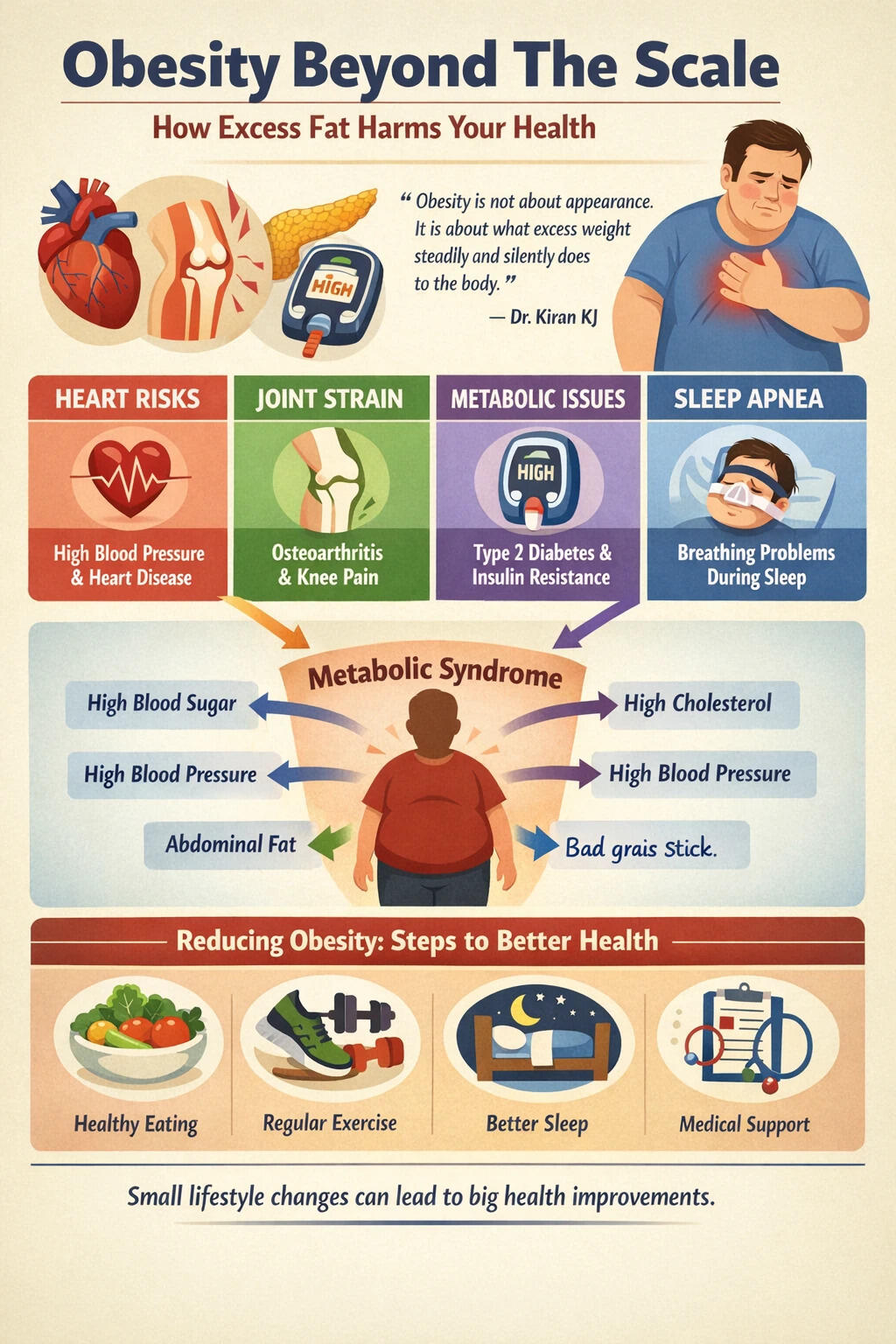
With balanced nutrition, regular physical activity, better sleep, and medical guidance when required, many people can significantly improve their health and reduce long-term risks.
Reversing obesity: lifestyle change is powerful medicine
The encouraging part is that obesity can often be improved with the right steps.Even 5-10 percent weight loss can lead to measurable health benefits, including better blood pressure and improved blood sugar levels.For many people, doctors recommend:Balanced eating habitsNot extreme diets, but consistent choices. More whole foods, vegetables, and fibre. Less ultra-processed food and sugary drinks.Regular physical movementWalking, cycling, or swimming for at least 150 minutes per week can gradually improve metabolism.Better sleep and stress managementSleep affects hormones that regulate hunger. Poor sleep often fuels weight gain.Medical guidance when neededIn early obesity, doctors may recommend medications to assist weight loss. In severe cases with conditions such as diabetes, hypertension, or sleep apnea, bariatric surgery may be considered as a medical treatment.Unlike cosmetic procedures, bariatric surgery is a metabolic intervention designed to improve health.Medical experts consulted This article includes expert inputs shared with TOI Health by: Dr Kiran KJ, Senior Consultant, Minimal Access GI & Bariatric Surgery, Apollo Hospitals Bannerghatta Road.Inputs were used to explain how excess body fat silently impacts heart, joint, and metabolic health, and why addressing obesity through lifestyle changes and medical guidance is essential for long-term well-being.







 English
  हिन्दी