 Sipu Jha

Missiles flying across the Middle Eastern skies and the roar of fighter jets over the Gulf are raising a pressing question in Washington: is Donald Trump’s war against Iran costing the United States billions in the name of victory?As Washington deepens its military campaign against Iran alongside Israel, policymakers and analysts are increasingly asking how much the war is costing American taxpayers and whether the financial burden could become a political problem for President Donald Trump.
With Operation Epic Fury now entering its twelfth day, the United States has mobilised a massive military presence across the Middle East.Aircraft carrier strike groups, advanced missile defence systems and hundreds of aircraft have been deployed to support operations against Iran.The scale of the deployment has raised a key question. How much is the war costing the United States each day?The intensity of the campaign has prompted estimates that the Pentagon may already be spending between $1 billion and $2 billion every day. Such numbers are raising alarm in Washington, particularly as the conflict unfolds during a politically sensitive period ahead of the US midterm elections.The administration is reportedly pouring billions of dollars into another Middle East conflict while many Americans continue to struggle with healthcare costs, housing affordability and inflation.The Trump administration, however, insists it has the resources to sustain the campaign.

The president has suggested the military operation could continue for several “weeks” if necessary, even as uncertainty over the war’s duration makes it difficult to estimate the final cost. He also claimed that US has a “virtually unlimited supply” of weapons and added, “wars can be fought ‘forever.”
When did the spending begin?
The spending did not begin when the first missiles were launched.Even before the latest strikes began, the US had already poured billions into military operations linked to Iran, deploying forces and strengthening its presence across the Middle East.Transporting troops, ships and aircraft into position ahead of the conflict cost the Pentagon hundreds of millions of dollars.

Elaine McCusker, a senior fellow at the American Enterprise Institute and former Pentagon budget official, told The Wall Street Journal on February 28 that the early deployments alone came at a steep cost.“Even before the strikes began, transporting troops, ships and aircraft to the region likely cost the military an estimated $630 million,” she said. These preliminary costs were only a small part of the broader financial picture.With the war still unfolding and the scale of operations expanding, the real question now is not just how much the conflict has already cost Washington, but how high the final bill could climb if the war drags on.
Estimates suggest $1bn–$2bn a day
Although the Pentagon has not released an official estimate of the war’s cost, multiple reports suggest the daily expenses are extraordinarily high.Late last week, two congressional sources told MSNBC that the war was costing the United States around $1 billion per day.A day later, Politico reported that some Republican lawmakers privately feared the Pentagon might be spending as much as $2 billion per day on the conflict.Meanwhile, analysis from the Washington-based think tank Center for Strategic and International Studies (CSIS) estimated that operations in Iran are costing taxpayers about $891.4 million per day.Taken together, analysts say the likely range of daily costs currently lies between $1 billion and $2 billion.Some of these expenses are already covered in existing defence budgets, but a significant portion of the early war costs has not yet been budgeted.
‘America plunging into endless conflict’
The rising costs are increasingly becoming a political flashpoint in Washington. US House Minority Leader Hakeem Jeffries criticised the administration’s spending on the war during a press conference on Capitol Hill.He said Trump is “plunging America into another endless conflict in the Middle East” and “spending billions of dollars to bomb Iran.”Jeffries also argued that the government was failing to address the economic pressures facing ordinary Americans. “But they can’t find a dime to make it more affordable for the American people to go see a doctor when they need one,” he said.“Can’t find a dime to make it easier for Americans who are working hard to purchase their first home. And they can’t find a dime to lower the grocery bills of the American people,” he added.With the financial burden of the war becoming a contentious issue, lawmakers are now seeking a clearer estimate of its true cost.Representative Brendan Boyle of Pennsylvania, the top Democrat on the House Budget Committee, has formally requested the Congressional Budget Office (CBO) to analyse the expenses associated with the war.

Early estimates from the Pentagon
Although an official estimate has not yet been released, some figures have begun to emerge from Pentagon briefings to Congress.According to a report by The New York Times, Pentagon officials told lawmakers that the first week of the war cost around $6 billion. Other reports suggest the daily costs vary depending on the intensity of military operations.While the early phases of military campaigns are often the most expensive, as per report the daily costs could decline once the pace of operations slows and cheaper weapons systems are used.
Why the war is so expensive
According to open-source intelligence analysts and military flight-tracking data, the high cost of the war stems from several factors including the scale of US deployments in the region. Since early February, Washington has significantly increased its military presence in the Middle East as tensions with Iran escalated.The data indicate that the US has deployed more than 120 aircraft to the region the largest surge of American airpower in the Middle East since the 2003 Iraq War.These deployments include advanced aircraft such as F-35 stealth fighters, F-22 air superiority jets, F-15s and F-16s, as well as airborne surveillance systems like E-3 Sentry AWACS aircraft.Transport aircraft and aerial refuelling tankers have also been mobilised to sustain the operations. A former British military official told Al Jazeera that having additional assets deployed across the region beyond permanent US bases has significantly increased the cost of the campaign.
Where is the money going?
The CSIS analysis published by Mark Cancian and Chris Park last week, estimated that the United States spent $3.7 billion in the first 100 hours of the war alone. It estimated that the US had used more than 2,000 munitions of various types during the opening phase of the campaign. However, CENTCOM has provided few specifics on munitions used.Replacing those munitions alone could cost around $3.1 billion, with costs rising by roughly $758 million per day if the current pace of operations continues.Researchers Cancian and Park noted that only a small portion of the war’s early costs were already included in the Pentagon’s budget. According to their analysis, most of the expenses roughly $3.5 billion, had not been budgeted in advance.
What the weapons cost
The rising cost of the conflict is also being driven by the expensive weapons systems used in modern warfare.Modern missiles, drones and air defence systems cost millions of dollars each, quickly pushing up the overall cost of military operations.
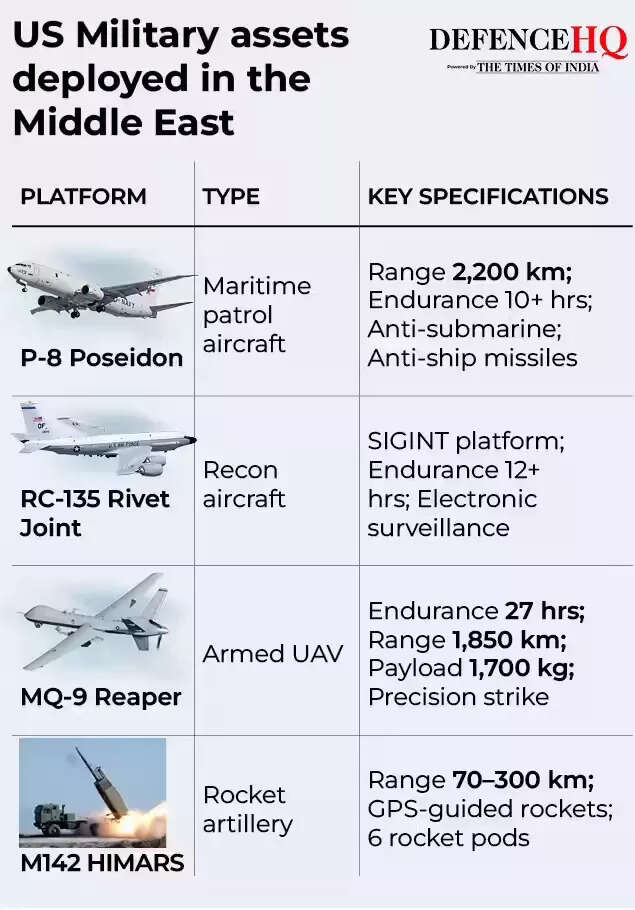
Tomahawk cruise missile ($2 million–$3.6 million): These missiles have reportedly been used in several strikes. The Center for Strategic and International Studies estimate the cost at between $2 million and $3.6 million per missile, Fox News reported.One-way “kamikaze” drones ($35,000 each): These drones are designed to strike targets and destroy themselves. Analysts estimate that at least 100 drones may have been used in early operations.THAAD interceptor missile ($12.8 million): These anti-ballistic missiles are used to intercept incoming threats. Each interceptor costs about $12.8 million, according to Pentagon documents.MQ-9 Reaper drone ($30 million): These surveillance and strike drones cost roughly $30 million per aircraft.Joint Direct Attack Munition (JDAM) ($80,000): These guidance kits convert conventional bombs into precision-guided weapons at a significantly lower cost.

Air operations: A massive and expensive air campaign
Air power has been at the heart of the US military campaign against Iran, with a vast fleet of fighter jets and support aircraft carrying out strikes and maintaining air superiority across the region.According to updates from Brad Cooper, commander of United States Central Command, more than 200 fighter aircraft have been actively involved in operations over the Middle East. The deployment reflects the scale and intensity of the air campaign, which combines stealth fighters, conventional jets and carrier-based aircraft.CSIS report estimates that the force includes around 50 stealth aircraft, such as the advanced Lockheed Martin F-35 Lightning II and Lockheed Martin F-22 Raptor, designed to penetrate heavily defended airspace. Alongside them are roughly 110 non-stealth aircraft, including McDonnell Douglas F-15, General Dynamics F-16 Fighting Falcon, and Fairchild Republic A-10 Thunderbolt II jets, which are used for precision strikes and close air support missions.Carrier groups stationed in nearby waters are also contributing to the operation. Around 80 carrier-based fighters, including Boeing F/A-18E/F Super Hornet and naval variants of the Lockheed Martin F-35 Lightning II, are flying missions from US aircraft carriers deployed in the region.Maintaining such a massive air campaign comes at a high financial cost. According to CSIS analysts estimate that air operations during the first 100 hours of the conflict cost roughly $125.2 million. As the campaign continues, each additional day of operations adds about $30 million to the overall bill.A portion of these expenses, roughly $2.7 million per day, has not been included in the Pentagon’s existing budget allocations.
Naval operations: Warships power the offensive
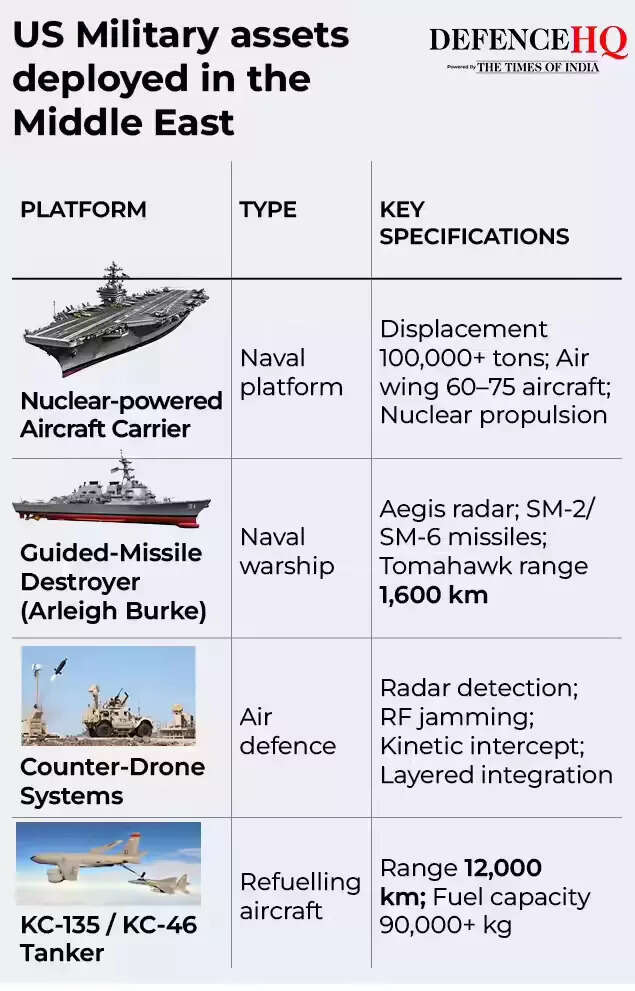
The US Navy has also dramatically increased its presence in the region, deploying one of its largest fleets in the Middle East in recent years.The naval force currently includes two aircraft carriers, fourteen destroyers, and three littoral combat ships, operating across key waterways including the Arabian Sea, Persian Gulf, and the Mediterranean Sea.Some naval platforms are also being used to test emerging technologies in combat. Among them are Low-Cost Uncrewed Combat Attack System (LUCAS) drones, which have reportedly made their combat debut during the operation.Operating such a large fleet is costly. Analysts estimate that naval operations during the first 100 hours of the campaign cost about $64.5 million, the report noted.If the deployment continues at its current size, each additional day of naval activity will add roughly $15.4 million to the cost of the war.
Ground operations
While air and naval forces are carrying out the bulk of the combat operations, US ground troops are playing an important supporting role across the region.Data from the Defense Manpower Data Center indicates that around 582 US soldiers are permanently stationed across various Middle Eastern bases. These troops are supported by additional personnel serving on rotational deployments.Several specialised artillery and air defense units have also been positioned in the region to protect US bases and allied facilities.Among the systems deployed are M142 HIMARS rocket artillery launchers capable of striking targets at long range. Air defense systems such as Terminal High Altitude Area Defense batteries and MIM-104 Patriot missile systems are also active, designed to intercept incoming ballistic missiles and other aerial threats.Although ground operations account for a smaller share of the overall campaign compared with air and naval forces, maintaining these units still carries significant costs, adding to the rapidly growing financial burden of the conflict.

What it could cost in total
Even if daily costs decline in the coming weeks, the overall price of the war is expected to be substantial. Kent Smetters, director of the Penn Wharton Budget Model, estimated that the conflict could ultimately cost US taxpayers around $65 billion.“If the war lasts more than two months, then this number goes up,” he said.According to AL JAZEERA analysts say the Pentagon will likely need to seek additional funding from the United States Congress to cover the unbudgeted costs of the war.Reports suggest the Pentagon has already prepared a $50 billion supplemental budget request to replenish missile inventories and replace equipment damaged or worn out during the conflict.According to a March 6 report by Politico, when reporters asked US House Speaker Mike Johnson whether Congress would approve this request, he said he was not certain about the exact amount the Trump administration would seek but added that Congress would pass the bill “when it’s appropriate and get it right.”
What are the stakes for Trump?
For Trump, the financial cost of the war could carry major political consequences. The administration’s decision to expand military operations in Iran is already drawing criticism from Democrats and some Republicans.If the conflict drags on and costs continue to rise, the debate over funding the war could become a major issue ahead of the next US elections.As analysts note, wars in the Middle East have historically proven far more expensive and often longer lasting than initially expected.And with Operation Epic Fury still unfolding, the final price tag for the United States remains uncertain.






 English
  हिन्दी