 Sipu Jha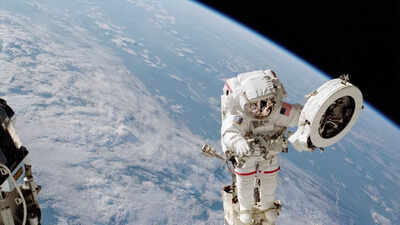
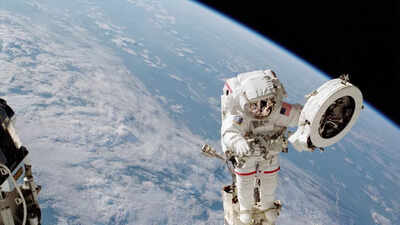
When, during the International Space Station (ISS) mission, astronauts Sunita Williams and Butch Wilmore stretched from eight days to over nine months, a critical question emerged at that time: why did NASA lack a dedicated emergency rescue plan? According to reports, the Daily Mail quoted that the agency faced a backfire when Boeing’s Starliner suffered thruster malfunctions. Unlike the Cold War era, NASA no longer maintains a standalone ‘rescue rockets’ on alternative due to high costs and a reliance on commercial partners. This left the agency in a standstill between Boeing’s safety assurances and the need for a SpaceX intervention. The crisis exposed a significant gap in NASA’s contingency planning, proving that while the International Space Station is a haven, the road home remains dangerously dependent on a limited fleet of private capsules.
Why NASA doesn’t keep rescue rockets on standby for astronauts stuck in space
Due to the prohibitive costs of maintaining a launch vehicle that is not being actively used, NASA does not have any dedicated ‘rescue rockets’ as an alternative. NASA uses its contingency plan to accomplish this by integrating ill-fated crews into any upcoming scheduled mission from commercial partners, such as Elon Musk’s SpaceX.NASA’s contingency plan was put to the test when Boeing’s Starliner problems caused the Agency to conclude that the Starliner was unsafe for returning astronauts home due to suspected thruster and engine failures. As the Starliner was not able to safely return the astronauts, Sunita Williams and Butch Wilmore decided to wait for almost 9 months until the next Crew Dragon spacecraft from SpaceX was available with 2 empty seats to return them to Earth. Although there was an extended stay, the astronauts were never in danger of life support, as the ISS had sufficient life support and supplies available to sustain them until their modified transportation could arrive.
How do astronauts survive on the ISS when their return fails
When rockets like Boeing’s Starliner have technical problems, the ISS still serves as an excellent, long-term base of operations. NASA’s International Space Station is a consistent and entirely stocked supply to provide the international community with approximately six months’ worth of supplies such as food, water, oxygen, etc. According to NASA’s FAQs, several times each month, Northrop Grumman and the Russian Space Agencies deliver many hundreds or thousands of pounds of new supplies to the ISS via regular cargo flights. With the assistance of advanced life-support systems that allow astronauts like Sunita Williams to recycle approximately ninety-eight (98) per cent of their drinking water, they are also able to maintain healthy bodies on lengthy missions. The ISS has specially designed equipment for astronauts to perform resistance exercises, which help prevent injuries to bones and muscles due to the effects of low gravity and therefore keep them in shape for their eventual return.








 English
  हिन्दी