 Sipu Jha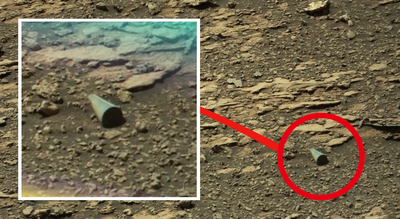
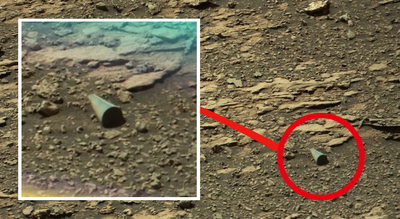
The roughly 20-centimetre object was first photographed by NASA‘s Curiosity Rover in 2022 but has never been officially identified. Avi Loeb says it should be the rover’s top priority. A Harvard University astrophysicist is calling on NASA to redirect its Curiosity Rover to investigate a small, shiny cylindrical object photographed on the surface of Mars in 2022 that has never been officially identified. Avi Loeb flagged the object in a post on Medium on 8 March, arguing that determining its origin should take precedence over the rover’s current tasks. The object was originally spotted by amateur Mars researcher Rami Bar Ilan while reviewing NASA’s archive of Curiosity images, and was subsequently brought to Loeb’s attention by Dr Jan Spacek of the Florida-based Foundation for Applied Molecular Evolution.
What was found, and where
The object was photographed by the Curiosity Rover in Gale Crater, near the Red Planet’s equator. It is described as having a perfectly round cylindrical shape, measuring roughly 20 centimetres in length, with a flat end. Its shiny surface caused it to stand out noticeably against the craggy Martian terrain, and its shape has been likened by some to a party hat lying on the ground. NASA has not officially identified or commented on the object. Loeb, reviewing the photographs, wrote in his Medium post: “Should we just assume that the mysterious cylinder is human-made debris and move on or turn back the rover to figure out whether its origin is different?”
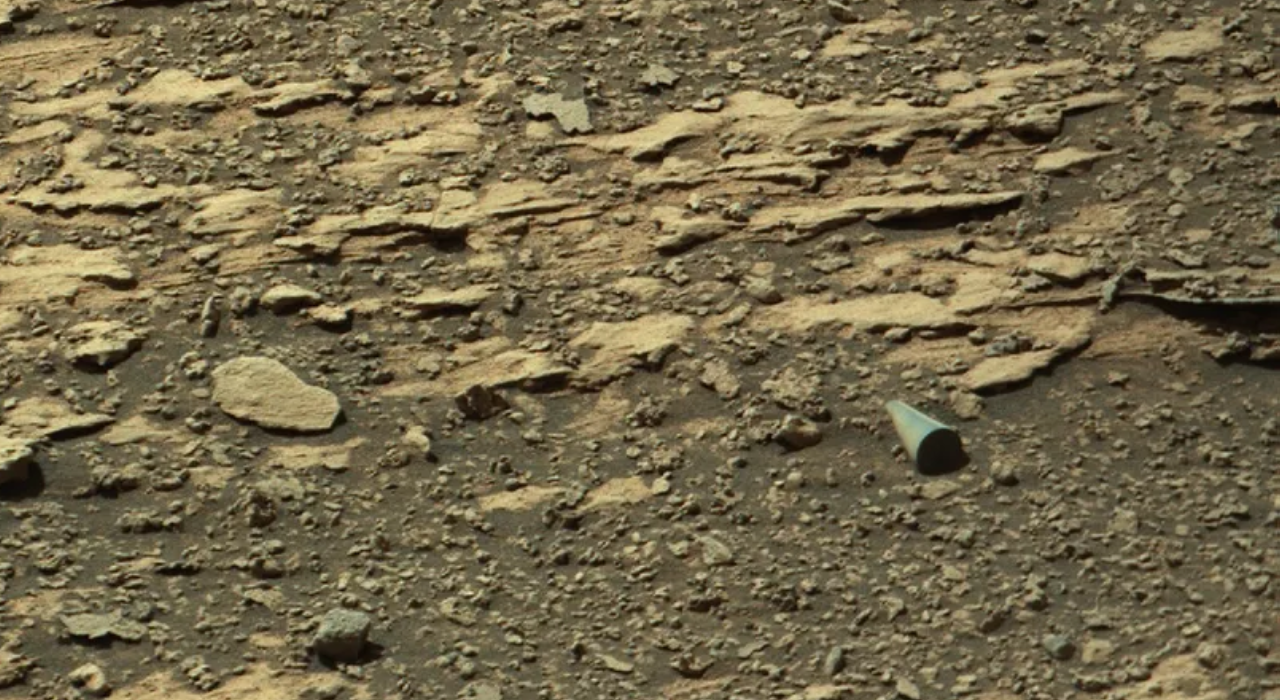
A raw image from the Mast camera (Mastcam) onboard NASA’s Mars rover Curiosity, taken on 2022–08–07 at 20:58:23 UTC. (Image credit: Mars analyst notebook,NASA) via Medium
Despite framing it as an open question, Loeb was clear about where he believed the evidence pointed. “The most likely explanation is that it corresponds to human-made debris,” he wrote. The most plausible candidates, based on how similar anomalies have been explained in the past, are components from Curiosity’s own landing system, parts of the Sky Crane mechanism or heat shield used during the rover’s 2012 descent onto Mars, which may have been scattered by winds or dislodged during landing. It is also possible the object is a piece of wiring or wheel material shed by the rover itself during its years of operation on the planet’s surface.
Why Loeb wants NASA to act
The Curiosity Rover is currently exploring the lower slopes of Mount Sharp within Gale Crater, approximately eight kilometres from the location where the cylinder was photographed. At the rover’s maximum operational speed of 0.16 kilometres per hour, returning to the site would take a matter of days. Loeb told the New York Post that the journey was worth making. “In my opinion, NASA should prioritise going back to examine the cylinder relative to the more mundane tasks the Curiosity rover is pursuing,” he said. “NASA is funded by the taxpayers and if we poll taxpayers they would likely agree with me that understanding the origin of the mysterious cylinder should be the top priority of Curiosity.” The Curiosity Rover is approximately the size of a small SUV, roughly three metres long, 2.8 metres wide, and 2.2 metres tall, weighing close to 899 kilograms. It is equipped with a 2.1-metre robotic arm and wheels with a diameter of 50.8 centimetres, and has been operating on Mars since its landing in August 2012.
Not the only unusual find
The cylinder is not the only notable object Curiosity has encountered in recent years. The rover accidentally cracked open a rock in the Gediz Vallis Channel and found pure yellow sulphur crystals inside, the first time sulphur has been found in its pure elemental form on Mars, according to Science Alert. The rover rolled over the rock, causing it to break open and reveal the crystals. Photographs from the area suggest there are many more such rocks nearby, indicating a potentially significant sulphur deposit in the region. NASA has not responded publicly to Loeb’s call to redirect the rover to examine the cylinder.








 English
  हिन्दी