 Sipu Jha
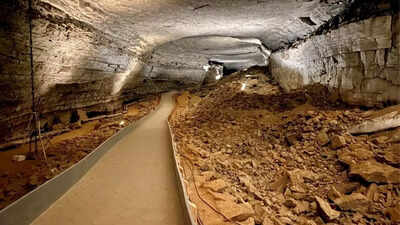
The Mammoth Cave, located deep under the hills of Kentucky, is the longest cave system in the world with an officially surveyed length of 426 miles (686 kilometres) according to the U.S. National Park Service. Each year, through ongoing mapping expeditions, new miles are added to this ‘endless’ cave system, which is a part of a UNESCO World Heritage Site and a time capsule for our planet, containing many rare species without eyes and carved into 330-million-year-old Mississippian limestone, with the cave passages themselves evolving over the last 10 to 12 million years. The 426-mile distance is only the beginning; experts estimate that there are another 600 miles of undiscovered cave systems within the dark limestone of Mammoth Cave.
How Mammoth Cave became the longest cave on Earth
The Mammoth Cave system is recognised as having the longest cave on Earth (426 miles or 686 km) worth of documented routes. This accomplishment has come about over the last 70 years of continuous exploration conducted by the Cave Research Foundation (CRF) in partnership with the National Park Service.A significant milestone occurred in 1972 when explorers discovered a link from the Flint Ridge system to Mammoth Cave, which formed an instantly connected length of 144 miles. Even though the mammoth lifetime has established a record amount of cave length at 426 miles, scientists believe there are approximately 600 additional miles of unexplored caves discovered in the limestone beds yet.
Over 130 species live in darkness in Mammoth Cave
Even though the cave is huge, its wildlife would leave you in shock. Over 130 species make their home here, including 42 troglobite species that have adapted to living in total darkness.The Northern Cavefish (Amblyopsis spelaea) and eyeless, translucent crayfish hunt very well with the use of their exceptional ability to feel vibrations rather than see. According to USGS, the keystone species providing food for the blind animals living deeper in the cave are cave crickets, which leave their home at night to feed and return to fertilise the cave floor with guano (poop).
Why hasn’t Mammoth Cave collapsed yet
According to NPS, Mammoth Cave has been shaped by a thick sequence called the Mississippian limestone, which dissolves quickly with acidic water. Most caves collapse as they grow, but Mammoth Cave is protected by a roof of Big Clifty Sandstone. This hard caprock acts like an umbrella, protecting the limestone passages below from surface erosion for over 3 million years.






 English
  हिन्दी