 Sipu Jha
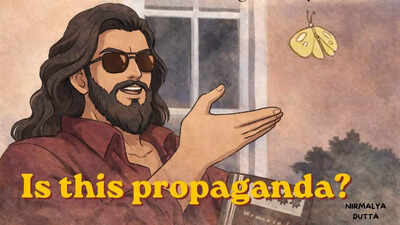
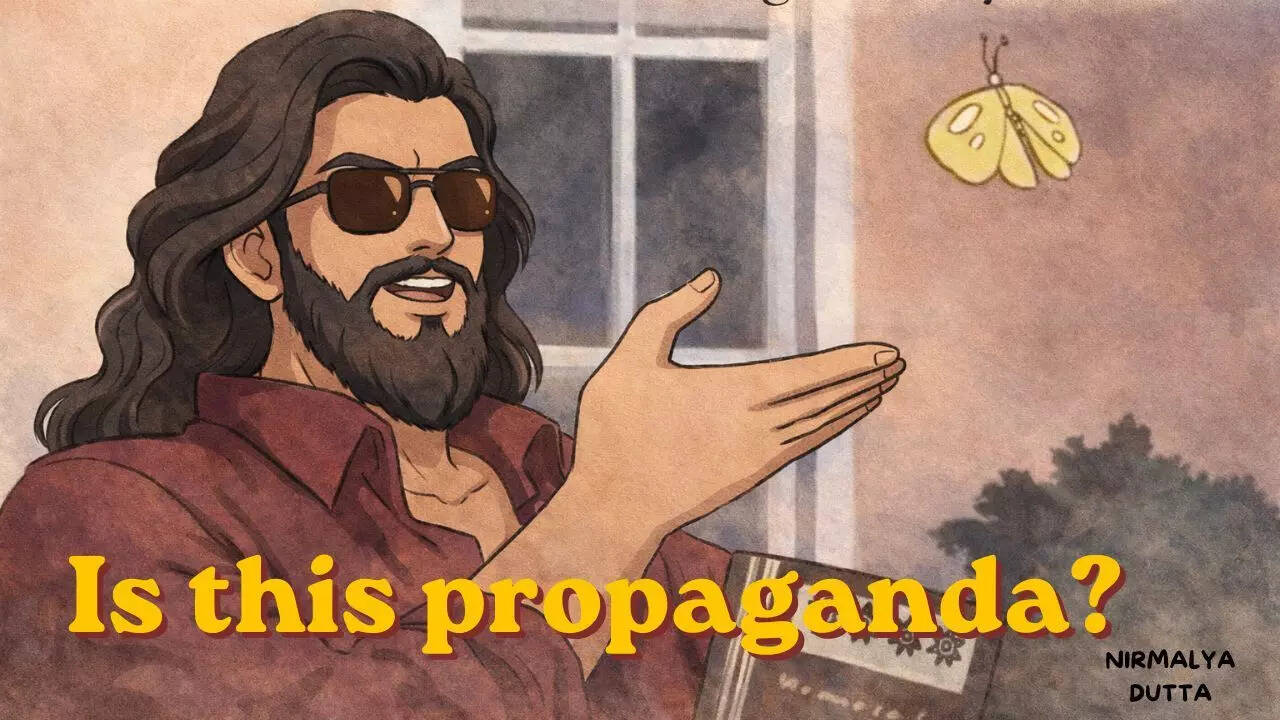
There’s a Cold War joke when two rival agents – a KGB one and a CIA one – find themselves in the same bar. The American tells his Russian counterpart: “I have to hand it to you – your propaganda is very impressive.” The Soviet smiles and replies: “It’s nothing compared to American propaganda.” Flummoxed, the American replies: “But we don’t have propaganda.” The Soviet winks and says: “Exactly.”There’s a line: “The greatest trick the Devil ever pulled was convincing the world he doesn’t exist.”The same goes for American propaganda, which is why most people know the aforementioned line from The Usual Suspects and not French poet Charles Baudelaire’s The Generous Gambler. Like the devil, the greatest trick American propaganda managed was to convince even the doyens who consume it or produce it that it doesn’t exist. It wraps up this illusion in the fig leaves of morality, economics, neo-liberalism, and the devil’s favourite sleight of hand: free will.The Nazis had Riefenstahl. Americans have Michael Bay movies.Communists have agitprop; Americans have “free press.”The interesting thing about the term agitprop is that it is the amalgamation of agitation and propaganda and is named after an actual Soviet department from the 1920s.One recently came across the term “agitprop” used to describe the sequel to Dhurandhar, Aditya Dhar’s magnum opus. It was one of the many words used to describe the Dhurandhar duology, along with ‘majoritarian’, ‘Islamophobic’, all the synonyms for intolerant, and some more polysyllabic jawbreakers that would make even India’s most loquacious politician call it an “exasperating farrago of distortions, misrepresentations and outright nonsense masquerading as movie reviews.”The most common epithet shoved on Dhar’s shelf is ‘propaganda’, a term which can be construed and tortured to describe almost every single movie, if one tortures logic enough.Read: How Hollywood mastered the art of propaganda Rang De Basanti can be viewed as anarcho-pacifist propaganda wrapped in the fig leaf of patriotism.Chak De India can be construed as ‘transphobic’ anti-cooperative federalism where the antagonist’s religion is flipped to create a victim complex. Three Idiots is clearly anti-engineering school propaganda.And Bhaag Milkha Bhaag is fat-shaming people for not being able to run.Jokes apart, whether you consider the Dhurandhar duology propaganda or not depends completely upon your availability heuristic, worldview, and what you think constitutes propaganda, and is frankly beyond the scope of this piece.What the duology does brilliantly is show that Bollywood – which we discovered post the internet boom is mostly borrowed, inspired, or plagiarised from cinema across the world – appears capable of civilisational myth-making.Every nation needs a foundational myth to agree on, a story that brings its denizens together. Post its independence from the British, the US had ‘Manifest Destiny’, the expansionist belief that it was their task to spread the American way of life across the North American continent. The belief was backed by great American novels like The Last of the Mohicans and gun-slinging cowboy movies about the American frontier, which cleverly hid the genocide of indigenous people.
For India – post and pre-independence – from Buddha to Gandhi, the foundational myth has been one of ahimsa, or non-violence, which was treated as the basic operating system of our nation, even the accepted truth. Of course that particular myth ignores both the two of the foundational text of Indic civilisation: the Mahabharata and the Ramayana.One of those pernicious lies that is downstream from that myth is that India has ‘never’ invaded any nation, something that actor Priyanka Chopra repeated on the Joe Rogan podcast while showing wilful ignorance about the seafaring incursions of the Cholas and other dynasties. One doesn’t blame her; Hollywood and Bollywood actors aren’t supposed to be experts in history, but the view just shows a popular consensus that has existed among people.When India finally won independence from the war-ravaged and tottering British Empire, the myth clung to our national DNA and even shaped our initial foreign policy.As geopolitical expert Brahma Chellaney argued in a TOI piece from 2019: “Had post-1947 India been proactive and forward-looking in securing its frontiers, it could have averted both the Kashmir and Himalayan border problems. China was in deep turmoil until October 1949, and India had ample time and space to assert control over the Himalayan borders. But India’s pernicious founding myth gave rise to a pacifist country that believed it could get peace merely by seeking peace, instead of building the capability to defend peace.”Of course, hindsight is 20/20, and it is very easy to look back at the man in the arena and make judgement calls from the comfort of our keyboards. But we have learnt the hard way that peace comes from having a bigger stick than the other side, or at least a nuclear weapon, which Indian governments of all ideological hues have worked together to pursue.The ahimsa foundational myth persisted in mainstream cinema and was in vogue till the last decade. Some commonly held beliefs were simply that Indians and Pakistanis are the same, who want to bond over biryani and Fawad Khan’s chiselled jaw. In the early part of the noughties, the notion was so firm that Farah Khan’s debut movie showcased an antagonist who considered Pakistan the enemy and a protagonist who, much like Neville Chamberlain, just wanted peace.
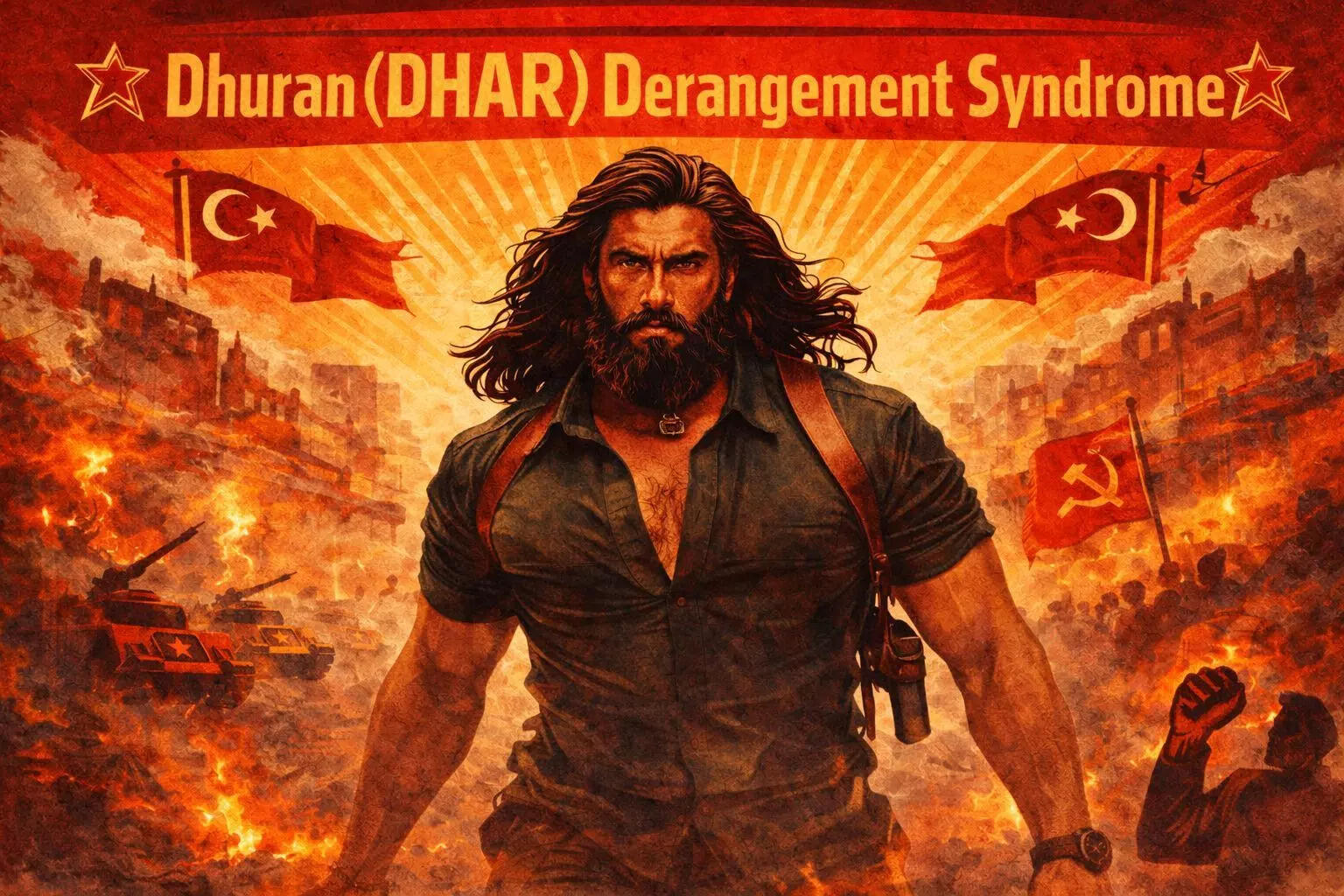
It was a notion that the Indian public also believed in to a certain extent, till the Overton window shifted after terror attack upon terror attack. But Bollywood’s worldview did not change, and it continued to serve up movies from assorted spy universes where Indian and Pakistani agents often broke into dance before thwarting faceless and non-religious threats against both nations.Movies that departed from this worldview, on the other hand, were so poorly executed that they appeared to be exploitation cinema trying to make a quick buck from current political sentiment.That is why the Dhurandhar duology stands on its own, because it is a rare instance of competent myth-making that is completely attuned to the availability heuristic of its audience.Dhar’s duology rejects Bollywood’s mass, formulaic approaches to war movies or spy thrillers, eschewing escapist item-number fantasies or surreal jamborees, with a level of peak detailing that would gladden Frederick Forsyth’s heart. The movie uses enough real-life examples to serve a delicious Quentin Tarantino-style revenge fantasy, the kind we have seen in Inglourious Basterds, Django Unchained, or Kill Bill.The music is sublime, mixing hits old and new, from far-off genres. Golden-era Bollywood classics jostle with qawwalis, as Punjabi pop, Arabic rap, Indian hip-hop, and Western rock come together, coupled with a background score that could have been developed by Hans Zimmer.There are so many scenes – subtle and not-so-subtle – that go out of their way to push the phantasmagoria of revenge, the kind that Hollywood has used to sublime effect over the years. All in all, it is competent myth-making. And your availability heuristic will decide whether it is myth-making for a particular spymaster, regime, religion, nation, or civilisation.This is not the first Indian movie to do that. The Baahubali duology and RRR are both sublime artefacts of civilisational pride wrapped in grand filmmaking, but the difference is that they are either set in fantastical lands or in history. Dhurandhar, on the other hand, is set in contemporary times – in the not-so-distant future – one that is the lived reality for many people watching the movie.Dhurandhar is balm for the civilisational wound, or, as Arjun Rampal, a Mumbai denizen who saw the atrocities during 26/11, put it: “This is my revenge.”Which brings us to the final question: why is there so much hysterical anger against the movie? Recently, when an Indian national pleaded guilty in an American court to a plot to assassinate an American citizen and bona fide Khalistani, social media was full of people mocking Aditya Dhar. The simple answer is that Dhurandhar Derangement Syndrome is the sigh of the former oppressor, facing civilisational erasure. The democratisation of art is a tad too much for a class that could long control the channels of communication, one that could decide what is a genteel worldview and what is not. Dhurandhar is a clean break from that past. Bollywood has some way to go before it can compete with Hollywood when it comes to myth-making, à la Top Gun or American Sniper, but this is definitely a start.In Dhurandhar’s title track, there is a line: “You are not ready for this.” In the sequel, there is a follow-up: “You are still not ready for this.” The old population might not be, but it is clear that the audience, and many denizens of new India, are definitely ready for it.








 English
  हिन्दी