 Sipu Jha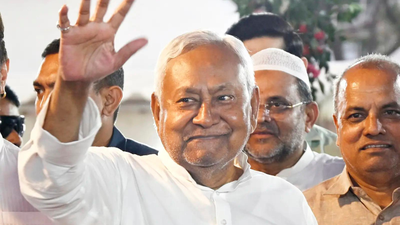
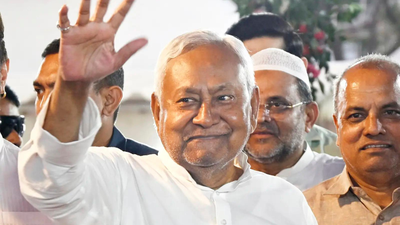
NEW DELHI: Bihar chief minister and JD(U) president Nitish Kumar on Monday resigned from the Bihar legislative council days after securing a place in Rajya Sabha, marking an end of era in the state politics. The move has triggered fresh speculation over an impending change of guard in the state’s top post.Now all eyes will be on who takes over Nitish’s reign as Bihar chief minister as both JD(U) and BJP may push for the upper hand in the alliance equation.The announcement, however, may not come immediately going by the remarks from within the JD(U), where leaders have repeatedly invoked a constitutional provision allowing a chief minister to continue for up to six months without being a member of the legislature. The six-month rule Close aides of the 75-year-old Nitish Kumar, along with senior ministers like Shravan Kumar, have made cryptic references to the constitutional window, keeping political circles abuzz, according to news agency PTI. While no official plan has been announced, the repeated emphasis on the provision has added to speculation that a leadership shift is being calibrated.Sources in the NDA, however, suggest Nitish is unlikely to remain in office for the entire six-month period. There is also talk that he could move to the Rajya Sabha early next month, a step that may smoothen the transition.Timing linked to ‘Kharmaas’Insiders indicate that any change in leadership may only take place after ‘Kharmaas’, the inauspicious period in the Hindu calendar that ends on April 14. The timing, they say, could be a key factor in determining when the baton is passed.BJP eyes top post after long waitThe developments have energised the BJP, which sees a real opportunity to install its own chief minister in Bihar for the first time despite being part of the ruling coalition for nearly two decades. With JD(U) only marginally ahead in numbers, the BJP is believed to be weighing its options carefully.Among the frontrunners is deputy CM Samrat Choudhary, who holds the home portfolio. A Koeri leader and a potential successor to Kurmi face Nitish Kumar, as Samrat could help maintain the crucial Kurmi-Koeri caste equation in Bihar. His elevation may enable the BJP to consolidate support among a significant OBC group and counter perceptions of being an upper-caste-centric party.However, some within the BJP point to his relatively recent entry into the party in 2017, after stints in RJD and JD(U), as a factor that may affect his acceptability within certain sections of the organisation.Another key contender is Union minister of state for home Nityanand Rai, a former state BJP president who is seen as having strong backing from the central leadership.Delhi likely to take final callParty sources speaking to PTI indicate that while the BJP legislative party will formally elect the leader, the decision is likely to be made by the central leadership. They point to precedents such as Rajasthan, where leadership choices were finalised in Delhi before being announced in the state.Amid the speculation, JD(U) leaders maintain that the party will seek a fair share in the new cabinet if a leadership change takes place. There is also buzz that Nitish Kumar’s son, Nishant Kumar, who recently joined active politics, could be considered for a key role, possibly as deputy chief minister.




 English
  हिन्दी