 Sipu Jha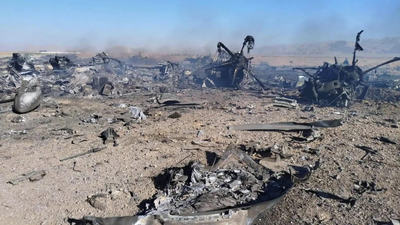
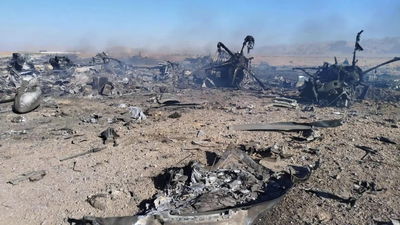
The United States destroyed at least one of its own high-value military aircraft during a dramatic rescue mission deep inside Iran, after mechanical failures left it stranded and at risk of falling into enemy hands, officials and reports indicate.The operation described by US President Donald Trump as “one of the most daring Search and Rescue Operations in US history”—was launched after an F-15E Strike Eagle was shot down over southwestern Iran. While one crew member was recovered quickly, a second airman, a senior weapons systems officer, was left hiding behind enemy lines for more than 24 hours.According to accounts reported by The New York Times, the officer survived by taking cover in a mountain crevice and trekking up to a 7,000-foot ridgeline, evading Iranian search teams. Tehran had reportedly offered a reward for his capture, triggering a high-stakes race between US and Iranian forces to locate him first.American aircraft carried out strikes on approaching Iranian convoys, while special forces—believed to include elite units such as Navy SEAL Team 6—moved in under cover. Intelligence support, including efforts by the CIA to mislead Iranian authorities about the airman’s location, played a key role in the operation.
Why US destroyed its own aircraft
One of the most interesting detail of the mission came after the airman was finally located and extracted. He was brought to waiting MC-130J Commando II planes positioned on improvised desert landing strips inside Iran.However, at least one—and possibly two—of these aircraft became inoperable after landing, reportedly due to mechanical failure or getting stuck in soft desert terrain. With Iranian forces closing in and no viable way to recover or repair the planes, US commanders faced a critical decision.Also read: Trump claims victory as American aircraft wreckage smolders in the desertRather than risk sensitive military technology being captured by Iran, the stranded aircraft were deliberately destroyed on the ground before US forces withdrew. Each such aircraft can cost upwards of $100 million and carries advanced communications, navigation and special operations systems.Military experts say the decision reflects standard protocol in high-risk operations: preventing adversaries from gaining access to classified equipment can outweigh the financial loss of the aircraft itself.
A high-risk mission
The rescue involved hundreds of special operations personnel and multiple aircraft operating for hours over hostile territory. Trump said the mission included an earlier daylight extraction and described the overall effort as an “amazing show of bravery and talent”.“This type of raid is seldom attempted because of the danger to man and equipment,” he said, adding that the rescued officer—whom he called a “highly respected Colonel”—was “seriously wounded” but safe.The broader context underscores the stakes. The shootdown marked the first time since the Iraq war that a US fighter jet had been downed in combat, and its pilot risked becoming a high-value prisoner for Iran.Analysts say the successful rescue not only avoided a potential strategic setback for Washington but also demonstrated the US military’s longstanding doctrine: no service member is left behind—even if it means destroying its own assets to ensure it.





 English
  हिन्दी