 Sipu Jha
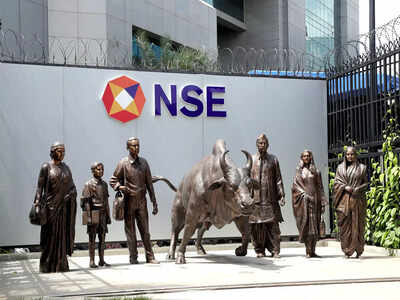
The National Stock Exchange (NSE) reportedly faces approximately 170 million cyberattacks daily, necessitating a dedicated team of “cyber warriors” to ensure seamless operations. “Every day, millions of cyberattacks target the NSE, but our technical teams, supported by advanced systems and specialized software, combat these threats round the clock,” a senior NSE official told PTI. The official noted that the exchange encounters 150 to 170 million cyberattacks daily, posing a significant challenge for its teams and systems.Recently, a group of journalists from Jammu and Kashmir visited the NSE to observe its management facilities, cyber defense centers, and backup systems. The NSE’s twin cyber defense centers operate in constant battle mode, equipped with upgraded software to neutralize and repel large-scale attacks on the financial market infrastructure 24/7, year-round. “The robust cybersecurity architecture, combining tech-savvy personnel, machines, and technology, ensures the safety of NSE’s operations,” the official told PTI.To bolster security, the NSE mandates Vulnerability Assessment and Penetration Testing (VAPT) for all trading members and staff to maintain system integrity.
How NSE fought highest-ever cyberattacks during ‘Operation Sindoor’
During ‘Operation Sindoor,’ a DDoS simulation, the NSE recorded an unprecedented 400 million cyberattacks in a single day, the highest ever. Despite this, attackers failed to cause damage due to the coordinated efforts of personnel, machines, and advanced technology. A DDoS attack floods a server with traffic from multiple sources, aiming to crash or make it unavailable to legitimate users, a critical threat to industries like the stock market that rely on uninterrupted operations. As a precaution during this period, the NSE temporarily restricted access to its website for foreign users.Maharashtra Cyber had identified seven Advanced Persistent Threat (APT) groups responsible for launching over 15 lakh cyber attacks targeting critical infrastructure websites across India following the Pahalgam terror strike in April this year. Of these, only 150 attacks were reportedly successful. This means a failure rate of 99.99% or should one say abysmal success rate of 0.01%. The methods used by hackers included malware campaigns, Distributed Denial-of-Service (DDoS) attacks, and GPS spoofing. The defacement of Indian websites was also reported.
What has made cyber attacks more dangerous
The NSE leadership said that a breach could impact not only the exchange’s systems but also “whatever is connected to us,” highlighting the ripple effect of digital vulnerabilities across interconnected networks. Officials said that growing global interconnectedness and system complexity have heightened the risk of large-scale cyberattacks, posing a significant threat to financial market stability. They further noted that the potential for low-cost, large-scale cyberattacks on financial market infrastructure remains a major global risk.







 English
  हिन्दी