 Sipu Jha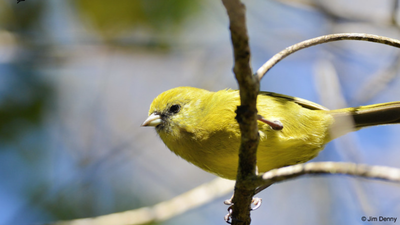
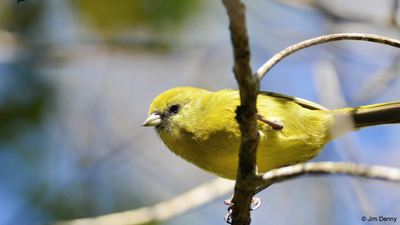
Screen grab (Source: X/@birdd111)
In a counter-intuitive but urgent conservation push, drones and helicopters are releasing thousands of mosquitoes over Hawaii’s forests in an effort to rescue some of the islands’ most threatened birds. The operation is part of a large-scale bid to suppress invasive mosquito populations that are driving native Hawaiian honeycreepers towards extinction.In June, dozens of biodegradable pods, each carrying around 1,000 non-biting, lab-reared male mosquitoes were dropped across remote forest areas. According to CNN, these insects have been treated with a naturally occurring bacterium, Wolbachia, which means eggs do not hatch when they mate with wild females. Conservationists hope that repeated releases will shrink the wild mosquito population responsible for spreading avian malaria.The stakes are high as Hawaii once had more than 50 known honeycreeper species; only 17 survive today and most are endangered. CNN notes that the ‘akikiki, a small grey bird, became functionally extinct in the wild last year, while fewer than 100 ʻakekeʻe remain. The birds are culturally significant, and as pollinators and seed dispersers, play a key ecological role.Mosquitoes arrived in Hawaii in the 1820s, likely via whaling ships, and triggered waves of extinctions among native birds. Dr Chris Farmer, Hawaii programme director for the American Bird Conservancy (ABC), told CNN that avian malaria is the “existential threat”, with warming temperatures allowing mosquitoes to move higher into mountain refuges. “We’re watching the populations of birds there just completely plummet,” he said. As temperatures rise, “the birds [are] getting pushed further and further up until there’s no habitat left that they can survive in”. He warned: “If we don’t break that cycle, we’re going to lose our honeycreepers.”ABC and the Birds, Not Mosquitoes partnership turned to the incompatible insect technique in 2016, spending several years testing Wolbachia strains. Releases began in 2023 using helicopters; Farmer told CNN they now release about 500,000 mosquitoes a week on Maui and a similar number on Kauai, using both helicopters and drones.CNN quoted Adam Knox, who is overseeing aerial deployment for ABC, saying that this marks the “first known instance of specialised mosquito pods being dropped by drones”. While the impact will take a year to assess, Farmer said the aim is to “buy time” for remaining species. “We have the ability to save these species,” he told CNN.






 English
  हिन्दी