 Sipu Jha
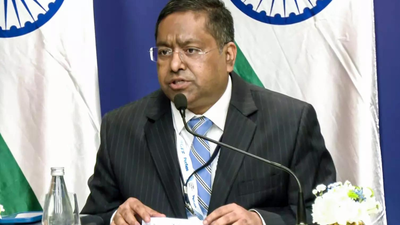
NEW DELHI: The ministry of external affairs on Monday said that India continues to closely monitor developments in Pakistan, adding that “democracy and Pakistan don’t go together” in response to concerns about the weakening of democratic institutions in the neighbouring country.“We keep a close eye on every development in Pakistan. But regarding democracy, you’re saying that democracy in Pakistan is becoming weak and its strengths are being weakened. Democracy and Pakistan don’t go together,” MEA spokesperson Randhir Jaiswal said. Jaiswal added that India is aware of reports of border clashes with Pakistan that killed several Afghan civilians and “strongly condemns attacks on innocent people,” reaffirming India’s support for Afghanistan’s sovereignty, territorial integrity, and independence.In connection to anti-terror discussions, Jaiswal also highlighted the 21st meeting of the India-US Counter-Terrorism Working Group, held on December 3. “Both sides attach high importance to counter-terrorism cooperation. It is an important element of our comprehensive global strategic partnership with the United States,” he said.He noted that the two countries strongly condemned the recent terrorist attacks in Pahalgam and Delhi, and reaffirmed their commitment to strengthening multilateral cooperation against terrorism through platforms such as the UN, the Quad, the Financial Action Task Force, and other forums.“The two sides renewed their commitment to strengthening multilateral cooperation in the fields of terrorism, including at the UN, within the format of Quad, as well as in the format of Financial Action Task Force and several other multilateral forums where we discuss and continue to discuss these aspects,” Jaiswal added. At the meeting, India and the United States pressed for tougher UN actions against Pakistan-based terror groups, seeking additional punitive measures such as asset freezes and arms embargoes on Lashkar-e-Taiba, Jaish-e-Mohammad, their proxy outfits, and their backers.They also called for further designations of ISIS and al-Qaida affiliates under the UN sanctions regime. Although these groups are already listed and subject to existing restrictions, both sides stressed the need to broaden and intensify global pressure on them.During the talks, India thanked the US State Department for designating The Resistance Front (TRF), a Lashkar-e-Taiba proxy, as both a Foreign Terrorist Organisation (FTO) and a Specially Designated Global Terrorist (SDGT). The designation followed the group’s claim of responsibility for the Pahalgam terror attack.“The two sides called for additional designations of ISIS and al-Qa’ida affiliates, and LeT and JeM and their proxy groups, supporters, sponsors, financiers and backers, under the UN 1267 sanctions regime, ensuring their members face a global asset freeze, travel ban and arms embargo,” the statement by MEA read.





 English
  हिन्दी