 Sipu Jha
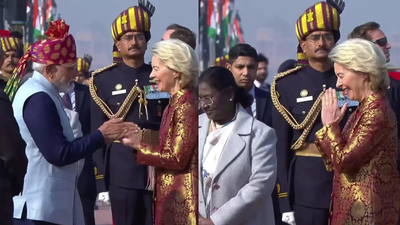
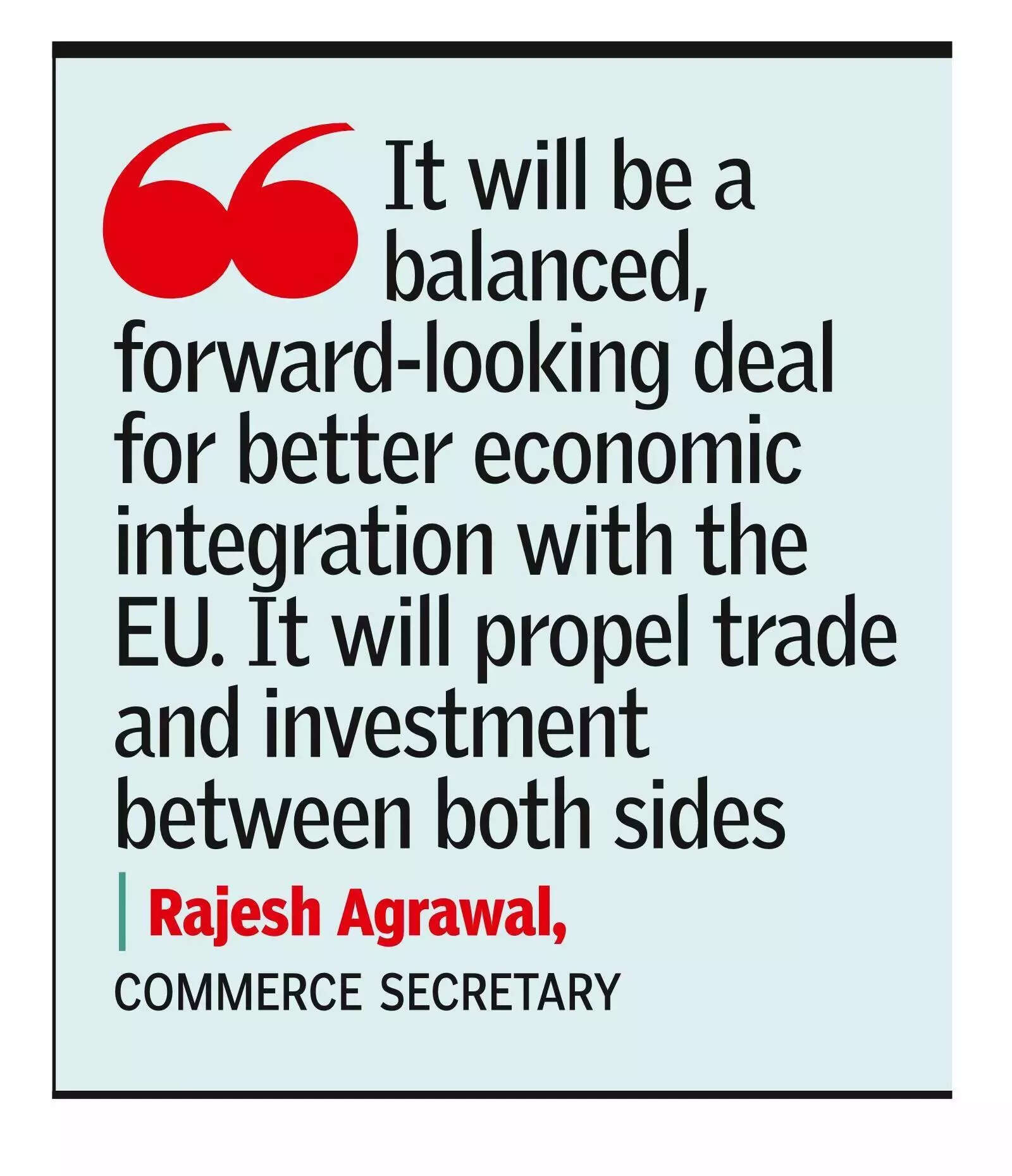
NEW DELHI: India and the European Union have concluded negotiations for a free trade agreement that will cover goods, services and other aspects of engagement with the deal set to be announced by leaders from the two sides on Tuesday, commerce secretary Rajesh Agrawal said. “It will be a balanced, forward-looking deal for better economic integration with the EU. It will propel trade and investment between both sides,” Agrawal said on Monday on the agreement that has been under negotiation for more than 18 years, but got a lease of life in 2024. US President Donald Trump’s reciprocal tariffs are seen to have pushed both sides to engage more aggressively to finalise the agreement, factoring in each other’s concerns in sectors such as agriculture and dairy.
.
The agreement may, however, take a few months to be ratified and is likely to be implemented in early 2027, officials said. Over the next two weeks, the two sides will put together a cleaner text of the agreement, which will be legally vetted over the next 5-6 months before it is signed. The agreement will then have to be ratified by the European Parliament, but officials explained that it will not have to be approved by each member-state of the 27-nation bloc since it does not contain “mixed competence”. India is expected to get zero-duty access to several key product segments such as textiles, leather and marine products, in return for concessions in sectors such as automobiles and wines and spirits. In a TV interview, European commissioner for trade and economic security MaroS Šefcovic said the aim was to see full or partial tariff reduction on 97-99% of goods, while factoring in sensitivity in sectors such as agriculture and dairy. He said the trading bloc was looking for a “combination” of lower tariffs on a specified number of vehicles along with phased reduction. He said India was a smaller market compared to EU, but growing rapidly, and auto was an important sector for both sides. He said it is a sector that is complementary given that India makes small cars, while European automakers focused on larger and technologically more advanced vehicles. “We are looking at the way which would help us find solutions, create new supply chains and make an even better business case for European car makers, while opening new possibilities for cooperation,” Šefcovic said. He underlined the broader strategic intent of the FTA in building resilient supply chains, reducing risky dependencies and creating jobs in India and EU.

 English
  हिन्दी