 Sipu Jha
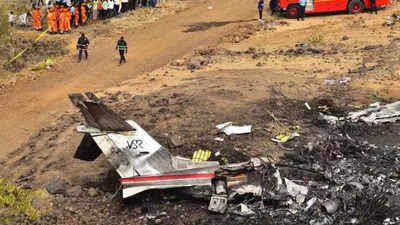
PUNE: The plane crash on Wednesday that killed deputy chief minister Ajit Pawar and four others has raised questions about aviation weather protocols — particularly the pre-flight weather briefing procedures for chartered aircraft and the visibility conditions during landing.The Learjet 45, which departed from Mumbai and crashed near the Baramati airstrip, was operating as a non-scheduled charter flight. According to a senior official from IMD’s civil aviation services division, this category of aircraft does not receive direct weather briefings from the India Meteorological Department.“Baramati airstrip lies outside IMD jurisdiction and does not have any meteorological office on site. We don’t provide services there,” an official said, adding that it was a small, non-commercial facility primarily used for private and temporary landings.This stands in contrast to major Indian airports where IMD units provide comprehensive weather bulletins — covering cloud cover, visibility, and other aviation-critical parameters — for both departure and arrival points. For non-scheduled and charter flights, pilots typically rely on IMD’s Online Briefing System (OLBS), a centralised platform run by IMD offices at international airports in Chennai and New Delhi. Access requires airline registration and approval from the ministry of civil aviation.“National carriers get official OLBS accounts through proper procedures,” the official said. “Charter operators with accounts can log in and obtain all weather data themselves. But we don’t know whether this particular aircraft was registered or accessed the system,” the official added.While scheduled and VVIP flights receive direct IMD briefings, charter operators depend mainly on the self-service online portal.A PIB press release stated that when the aircraft contacted Baramati, airfield staff reported calm winds and visibility of around 3,000 meters (about 3km).A former IMD official with aviation experience suggested this visibility might have been inadequate. “Visibility should be above 5km for safe landing,” the expert said, emphasising that landing decisions ultimately rested with pilots and Air Traffic Control (ATC), and vary depending on aircraft specifications.He said smaller airstrips like Baramati, which lacked on-site IMD offices, relied on ATC’s own equipment for weather updates. “Such airfields generally do not issue METARs, the standardized half-hourly weather observations used widely in aviation,” the official said.According to a DGCA statement on Wednesday, Baramati is an “uncontrolled airfield” where traffic information is provided by instructors or pilots from the local flying training organizations.Baramati is also categorised as a table-top airport, located on elevated terrain. IMD officials said such airports posed additional risks. “Table-top airports are situated on small hills, above sea level. Their runways are often shorter than those at major airports, reducing the margin for landing and taxiing,” another IMD official said.






 English
  हिन्दी