 Sipu Jha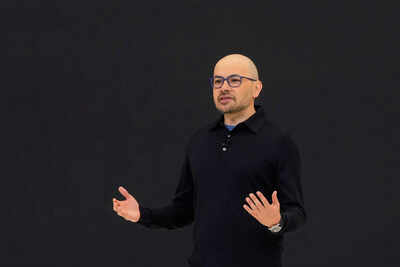
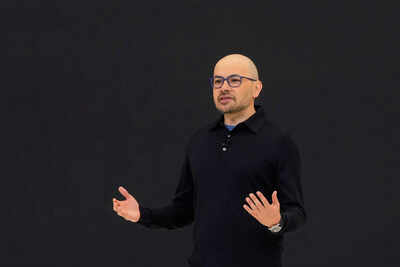
Google DeepMind CEO Demis Hassabis has opened up about the Gemini 3 launch that rattled OpenAI so badly that Sam Altman declared a company-wide “Code Red” in December. In a recent interview with Alex Heath, Hassabis admitted that even he wasn’t entirely sure how the new model would perform against the competition.“You never quite know when you’re baking a new model, right? You obviously have your theories and your tests,” Hassabis told Heath. But he noted Google was already on a strong trajectory, pointing to Gemini 2.5 topping leaderboards back in May.
OpenAI lost 6% of its users in a week after Gemini 3 dropped
The fallout from Gemini 3’s November release was swift. OpenAI shed roughly 12 million daily visitors within a week of Google’s launch. ChatGPT’s traffic dropped from 203 million to 191 million average daily visits, according to SimilarWeb data.
Altman’s internal memo instructed staff to pause work on advertising, AI health agents, and a personal assistant called Pulse. The focus shifted entirely to improving ChatGPT’s speed, reliability, and personalization.Hassabis, meanwhile, struck a measured tone. “It’s a ferocious, intense competition,” he acknowledged to Heath. “Everyone’s trying to leapfrog each other. So one can’t rest on our laurels.”
Google’s pre-training team is its secret weapon, says Demis Hassabis
When asked about what gives Google its edge, Hassabis didn’t hesitate. “When it comes to pre-training, I think we have the best team in the world by far,” he said. He credited Google DeepMind’s depth in fundamental research for the company’s ability to keep shipping competitive models.The Gemini app’s monthly active users jumped from 350 million in March to 650 million by October. Google’s Nano Banana image generator, launched in August, was so popular it nearly overwhelmed the company’s tensor processing units.
Google Deepmind CEO eyes AGI but warns the race isn’t over
Despite Gemini 3’s success, Hassabis isn’t declaring victory. He told Heath that Google’s generative AI market share has grown from 5% to 20% in a year, but “there’s still a lot of hard work in front of us.”He also took a subtle dig at competitors raising massive funding rounds. “Seed rounds for companies that have nothing yet in the research or product… that’s very fragile,” he observed.For now, Hassabis says his team is laser-focused on Gemini 4. “This year, we hope to accelerate even further,” he said. The AI race, it seems, is far from settled.






 English
  हिन्दी