 Sipu Jha

If Kyle Tucker had reached the open market instead of signing with the Los Angeles Dodgers in January 2026, the Toronto Blue Jays would likely have emerged as one of the most aggressive teams in pursuit.Tucker is one of the rare players who checks every box. He brings power without selling out his approach, plays strong defense in the outfield, and is still firmly in his prime. Players like that almost never become available, which is why his hypothetical free agency would have reshaped conversations across the league. Toronto, facing growing pressure after several playoff appearances that failed to produce a deep run, would have been well positioned to act.The Blue Jays have hovered on the edge of true contention for years. They’ve had talent, depth, and pitching, but the lineup has often lacked a single, game-altering presence who changes how opponents plan an entire series. Tucker fits that role cleanly. He’s not just another bat in the order; he’s the type of hitter who forces pitchers to work differently and reshapes how defenses align.Timing would have mattered as much as talent. With the Houston Astros managing payroll constraints and Tucker nearing the most expensive years of his career, the idea of him becoming available had already loosened the market. For Toronto, this would not have been about adding depth or chasing marginal gains. It would have been a direct attempt to raise the team’s ceiling and move from contender to legitimate title threat.(Disclaimer: The data and analysis in this post are based on conjecture as of right now. Although the information is based on reliable sources, it’s crucial to remember that these are not official declarations or verified actions. It is advised that readers use caution when interpreting this analysis and wait for official updates as the offseason progresses.)
Why Kyle Tucker Would Have Fit Toronto Blue Jays’ Long-Term Plan
Any discussion around Kyle Tucker begins with contract reality. Industry expectations suggest his next deal could comfortably exceed $400 million, a figure that would place him among baseball’s highest-paid players. For Houston, moving him before that point would have meant gaining young, controllable talent while avoiding a massive long-term obligation.
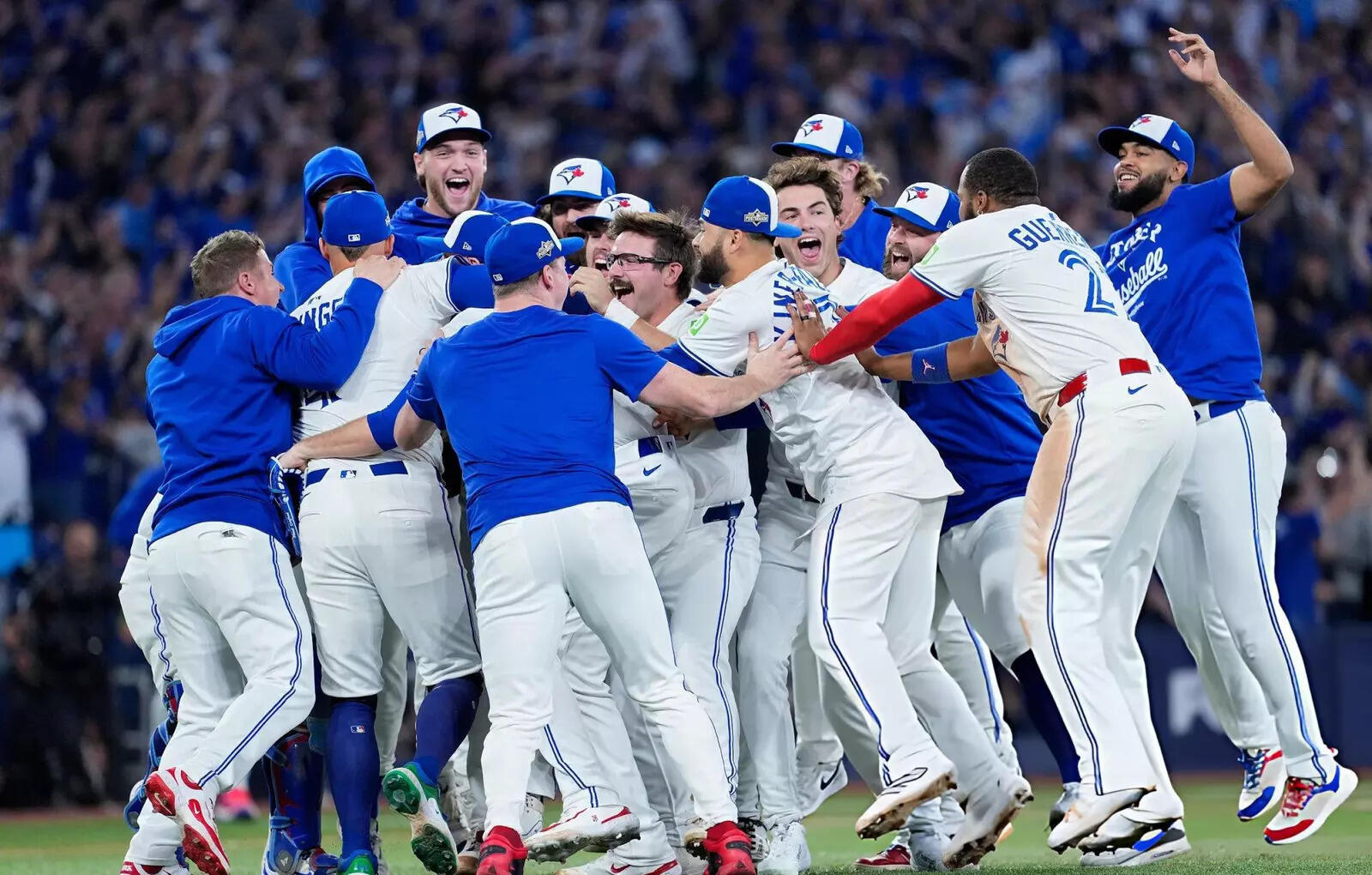
Toronto Blue Jays (Image Source – Getty Images)
Toronto, meanwhile, would have seen a rare opening. The organization has both the prospect depth and the competitive urgency to justify a major swing. While any deal would have required real sacrifice, either top prospects or players ready for everyday roles, the payoff would have been immediate. This would have been the type of move that defines an era rather than supplements it.
What Each Side Would Have Gained
From Toronto Blue Jays’ point of view, adding Kyle Tucker would have solved multiple problems at once. He offers consistent middle-of-the-order production, with a track record of strong averages, power, and run creation. That kind of reliability has been uneven in recent Blue Jays lineups, especially when games tighten late in the season.There’s also the matter of presence. Tucker carries star weight. His arrival would have sent a clear message to both the clubhouse and the fanbase that the front office was willing to push beyond comfort to chase a championship.For Tucker, Toronto would have represented a chance to step into a major market with a competitive roster already in place. The environment would have supported both performance and profile, while positioning him for the type of long-term contract his production suggests is coming.
The Risks That Would Have Come With It
The cost would not have been light. Toronto would have needed to part with valuable future assets, potentially thinning out depth that matters over a long season. There’s also the reality of Tucker’s recent injury history, including time missed in 2024, which adds uncertainty to any long-term commitment.For Houston, moving on from a cornerstone player would have meant an immediate hit to star power and lineup balance. The success of such a move would hinge entirely on how quickly and effectively the return pieces developed.Tucker himself would have faced the pressure that comes with a new league, a demanding market, and heightened expectations. Toronto is not a quiet place to struggle, especially for a player brought in to change outcomes.Had Tucker not already committed to the Dodgers, Toronto would have been one of the clearest teams ready to move first and spend big. The fit made sense in terms of timing, roster construction, and competitive goals. While the risks would have been real on every side, so would the upside.Also read: MLB trade rumors: New York Mets exploring blockbuster move for $116.5 million Arizona Diamondbacks star following Jeff McNeil exitDeals like this don’t just alter a single roster. They change how a team is viewed for years. For the Blue Jays, a player like Kyle Tucker could have been the difference between staying close and finally breaking through.







 English
  हिन्दी