 Sipu Jha
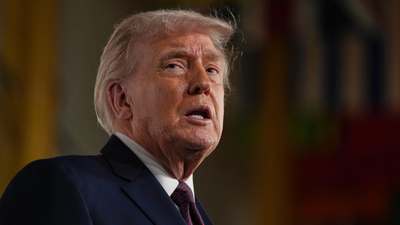
US President Donald Trump said on Thursday (US local time) that he hopes to avoid military action against Iran and has plans to pursue further talks with Tehran on a possible nuclear deal, even as the United States ramps up its military presence in the Middle East.The President spoke to reporters at the premiere of a documentary about First Lady Melania, confirming that the US military presence in the region is expanding but expressing a preference for diplomacy. “I built (up) the military in my first term, and now we have a group headed out to a place called Iran, and hopefully we won’t have to use it,” Trump said.Asked if he would have talks with Iran, he added, “We have a lot of very big, very powerful ships sailing to Iran right now. And it would be great if we didn’t have to use them,” he said. Trump added that he had laid out clear demands to Tehran: “I told them two things; Number one no nuclear. And number two stop killing protesters. … They’re going to have to do something.”His comments came amid rising tensions between Washington and Tehran, with the US continuing to deploy warships and air assets across the Middle East. During a Cabinet meeting on Thursday, US Secretary of War Pete Hegseth also warned Iran against pursuing nuclear weapons and said the military was prepared to act under Trump’s orders.Referring to possible strikes on Iran’s nuclear facilities, Hegseth said, “When President Trump said, ‘We’re not getting a nuclear Iran,’ he meant it.”Also read | ‘He meant it’: Pete Hegseth warns Iran on nukes, signals Trump has military options readyAccording to CNN sources, Trump is weighing a large-scale attack on the Islamic Republic led by Supreme Leader Ayatollah Ali Khamenei, with discussions focusing on targeting senior figures in Iran’s leadership. Reuters reported that the talks have also explored creating conditions for “regime change” following a harsh crackdown by Iranian authorities on nationwide protests earlier this month that killed thousands of people.Iran has witnessed one of the largest anti-regime protest movements in decades, driven by economic hardship, rising prices, and inflation. Trump is said to believe the unrest could be used to consolidate anti-Khamenei sentiment and potentially turn it in his favor to facilitate a regime change.Trump’s tensions with Iran date back to his first term in office, during which he consistently sought to pressure Tehran to curb its nuclear ambitions.


 English
  हिन्दी