 Sipu Jha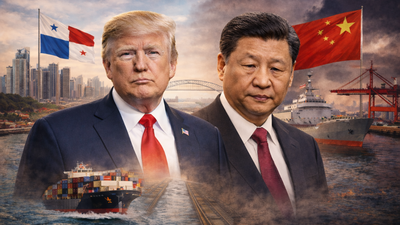
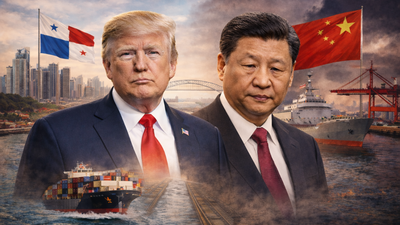
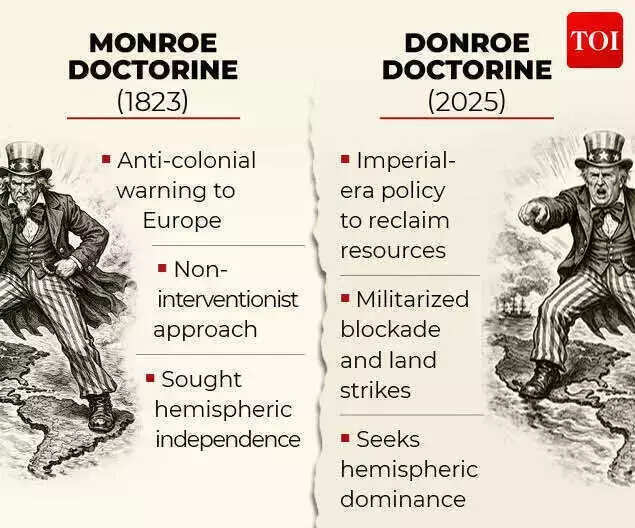
In a strategic victory for the “Donroe Doctrine”, the Supreme Court of Panama has cancelled a major Panama Canal ports contract held by a Chinese-linked firm.
Driving the news
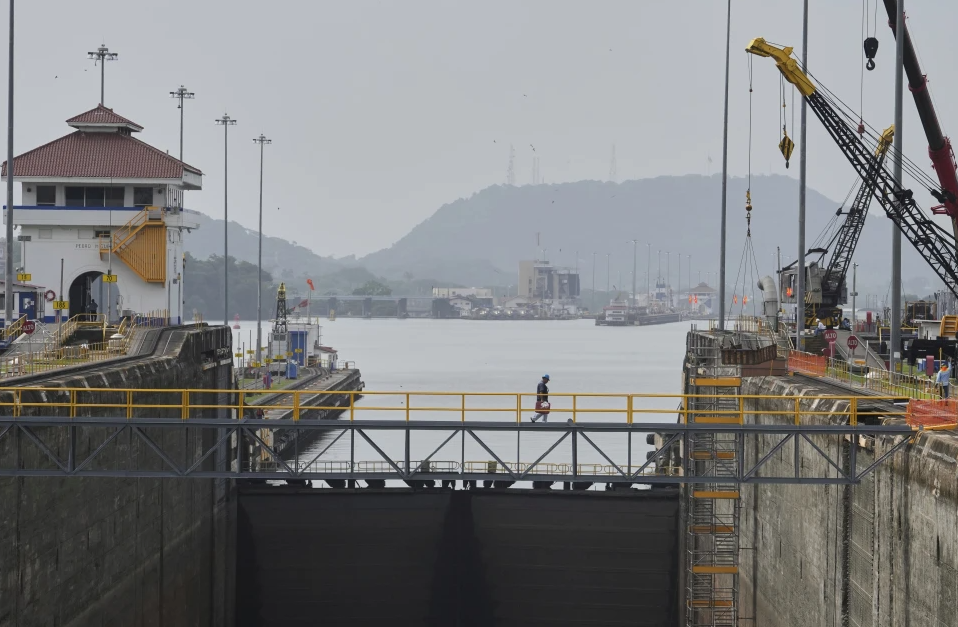
Panama’s Supreme Court has struck down the concession allowing a Hong Kong conglomerate to operate key ports at either end of the Panama Canal – a ruling that aligns closely with US President Donald Trump’s push to curb Chinese-linked influence over strategic trade routes and complicates Beijing’s efforts under President Xi Jinping to defend its commercial footprint abroad.The court ruled that contracts held by a subsidiary of CK Hutchison Holdings were unconstitutional, voiding a decades-old arrangement to operate ports at the Atlantic and Pacific entrances of the Panama Canal.
“The Supreme Court found the laws which allowed CK Hutchison Holdings to operate two of the five ports of the canal ‘unconstitutional,’” the court said in a statement.
Why it matters
While the ruling is rooted in Panamanian constitutional law, its impact is geopolitical.The decision advances a core Trump objective: reducing Chinese-linked commercial presence near strategic infrastructure that Washington views as critical to national security. It also weakens Beijing’s ability to push back against US pressure campaigns targeting global logistics, ports and supply chains.About 5% of global maritime trade transits the Panama Canal, according to Reuters, making control of adjacent port infrastructure a high-stakes issue in the intensifying US-China rivalry.
The Trump angle
Trump had placed the Panama Canal at the center of his second-term foreign policy messaging, repeatedly arguing that China was exercising undue influence over the waterway through port operations – a claim denied by Panama and by Beijing.He went further, warning that the United States could reclaim the canal, which it built and handed over to Panama in 1999, if Chinese influence was not rolled back. He complained about transit fees and framed the canal as a symbol of past US strategic concessions.After CK Hutchison announced plans last year to sell its Panama ports to a consortium including BlackRock, Trump told Congress that his administration had “already started” reclaiming the canal, according to Bloomberg.The Supreme Court ruling now removes the legal basis for a Hong Kong-based operator at both entrances to the canal, reinforcing Trump’s argument that pressure – diplomatic, political and rhetorical – can force outcomes aligned with US strategic goals.Reuters described the decision as “a win for Washington,” noting that Trump has pushed aggressively to curb Chinese influence and boost US leverage over the waterway.
Between the lines
Trump’s claims that China “operated” the canal were widely described as false. The canal itself is run by Panama’s canal authority, not by CK Hutchison.But the ports mattered politically.Port operations are separate from canal management, yet they sit at choke points that shape shipping, logistics and security. By framing those operations as a national security issue, the Trump administration broadened the definition of strategic control – and set the stage for Panama’s legal reckoning.US secretary of state Marco Rubio underscored that approach by making Panama his first overseas stop, signaling how central the canal had become to Washington’s hemispheric strategy.
The Xi setback
For Beijing, the ruling lands at an awkward moment.Chinese authorities had already reacted sharply to CK Hutchison’s plan to sell its Panama ports to an international consortium that included BlackRock. Bloomberg had reported that China’s top Hong Kong office circulated commentaries warning companies to choose carefully which “side they should stand on” and urging entrepreneurs to be “proud patriots.”Several Chinese agencies, including the State Administration of Market Regulation, launched examinations of the deal for potential security or antitrust violations.“China has always firmly opposed the use of economic coercion and bullying to infringe upon the legitimate rights and interests of other countries,” Chinese foreign ministry spokesman Guo Jiakun said on March 27, according to Bloomberg.The Panama court decision undercuts Beijing’s leverage by voiding the concession outright – potentially removing both the asset and the proposed sale from China’s reach – while reinforcing the US narrative that Chinese-linked companies face growing resistance abroad.
Zoom in: Li Ka-shing in the crosshairs
The case has thrust Hong Kong billionaire Li Ka-shing into the middle of the US-China power struggle.Li’s conglomerate has been steadily reducing its exposure to mainland China for years. Only about 12% of CK Hutchison’s revenue comes from mainland China and Hong Kong, according to Bloomberg.Still, Beijing has treated the Panama ports issue as a test case – not only of national security, but of political loyalty.The planned sale of 43 ports in 23 countries, valued at roughly $19 billion in cash proceeds, was widely seen by analysts as financially attractive for CK Hutchison. But Chinese objections slowed the deal, and the Panama ruling now clouds its future entirely.
What Panama says
Panama’s government insists the ruling is about law, not geopolitics.The case stemmed from a lawsuit filed last year by Panama’s comptroller, Anel Flores, following an audit of the concession’s 2021 extension. The audit alleged unpaid taxes, accounting irregularities and the existence of a “ghost” concession operating within the ports since 2015 – allegations the company denied, according to AP.
Flores said the irregularities cost the government about $300 million since the extension and an estimated $1.2 billion during the original 25-year contract. He also said the extension lacked required approvals from his office.Panama President Jose Raul Mulino has repeatedly defended the canal as a Panamanian operation over which the country exercises full sovereignty.
What’s next
The Supreme Court gave no guidance on who will operate the ports or how Panama will proceed.Reuters reported that the ruling could force Panama to restructure its legal framework for port concessions and potentially re-open bidding for the terminals.CK Hutchison has limited legal options. It cannot appeal the ruling but could seek clarification or pursue international arbitration.“There is a long list of precedents where states clawed back control of ports and other infrastructure from private or foreign operators,” said Winston Ma, an adjunct law professor at New York University, quoted by Bloomberg. “Concession contracts typically reserve to governments the right to terminate for cause or public interest.”
The big picture
The Panama court decision underscores how legal rulings, trade infrastructure and geopolitics are increasingly intertwined.
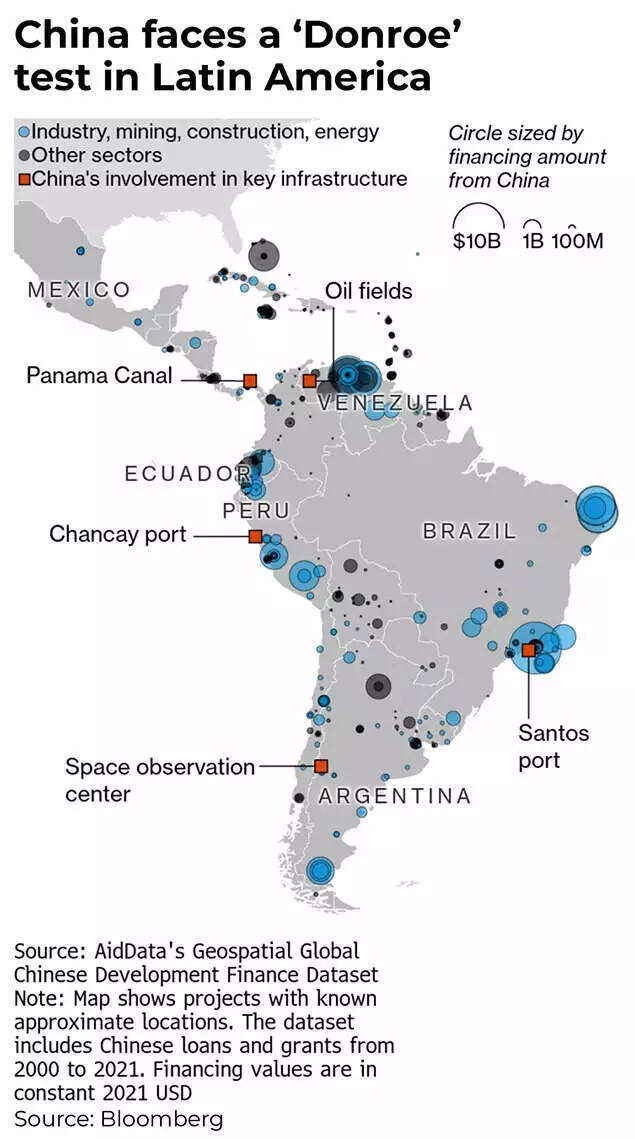
For Trump, it marks a tangible outcome supporting his argument that the US can roll back Chinese-linked influence at strategic chokepoints through sustained pressure.For Xi, it highlights the limits of Beijing’s ability to shield overseas commercial interests when host governments and courts align – overtly or implicitly – with US strategic priorities.As competition over global trade routes intensifies, the Panama Canal has re-emerged not just as a shipping artery, but as a frontline in the broader contest between Washington and Beijing.(With inputs from agencies)






 English
  हिन्दी