 Sipu Jha
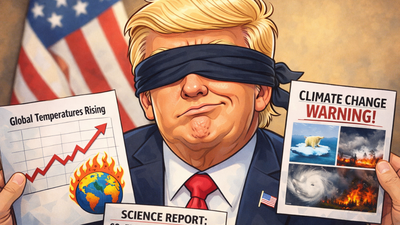
It’s often easier to blindfold ourselves or close our eyes to a looming catastrophe than to confront it, and nowhere is this instinct more gradually dangerous than with climate change. When extreme cold snaps or snowstorms hit, it can feel natural to dismiss global warming as a hoax, even if scientific evidence exists. Denial may bring comfort for a moment, but it ultimately fuels inaction, leaving the world more vulnerable. Ignoring the problem or flouting accountability of climate inaction does not make it disappear. What it does is narrow the window to respond effectively, even as the planet continues to warm, polar caps shrink, glaciers melt, sea levels climb, and weather systems grow more volatile.
“Whatever happened to global warming?”
As thick piles of snow buried highways, grounded flights, and pushed wind chills to dangerous lows across parts of the United States, winter storms swept multiple cities, triggering a rush on shovels and ice melt while households prepared for yet another punishing winter blast. In the middle of rolling advisories and storm warnings, a familiar political refrain resurfaced.
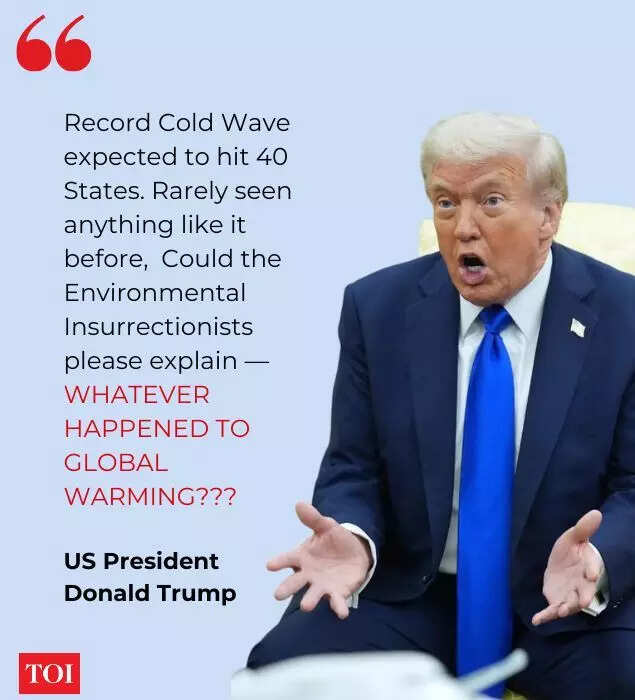
US President Donald Trump, reacting to the cold wave, recently posted on his social media platform Truth Social, presenting the storm as evidence against global warming and dismissing climate change. Challenging what he called “environment insurrectionists,” he wrote: “Record Cold Wave expected to hit 40 States.Rarely seen anything like it before… Could the Environmental Insurrectionists please explain , WHATEVER HAPPENED TO GLOBAL WARMING??”
–
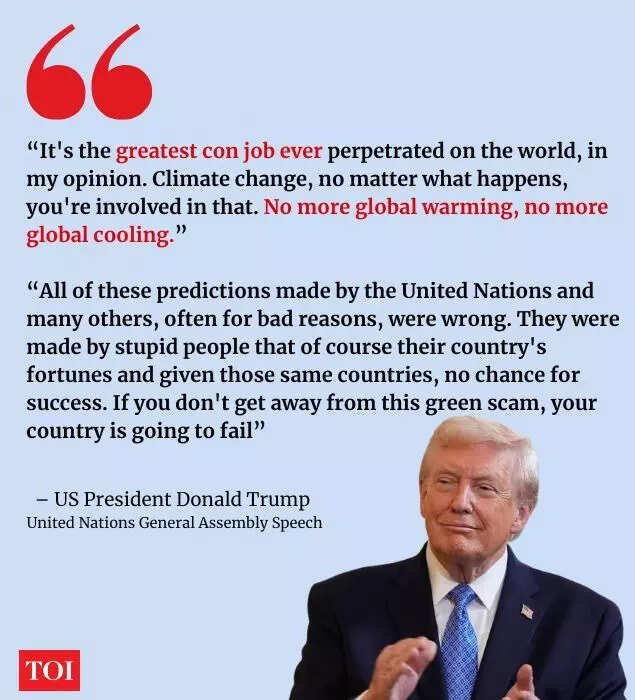
The post spread rapidly, drawing applause in some corners and exasperation in others, but above all reviving a persistent public confusion: if the planet is warming, why does bitter cold still strike? Scientists say the question is understandable , but misplaced. Weather is what people experience day to day, while climate reflects patterns measured over decades.Despite repeated scientific warnings about rising temperatures, intensifying storms, and melting glaciers, this is not the first time the US President has expressed skepticism about climate change. Addressing the United Nations General Assembly in September 2025, Trump described climate change as “the greatest con job ever perpetrated on the world,” reiterating his long-standing doubts about global environmental initiatives. He also argued that climate warnings shifted from “global cooling” to “global warming” to “climate change” to remain unfalsifiable.He devoted several minutes of his nearly hour-long speech to criticizing climate policies, singling out the European Union’s carbon-reduction efforts and arguing that such measures have damaged its economy. He also warned countries making large investments in renewable energy that their growth prospects would suffer. “It used to be global cooling. If you look back years ago in the 1920s and the 1930s, they said, global cooling will kill the world. We have to do something. Then they said global warming will kill the world. But then it started getting cooler. So now they could just call it climate change because that way they can’t miss climate change because if it goes higher or lower, whatever the hell happens, it’s climate change. It’s the greatest con job ever perpetrated on the world, in my opinion. Climate change, no matter what happens, you’re involved in that. No more global warming, no more global cooling.”“All of these predictions made by the United Nations and many others, often for bad reasons, were wrong. They were made by stupid people that of course their country’s fortunes and given those same countries, no chance for success. If you don’t get away from this green scam, your country is going to fail.”, Trump added.
–
Notably, since returning to office, Trump had initiated the United States’ second formal withdrawal from the 2015 Paris Agreement, under which nearly 200 countries committed to limiting global warming to 1.5°C above pre-industrial levels. Only a small group of nations , including Yemen, Iran and Libya , remain outside the pact. His administration has instead advanced an “energy dominance” agenda focused on expanding oil, gas and coal production, while scaling back federal emphasis on renewables, even as solar and wind power have grown increasingly cost-competitive. “We have the most oil of any nation anywhere in the world, and if you add coal, we have the most of any nation,” he said.The remarks came just a day before UN Secretary-General António Guterres convened a climate summit to review updated national climate action plans. Guterres highlighted both the environmental and economic case for clean energy, noting that global investment in renewables reached about $2 trillion last year , significantly outpacing fossil fuel investment , and has risen sharply over the past decade.
What is Global Warming?
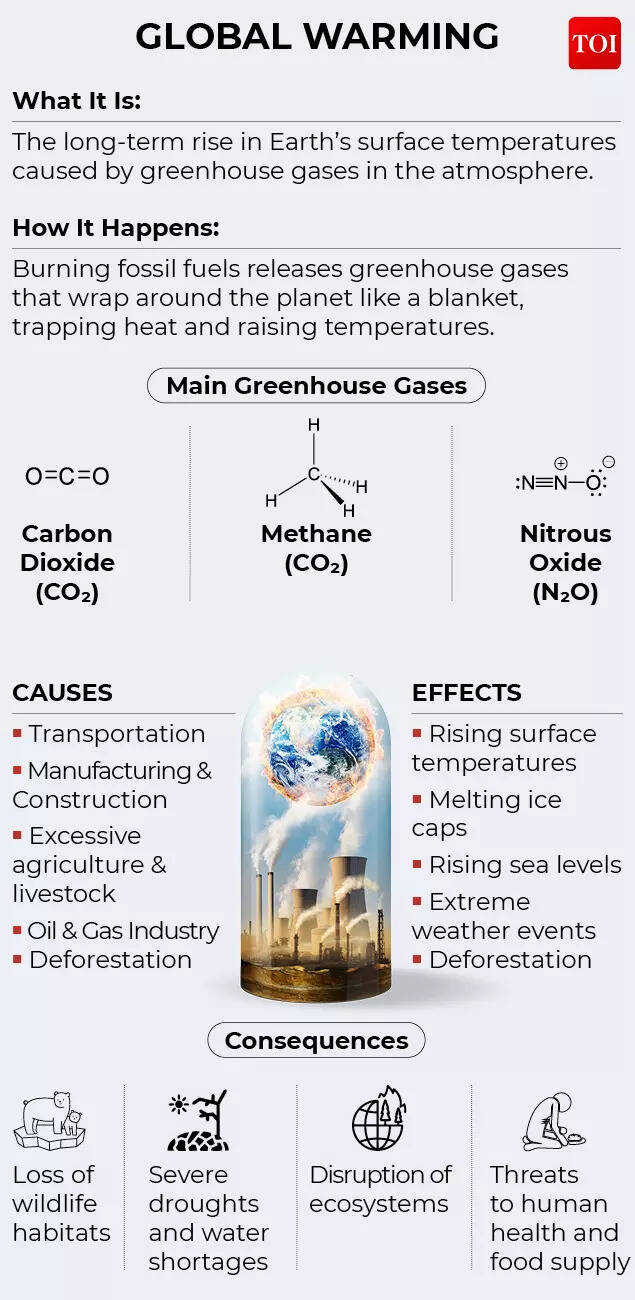
Global warming refers to the long-term increase in Earth’s average surface temperature, primarily due to human activities such as burning fossil fuels, deforestation, and industrial processes. These activities increase concentrations of greenhouse gases like carbon dioxide (CO₂) and methane (CH₄) in the atmosphere, which trap heat and disrupt natural climate systems. Global warming drives a variety of environmental changes, including rising sea levels, more extreme weather events, melting ice caps, and shifts in ecosystems.
What is global warming?
Wallace Smith Broecker, an American oceanographer, is widely credited with popularizing the term “global warming” in scientific literature. In 1975, he published a paper in Science titled “Climatic Change: Are We on the Brink of a Pronounced Global Warming?” This paper synthesized research on carbon dioxide and climate, arguing that CO₂ emissions could lead to significant planetary warming. While the exact phrase “global warming” had appeared earlier in other contexts, Broecker’s work was the first scientific usage to define the modern climatological meaning.
Weather vs Climate : Understanding the Difference
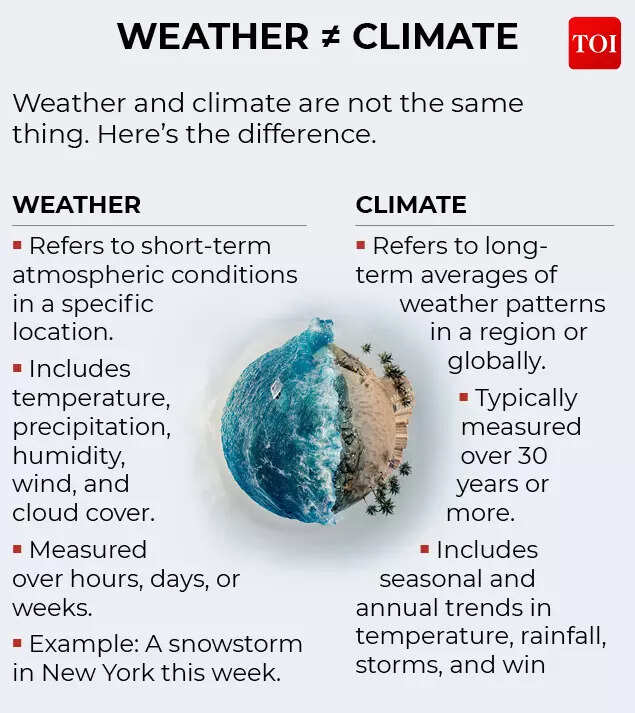
Weather describes short-term atmospheric conditions , temperature, precipitation, wind , at a specific place and time. Climate refers to long-term averages observed over decades or centuries. A single cold snap, no matter how extreme, does not negate a century-scale warming trend.
–
Global temperature records compiled by NASA, the World Meteorological Organization (WMO), and other agencies show that Earth’s average surface temperature has risen sharply since the late 19th century. The past decade (2015–2024) ranks as the warmest on record. Even with occasional cold days, the planet’s average temperature continues to climb, faster than at any time in at least 10,000 years.According to the Arctic Council, cold extremes can coexist with warming. A warmer atmosphere holds more moisture, which can fuel heavy snowfalls. Shifts in high-altitude wind currents can also push Arctic air southward, creating intense local cold while the globe as a whole keeps heating.
Human hand behind climate change
According to the United Nations, climate change refers to long-term shifts in temperatures and weather patterns. While natural factors such as volcanic eruptions and solar cycles influence climate, human activity has been the dominant driver since the 1800s. The large-scale burning of fossil fuels like coal, oil, and gas releases greenhouse gases, trapping heat in the atmosphere and raising global temperatures.Carbon dioxide and methane are the main culprits. They are released by energy production, transport, industry, buildings, agriculture, and land-use changes such as deforestation. These gases act as an insulating layer around the planet, preventing heat from escaping into space. As a result, the Earth warms , unevenly, but consistently.The IPCC Sixth Assessment Report (AR6) concludes that human influence accounts for virtually all of the global warming observed over the last 200 years. The planet is now about 1.1–1.4°C warmer than pre-industrial levels. Each of the last four decades has been warmer than any decade since systematic records began in the mid-1800s..
The Polar Jet Stream: A wavier river of wind
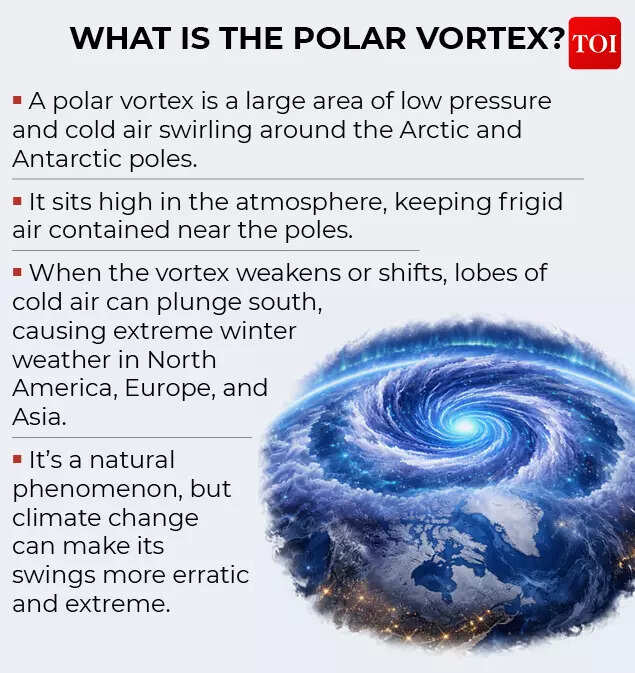
One of the most important drivers of extreme weather is the polar jet stream , a high-altitude ribbon of fast-moving wind that circles the Northern Hemisphere. Traditionally, it acts as a barrier between cold Arctic air and warmer southern air, steering storms and regulating seasonal weather. Airlines rely on it for transatlantic tailwinds; meteorologists watch it for predicting storms.
What is the Polar Vortex?
But the jet stream is becoming less stable. The Arctic is warming three times faster than the global average, reducing the temperature contrast between north and south that powers the stream. Slower winds allow the jet stream to meander more, producing larger north-south waves that stall over regions. Persistent heatwaves, cold snaps, heavy rainfall, or droughts can follow depending on which side of a wave a location sits.Dr Jennifer Francis, senior atmospheric scientist at the Woodwell Climate Research Center, explains: “The big swings of the jet stream tend to be very persistent. As each wave brings warm or cold air to a region, this slow movement can cause extreme weather patterns , and we are seeing these wavey patterns happen more frequently.”The impacts are already visible. In 2024, Svalbard experienced its coldest winter in 20 years, followed by rapid warming and early sea ice disappearance, leading to a record-breaking warm summer. Meanwhile, Central Europe endured devastating floods, affecting millions. Francis notes: “These extremes often come in pairs. While one region experiences unusually warm temperatures, a downstream area will see the opposite , whether a dry spell, flooding, or cold.”Warmer oceans amplify the jet stream’s erratic behaviour. Record-breaking sea surface temperatures in the North Pacific and Atlantic release more heat and moisture into the atmosphere, intensifying storms. Shrinking sea ice reduces the barrier that once limited ocean heat transfer to the air, reinforcing Arctic warming and jet stream distortion. Water vapour, a potent greenhouse gas, traps more heat, while latent heat released from cloud formation warms the air further.The polar jet stream interacts with the subtropical jet stream flowing near the equator. When these streams align, tropical warmth and moisture collide with cold Arctic air, creating powerful storm systems. The polar vortex, a stratospheric pool of Arctic air, can also deform or split, sending lobes of frigid air southward and worsening cold spells, such as the record-breaking Texas Freeze of February 2021.The growing volatility of the jet stream is altering weather for billions. Persistent swings and unusual oscillations are linked to heatwaves, wildfires, flooding, droughts, and snow extremes. While reversing these changes may be unrealistic, researchers stress that slowing greenhouse gas accumulation can moderate these trends
Climate change as a health crisis
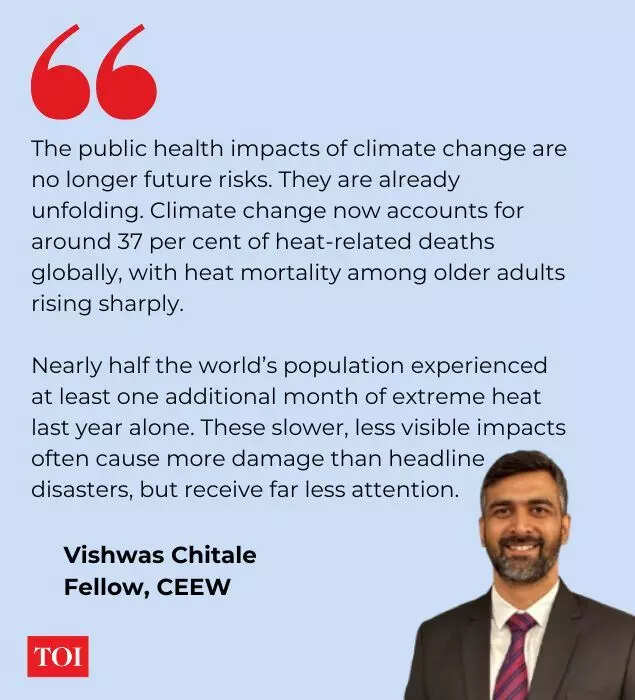
Beyond meteorology, climate change poses a mounting human health crisis. The WHO describes it as a “fundamental threat to human health,” affecting food, water, air quality, livelihoods, and healthcare systems. Rising temperatures and intensifying weather extremes contribute to humanitarian emergencies such as heatwaves, floods, storms, and wildfires.About 3.6 billion people already live in regions highly vulnerable to climate impacts. Climate-related stresses, including heat exposure, undernutrition, and disease spread, are expected to increase mortality in the coming decades. Health systems in lower-income countries and small island states are particularly strained. Climate pressures affect health directly through injury and death in disasters, and indirectly by worsening food and water insecurity, air pollution, and disease exposure.Climate change also exacerbates mental health issues, including anxiety, depression, and post-traumatic stress, particularly among displaced communities. Vulnerable populations , children, the elderly, low-income communities, migrants, and people with underlying health conditions , bear the brunt of these impacts.Vishwas Chitale, Fellow at the Council on Energy, Environment and Water (CEEW), warns that “the public health impacts of climate change are no longer future risks — they are already unfolding. A significant share of heat-related deaths globally is now attributable to climate change, and mortality among older adults is rising sharply. Changing temperature and rainfall patterns are also expanding disease spread, disrupting food and water security, and reducing labour productivity, especially for informal and outdoor workers.”
–
Food, water, and economic risks
Shifts in temperature and precipitation patterns disrupt food production, exacerbate water scarcity, and strain infrastructure. Vector-borne diseases spread into new regions. Coastal areas face rising sea levels and storm surges. Economic losses from extreme weather events are mounting, with infrastructure damage, agricultural losses rising worldwide.Vishwas Chitale, explains that long-term data shows warming trends remain clear despite occasional cold spells. Chitale notes that warming increases overall volatility, not just heat. “Global warming loads the atmosphere with more energy and moisture, which amplifies extremes. That means stronger heatwaves, heavier rainfall events, and also occasional severe cold outbreaks — but the balance of risk is shifting strongly toward heat.”He points to mounting heat exposure risks worldwide. “More than half the world’s population could face extreme heat by 2050 if global temperatures rise by around 2°C. India already experienced its longest heatwave since 2010 in 2024, with several states seeing temperatures above 40°C for weeks. Climate projections show heat extremes will increase in intensity, frequency and duration, and spread to more areas.” “Our CEEW assessment shows that about 57% of Indian districts — home to roughly three-quarters of the population — are already in high to very high heat-risk categories. That highlights how widespread vulnerability already is.”Chitale further warns that delayed action will raise the cost sharply. “If climate change continues to be misunderstood or ignored, the consequences for people and economies will be severe — including hundreds of thousands of additional deaths each year from heat stress and disease, growing pressure on healthcare systems, and increasing disruption to food, water and livelihoods. The cost of inaction will far exceed the cost of acting early.”
Global frameworks and climate action
International frameworks, including the Paris Agreement and Sustainable Development Goals, guide mitigation and adaptation. Climate action generally focuses on three pillars: cutting greenhouse gas emissions, adapting to unavoidable impacts, and financing transitions.Energy transition is central. Replacing fossil fuels with solar, wind, and other renewables is key to limiting global warming to 1.5°C above pre-industrial levels. Achieving net-zero by 2050 is a start, but near-term reductions are critical. Production and consumption of fossil fuels must drop sharply by 2030 to avoid catastrophic warming.A freezing week does not cancel a warming planet. The science is settled, the trends are measured, and the impacts are already visible. The choice before governments and societies is no longer whether climate change is real, but how quickly and seriously they respond. Delay carries a cost which is measured in lives, livelihoods and stability.Mitigation measures often carry co-benefits: cleaner air, improved health, better urban resilience, and more sustainable food systems. Climate action is not just about avoiding a larger threat but it can also improve the quality of our lives today.





 English
  हिन्दी