 Sipu Jha
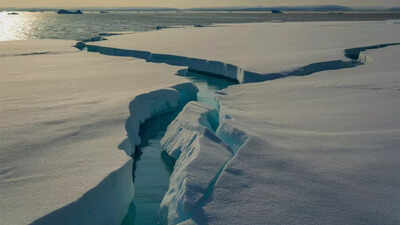
The Arctic is not just getting warmer. It is starting to behave in new manners in ways that are dangerous for nature. For decades, scientists mostly tracked average changes. Slightly warmer summers. Shorter winters. A bit more rain instead of snow. That picture is now incomplete. What matters more, and is changing faster, is extreme weather.The researchers looked at daily and hourly weather data across the entire Arctic from 1950 to 2022. Not just temperatures, but things that actually hit plants and animals hard. Sudden winter thaws. Rain falling on snow and freezing into ice. Heatwaves in places that rarely had them. Droughts where moisture used to be reliable. They found that these events are becoming more common, more intense, and more widespread. Especially in the last 30 years.
The frequency of extreme weather events has increased sharply in Arctic
Plants and animals can often adjust to slow, steady warming. They cannot easily survive shocks. A few days of winter rain that freezes can seal the ground in ice. Reindeer cannot reach the food. Plants suffocate. Entire grazing areas fail in one season. A short but intense heatwave can dry tundra soils that evolved to stay cold and wet. Roots suffer. Growth stops. In some places, vegetation does not recover.The study, “A new era of bioclimatic extremes in the terrestrial Arctic”, shows that these kinds of events are no longer rare. In fact, nearly one-third of the Arctic land area is now experiencing extreme weather that simply did not occur there in the mid-20th century.Different Arctic regions are changing in different waysThe Arctic is not one climate. The study divided it into six broad climate types. High Arctic islands are seeing more powerful heatwaves, even if total summer warmth is still limited by sea ice. Continental regions like Siberia are seeing stronger droughts and heat combined. That combination is especially damaging. Coastal Europe and Scandinavia are seeing more rain on snow and winter warming events. Mild winters sound harmless, but they are often the most destructive. Some regions show big changes in seasonal patterns. Others show sudden spikes in extreme events. In a few places, both are happening at once. Those areas are flagged as risk hotspots.This is a new climate regime, not a trend lineOne of the most important findings is this. Many extreme events have only started appearing recently. They are not gradual increases from the past. They are new. That means Arctic ecosystems have no history with them. No built-in resilience. No time to adapt. This is why the authors say the Arctic has entered a new era of bioclimatic extremes. Not just warmer. Different.What this means going forwardThe study does not try to predict exact outcomes. It is careful about that. But the implication is clear. Ecosystem changes we already see, greening, browning, and species shifts, may be driven less by slow warming and more by sudden damage from extreme events. If those events keep accelerating, as recent decades suggest, the Arctic will keep moving into unfamiliar territory. These changes will occur unevenly and faster than many ecosystems can manage.








 English
  हिन्दी