 Sipu Jha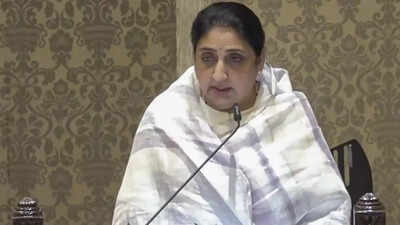
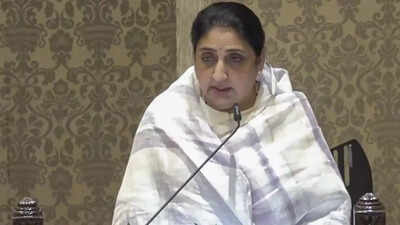
Maharashtra politics has rarely been short of convulsions, but even by the state’s turbulent standards, the untimely demise of deputy chief minister and Nationalist Congress Party (NCP) chief Ajit Pawar in the January 28 plane crash has thrown up a new challenge to the coastal state’s already fragile political equilibrium. The loss of Ajit ‘Dada’ Pawar goes beyond emotional, as it has ripped open cracks that had appeared to be sealed after the Maharashtra local body polls seemingly settled the near-constant realignments seen since 2019.With Sunetra Pawar, Ajit Pawar’s wife and a Rajya Sabha member, sworn in as deputy CM on Saturday, stepping into the role held by her husband, the state has formally entered a new and uncertain phase, shaped by the vacuum left by Dada’s death.
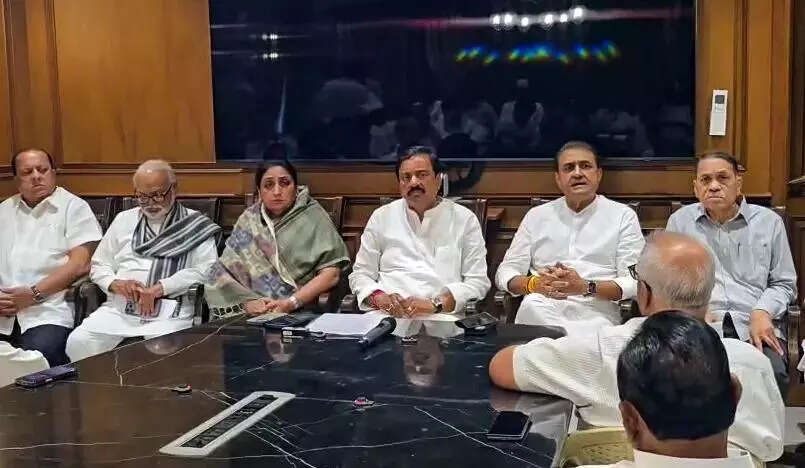
Late deputy CM Ajit Pawar’s wife and Rajya Sabha member Sunetra Pawar, NCP leaders Praful Patel, Chhagan Bhujbal and others during NCP legislative party meeting at the State Legislative Assembly in Mumbai on Saturday. (PTI photo)
Sunetra Pawar’s elevation may have filled the immediate constitutional vacuum, but it has also foregrounded larger, unresolved questions about the NCP’s future, the ruling Mahayuti alliance’s stability, and the direction the state’s politics will take in the absence of one of its most influential power brokers.The ‘aamdar’ of BaramatiAjit Pawar was more than a mass leader from Baramati or a powerful Pawar family scion. For allies and adversaries alike, he was a political manager popularly considered par excellence, a negotiator who understood the language of power, and a bridge between rival camps that otherwise struggled to trust each other. His absence now raises fundamental questions, and at the centre of this unfolding story is Sunetra Pawar.Her rise, propelled by tragedy, sympathy and political necessity, comes at a moment when the NCP itself is at a crossroads, caught between reunification and reinvention.Ruptures and realignmentsThe significance of the current moment lies in the arc of Maharashtra politics that has trudged through rupture and realignments. The first major rupture came after the 2019 assembly elections, when the long-standing BJP–Shiv Sena alliance collapsed over the chief ministership.The same year, in November, Ajit Pawar stunned the political spectrum by taking oath as deputy CM alongside rival Devendra Fadnavis in a pre-dawn ceremony, even as talks were underway for the formation of the Maha Vikas Aghadi (MVA) comprising the Shiv Sena, the Congress and the NCP.
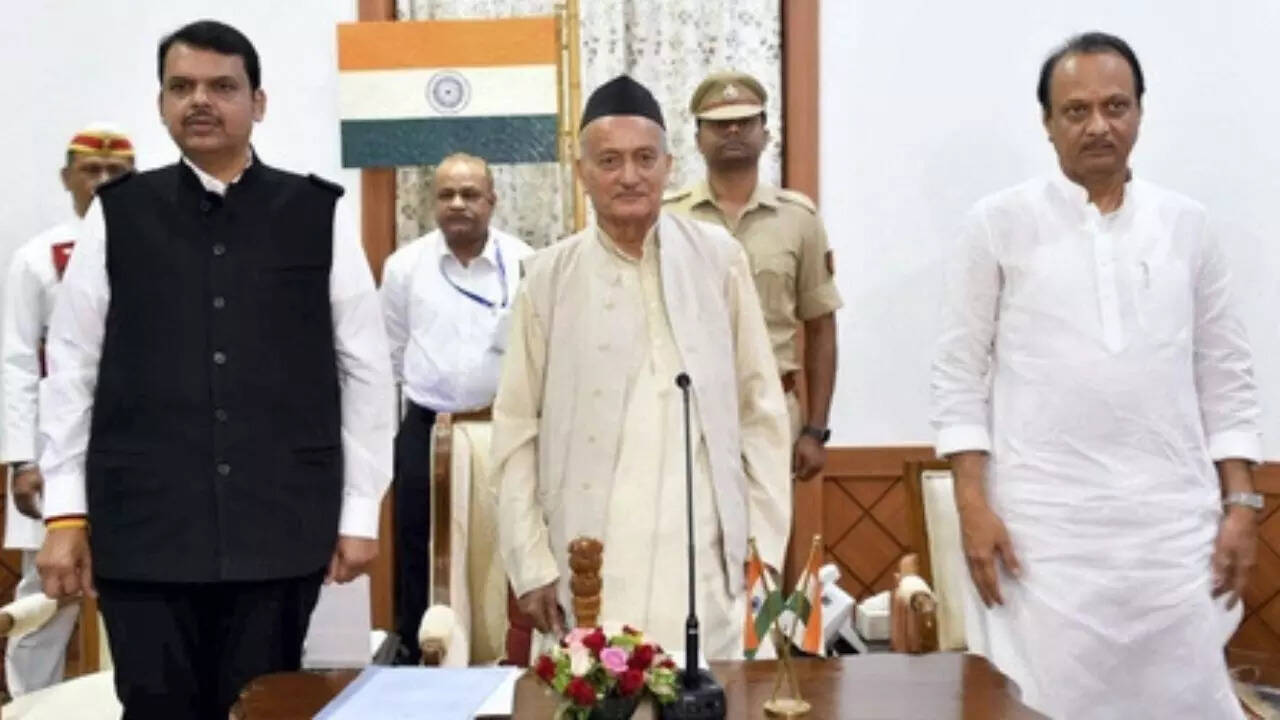
Maharashtra chief minister Devendra Fadnavis and deputy CM Ajit Pawar greeting governor Bhagat Singh Koshyari after taking oath at Raj Bhavan in 2019.
The government lasted less than four days, but the episode marked the first visible rupture between Ajit Pawar and his uncle Sharad Pawar.However, Ajit returned to his uncle and, interestingly, took an oath again as deputy CM under the Maha Vikas Aghadi (MVA) banner, an ideologically unlikely coalition of the Shiv Sena (then undivided), the Congress and the Sharad Pawar-led NCP, which was born after the Sena-BJP split.
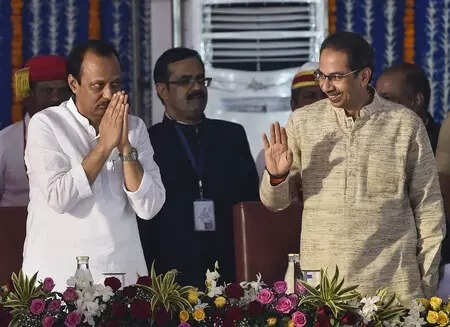
NCP leader Ajit Pawar with Chief Minister Uddhav Thackeray during the swearing-in ceremony for Maharashtra cabinet expansion at Vidhan Bhavan in Mumbai in 2019.
That experiment in power-sharing ended dramatically in June 2022, when Eknath Shinde led a rebellion within the Shiv Sena, bringing down the Uddhav Thackeray government. A year later, in July 2023, Ajit Pawar engineered a similar split within the NCP, taking a majority of MLAs with him into the BJP-led National Democratic Alliance (NDA).
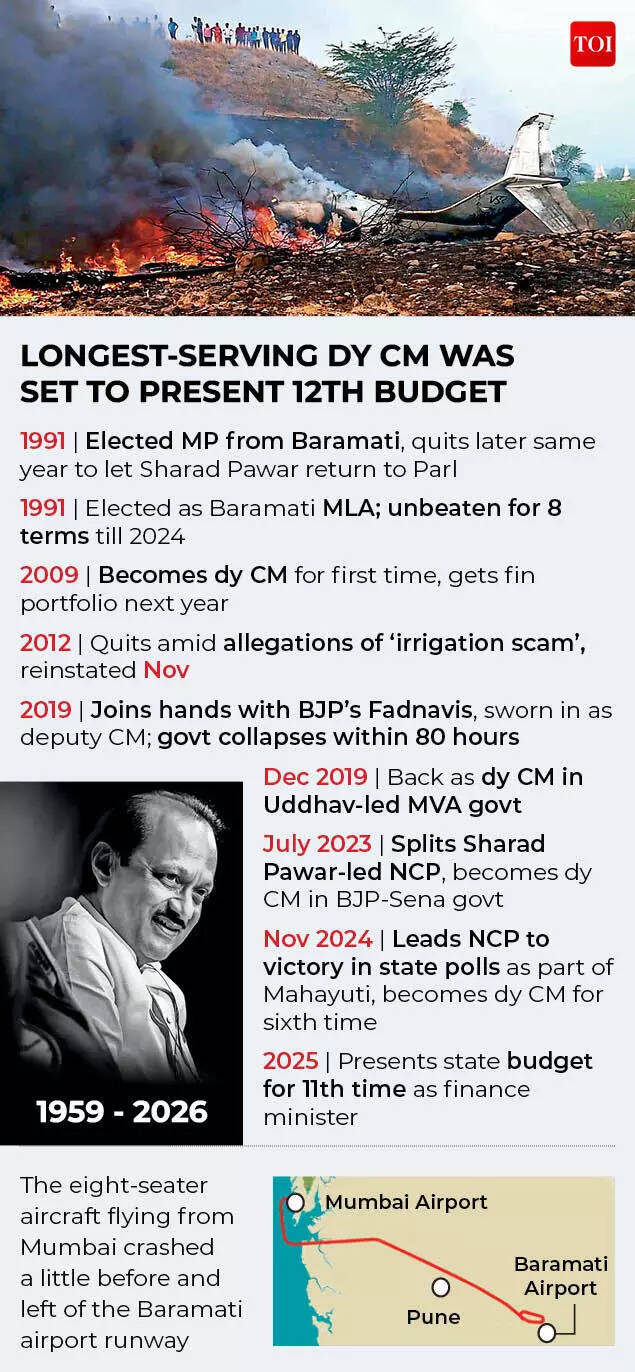
Ajit Pawar: Longest-serving deputy CM
The Election Commission subsequently recognised Ajit Pawar’s faction as the legitimate NCP, awarding it the party’s name and the ‘clock’ symbol.These twin splits fundamentally altered Maharashtra’s political landscape. Power shifted decisively towards the BJP, which emerged as the principal pole around which regional actors revolved. Ajit Pawar’s entry into the Mahayuti government as deputy CM was widely seen as a masterstroke, and criticised alike, given corruption charges against Pawar, which the BJP itself vehemently highlighted.However, Ajit Pawar gave the BJP numerical stability to its government and leverage over its other ally, the Shinde-led Shiv Sena.The 2024 Lok Sabha elections and subsequent assembly and local body polls appeared, at least superficially, to bring a measure of stability. The Mahayuti retained power, the opposition regrouped, and after the Brihanmumbai Municipal Corporation and other civic elections, the sense in political circles was that the era of constant churn might finally be easing.However, Ajit Pawar’s untimely death shattered that assumption.Pawar’s centrality to powerAjit Pawar’s political journey was marked by ambition, controversy and resilience. Over three decades, he built an image as a decisive administrator and an uncompromising leader, particularly in western Maharashtra’s cooperative and sugar belt. Even critics conceded that he had an unmatched command over the bureaucracy and a reputation for keeping his word.Within the Mahayuti, Ajit Pawar played a unique role. For the BJP, he was both an ally and a counterweight. His presence ensured that the Shinde faction of the Shiv Sena did not emerge as the sole regional power broker in the alliance. For chief minister Devendra Fadnavis, Ajit was a partner who could deliver numbers, manage legislators, and absorb political shocks.His death has therefore left a void that is not easily filled. While the government remains numerically secure, the internal balance within the Mahayuti has been disrupted. The question now is whether any other leader can replicate Ajit Pawar’s ability to straddle competing interests without destabilising the alliance.Sunetra Pawar: From margins to the centreIt is in this competitive political landscape that Sunetra Pawar’s elevation has become a centre of Maharashtra’s politics. Married into the Pawar family in 1985, she spent decades away from active politics, focusing largely on social work in and around Baramati. Her initiatives in sanitation, women’s self-help groups and rural development earned her quiet respect, but little public visibility.Her entry into electoral politics came only in 2024, when Ajit Pawar fielded her against cousin Supriya Sule from the bastion Baramati Lok Sabha constituency.
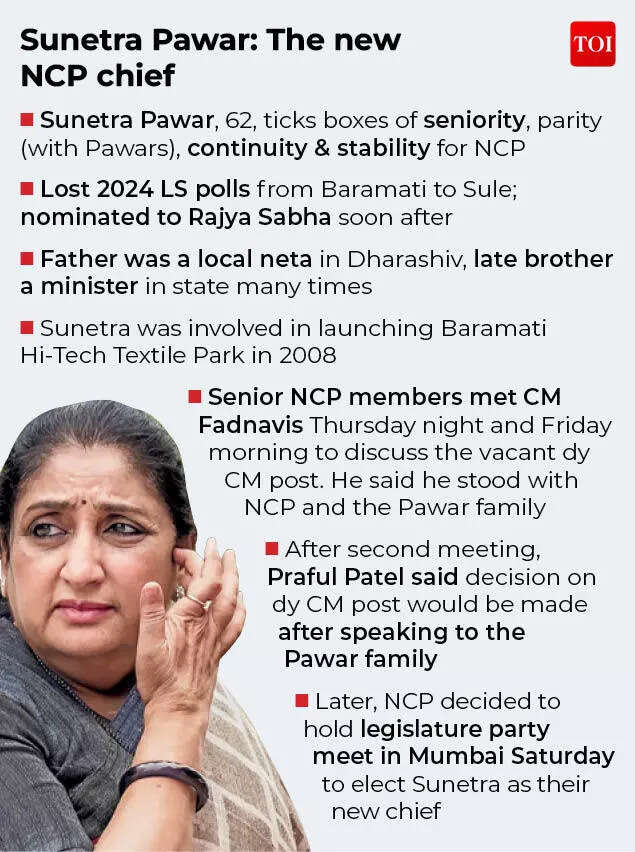
Sunetra Pawar
The contest was as much about family and symbolism as it was about politics. Sunetra lost by a significant margin of over 1.5 lakh votes, reaffirming both Supriya Sule’s entrenched base and the limits of Sunetra’s political reach at the time.However, her subsequent nomination to the Rajya Sabha gave her a formal role and exposure to national politics. Now, in the wake of Ajit Pawar’s death, she finds herself at the centre of a leadership transition driven by sympathy, continuity and the Pawar family legacy.Earlier, senior NCP leaders publicly backed Sunetra Pawar’s elevation as leader of the legislature party, clearing the way for her induction into the Maharashtra cabinet. Within the party, her appointment is widely seen as a means of honouring Ajit Pawar’s legacy while pre-empting internal factionalism at a moment of uncertainty.While the names of Ajit Pawar’s sons, Jay and Parth, briefly surfaced in internal discussions, continuity emerged as the decisive consideration. That logic worked overwhelmingly in Sunetra Pawar’s favour. As Ajit Pawar’s spouse, and the most senior figure within his immediate family, the 62-year-old Rajya Sabha member was viewed as best placed to provide stability, particularly in a party where seniority still carries considerable weight in leadership transitions.
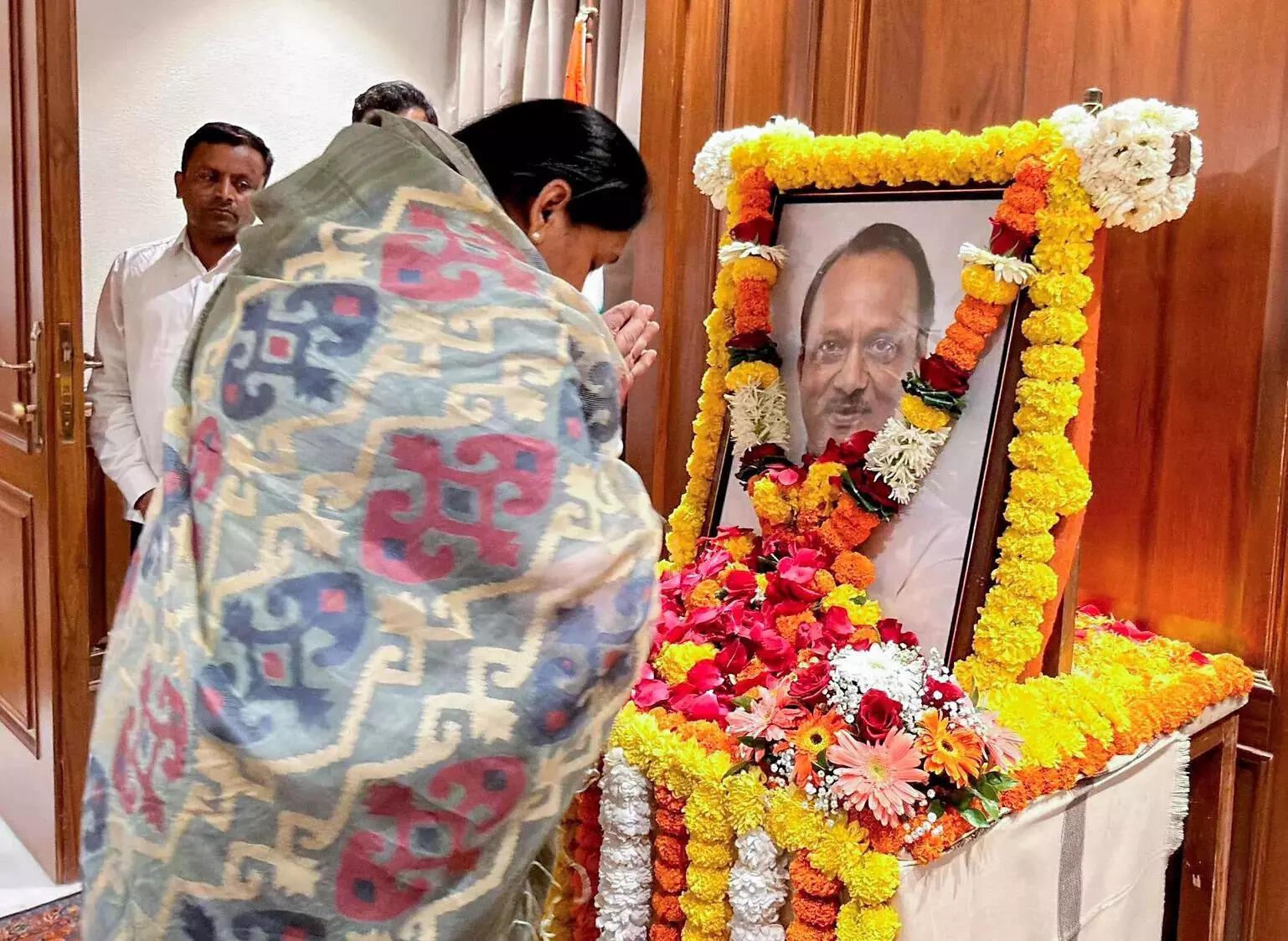
Sunetra Pawar paying tribute to her husband and late Maharashtra deputy chief minister Ajit Pawar at Vidhan Bhavan in Mumbai on Saturday.
Ajit Pawar was surrounded by a formidable cohort of experienced leaders within the NCP, including Praful Patel, Dilip Walse Patil, Chhagan Bhujbal, Hasan Mushrif, Sunil Tatkare and Dhananjay Munde, all veterans of organisational politics, the legislature and administration. While the party may not have resisted Ajit Pawar’s sons in the long term, given their lineage and legacy, Sunetra Pawar’s elevation required no negotiation even with the most seasoned among this group.Yet, the challenge before her is formidable. Sunetra Pawar lacks the organisational grounding and political toughness that Ajit Pawar honed over decades. As Deputy chief minister and a face of the party, she will have to navigate a leadership structure populated by senior figures accustomed to Maharashtra’s hard-edged politics, where personal survival has often taken precedence over party discipline.The merger question: Inevitability or illusion?Ajit Pawar’s death has also revived discussions around a reunification of the two NCP factions. Even before the tragedy, there were signs of a thaw. The two factions had contested recent local body polls together under the NCP symbol, and leaders on both sides acknowledged that prolonged division had weakened the party.Several leaders have claimed that reunification was Ajit Pawar’s last wish, part of a longer-term strategy to secure the NCP’s relevance ahead of the 2029 elections. His reported discussions with Sharad Pawar and other senior leaders suggested that a merger was not merely tactical but deeply personal, aimed at healing family and political rifts.On Saturday, NCP (SP) chief Sharad Pawar made a significant revelation about the future of the NCP, saying that talks to merge the two rival NCP factions were already under way and had progressed to an advanced stage before the sudden death of his nephew.
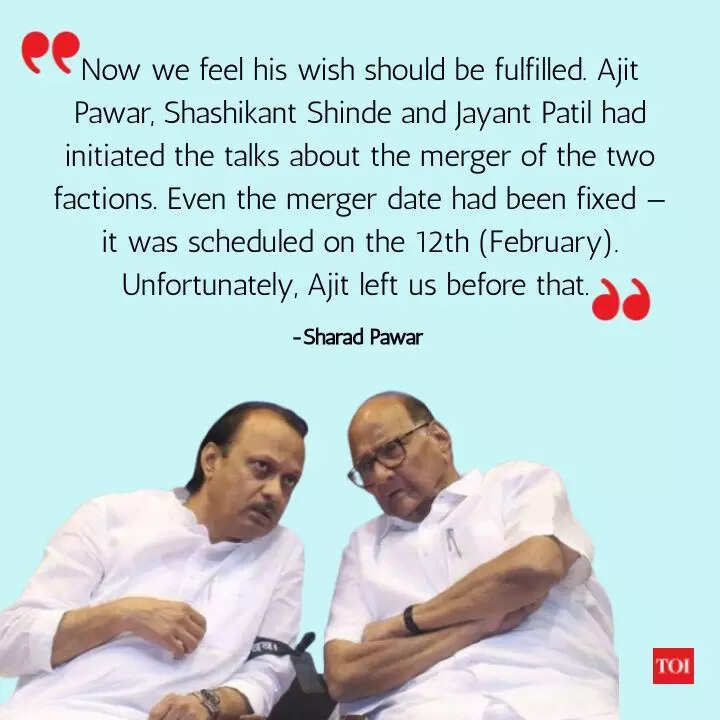
Sharad Pawar on NCP’s merger
If the merger does materialise, it will raise an immediate and delicate question. Who leads the united NCP?Sharad Pawar’s stature remains unmatched, but his advancing age makes a return to active organisational leadership unlikely. This opens up the possibility of a generational transition, potentially pitching Sunetra Pawar against Supriya Sule.Such a contest would not be straightforward. Supriya Sule brings parliamentary experience, a national profile and a reputation as a consensus-builder. Sunetra Pawar, on the other hand, carries the emotional weight of Ajit Pawar’s legacy and the sympathy of party workers still grieving his loss. The choice between them would reflect deeper questions about the party’s identity that would fuel a battle between continuity versus renewal and sentiment versus structure.A compromise arrangement, with Sharad Pawar as a guiding figure and a collective leadership at the top, is also possible. But Maharashtra’s political history suggests that ambiguity at the top rarely lasts.Mahayuti without Ajit PawarFor the BJP, Ajit Pawar’s absence alters the internal dynamics of the Mahayuti. He was widely seen as the BJP’s leverage against the Shinde-led Shiv Sena, ensuring that no single ally could dominate the alliance. Without him, the BJP will have to recalibrate its strategy.One scenario is that the BJP consolidates its position further, reducing its dependence on strong regional partners. Another is that the Shinde faction seeks greater autonomy and bargaining power, potentially leading to friction within the alliance.Sunetra Pawar’s elevation could partially mitigate this imbalance, but only if she is able to command authority within the NCP and negotiate effectively with allies. Unlike Ajit Pawar, she does not yet have a track record of hard bargaining or crisis management.The pull of a ‘natural alliance’The possibility of the NCP breaking away from the Mahayuti and returning to an alliance with the Congress and Sharad Pawar’s faction cannot be ruled out. Historically, the NCP’s ideological comfort has been with the Congress, particularly on issues of social justice and secularism.However, such a move would carry risks. Several NCP MLAs aligned with Ajit Pawar joined the BJP-led alliance precisely to remain in power. A sudden shift could trigger defections, weakening the party at a time when unity is crucial.Moreover, the BJP’s dominance in the assembly with 131 seats in the 288-member House means that even a united NCP’s exit would not immediately threaten the government’s survival. The real impact would be felt in regional power centres, particularly in western Maharashtra, where the NCP’s influence has traditionally been strongest.A moment of reckoningAjit Pawar’s death has transformed Maharashtra politics in ways that are still unfolding. It has reopened questions that many believed had been settled, like the future of the NCP, the durability of the Mahayuti, and the balance between ideology and pragmatism in state politics.For Sunetra Pawar, the moment is both an opportunity and a test. Whether she emerges as a commanding leader or a transitional figure will depend on how she navigates the competing pressures of legacy, alliance politics and organisational discipline.For the NCP, the coming months may determine whether it reclaims its identity as a united regional force or continues to function as a collection of pragmatic power centres.And for Maharashtra, a state accustomed to political upheaval, Ajit Pawar’s absence marks the end of an era and the beginning of an uncertain new phase, where old equations no longer hold and new ones are still being written.






 English
  हिन्दी