 Sipu Jha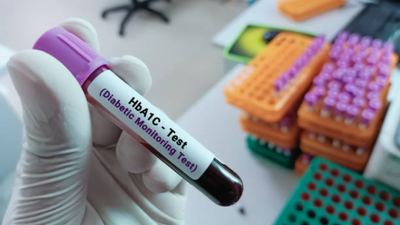
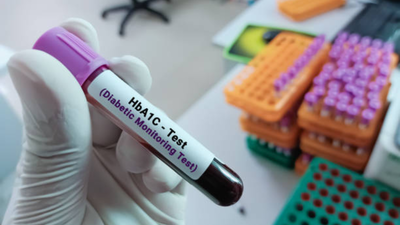
A new evidence-based viewpoint published online in Lancet Regional Health: Southeast Asia highlights that the widely used glycated hemoglobin (HbA1c) test, as available in India, may not accurately reflect blood glucose levels for millions of Indians, particularly in regions with high prevalence of anemia, hemoglobinopathies, and red blood cell enzyme (G6PD) deficiency.The review questions reliance on HbA1c as a sole diagnostic or monitoring tool for type 2 diabetes in South Asia. What is HbA1c? HbA1c measurements primarily reflect the glycation of hemoglobin. Any condition that affects the quantity, structure, or lifespan of hemoglobin, such as anemia, hemoglobinopathies, or other red blood cell disorders, can distort HbA1c values and lead to misleading estimates of average blood glucose.
“Relying exclusively on HbA1c can result in misclassification of diabetes status,” said Professor Anoop Misra, corresponding author and Chairman of Fortis C-DOC Center of Excellence for Diabetes. “Some individuals may be diagnosed later than appropriate, while others could be misdiagnosed, which may affect timely diagnosis and management. Similarly, monitoring of blood sugar status may be compromised.”Shashank Joshi, co-author from Joshi Clinic, Mumbai, added: “Even in well-resourced urban hospitals, HbA1c readings can be influenced by red blood cell variations and inherited hemoglobin disorders. In rural and tribal areas, where anemia and red cell abnormalities are common, the discrepancies may be greater.”India ranks third globally in cancer cases, and over 50% of the cases could be prevented: Doctor reveals the lifestyle changes that matterDr. Shambho Samrat Samajdar, co-author from Kolkata, emphasized a comprehensive approach: “Combining oral glucose tolerance test, self-monitoring of blood glucose, and hematologic assessments provides a more accurate picture of diabetes risk. This approach can help refine public health estimates and guide resource allocation.”The diabetes myths millions of Indians believe, and their kidneys pay the priceAn HbA1c of 6.5% is recommended as the cut point for diagnosing diabetes. A value of less than 6.5% does not exclude diabetes diagnosed using glucose tests.
Key findings from the review include:
HbA1c may under- or overestimate blood glucose in populations with high rates of low blood counts (anemia), inherited blood disorders (abnormal hemoglobin), or enzyme problems like G6PD deficiency anemia, hemoglobinopathies.In some regions of India ( more than 50% population in some regions, data from 2025), people are nutritionally challenged with widespread iron deficiency anemia, which can distort HbA1c readings.This would affect both diagnosis and monitoring thus misleading clinicians.Reliance on HbA1c alone could delay diagnosis by up to 4 years in men with undetected G6PD deficiency, potentially increasing risk of complications.In addition, inconsistent quality control across laboratories can further affect HbA1c accuracy, making interpretation challengingPublic health surveys based solely on HbA1c may misrepresent India’s diabetes burden.
Recommended approach to glycemic monitoring
The authors outline a resource-adapted framework for India: in low-resource settings, oral glucose tolerance test (2 glucose values, one fasting and another 2 hours after ingesting 75 gm glucose) for diagnosis, and for monitoring self-monitoring of blood glucose (SMBG, using glucose meters) 2-3 times weekly combined with basic hematologic screening (hemoglobin, blood smear) is recommended. In tertiary care settings, combination of HbA1C (done with standard equipment) with OGTT for diagnosis and for monitoring, continuous glucose monitoring (CGM) with alternative markers like fructosamine. When needed, comprehensive iron studies, hemoglobin electrophoresis, and quantitative G6PD testing are advised. The framework emphasizes that monitoring intensity and biomarker selection should be tailored to healthcare resources and patient risk factors, with particular attention to populations where anemia, hemoglobinopathies, and G6PD deficiency are prevalent.
Diabetes is no longer a rich person’s disease in India
Diabetes has quietly become one of India’s biggest health problems, and the scary part is how normal it has started to feel. What was once seen as a “rich person’s disease” or something older people worry about is now affecting younger adults, working professionals, and even teenagers.India is often called the diabetes capital of the world, and unfortunately, that label fits. More than 100 million Indians are estimated to be living with diabetes, and many more don’t even know they have it. Add another large group with prediabetes, and you start to see the real scale of the problem. For many, the diagnosis comes late, after years of silent damage to the heart, kidneys, eyes, and nerves.Urban lifestyles play a big role. Long sitting hours, stress, poor sleep, and easy access to ultra-processed food have pushed blood sugar problems into everyday life. But this is no longer just a city issue. Diabetes is rising fast in small towns and rural areas too, where awareness, screening, and access to care are often limited.A lot of people think they understand blood sugar tests, but half-knowledge is where the real trouble starts. Many assume that if one report looks “normal,” everything must be fine. And that’s where things quietly backfire.Take fasting sugar, for example. Someone gets a normal fasting reading and relaxes, thinking diabetes is not their problem. But their post-meal sugar could be shooting up after every meal, slowly damaging blood vessels, nerves, and organs. Others rely only on HbA1c, not realising that this average number can hide extreme highs and lows. You can still have big sugar spikes and crashes even when the HbA1c looks acceptable.Another common mistake is testing at the wrong time or interpreting numbers without context. Checking sugar once in a while, after a “good food day,” gives false reassurance. On the flip side, one high reading can cause panic and unnecessary stress. Stress itself pushes sugar levels higher, a vicious loop.Wrong knowledge also leads to wrong habits. People skip meals before tests, over-restrict carbs, or stop medicines when numbers briefly improve. That short-term thinking often leads to long-term damage.Blood sugar control isn’t about one number or one test. It’s about patterns, timing, and consistency. Understanding what each test actually shows, and what it doesn’t, can prevent delayed diagnosis, poor control, and avoidable complications. When it comes to diabetes, knowing a little isn’t enough.Medical experts consulted This article includes expert inputs shared with TOI Health by: Professor Anoop Misra, Chairman of Fortis C-DOC Center of Excellence for DiabetesShashank Joshi, Joshi Clinic, MumbaiDr. Shambho Samrat SamajdarInputs were used to explain why relying on HbA1c is not enough for diabetes patients. The doctors also shared the right approach to monitor blood sugar levels.





 English
  हिन्दी