 Sipu Jha

NEW DELHI: It starts with an innocuous ring — a WhatsApp video call or a call from what looks like a government number. A voice ID flashes and a person claiming to be from the CBI, TRAI, or the Supreme Court appears on screen. Before you know it, you are told you are under “digital arrest”. You are being watched. You cannot hang up. And there is money you must transfer to “prove your innocence”.This chilling form of cyber-financial extortion has surged across India, leaving victims psychologically manipulated, isolated and financially devastated. Despite sounding surreal, this type of scam is very real — and increasingly sophisticated.

What is “Digital Arrest”?There is no legal concept called “digital arrest” in Indian law. Yet scammers have weaponised this term, making it sound official to unnerve victims.In these frauds, victims receive calls from “officials”, often through video or voice calls. They are told their Aadhaar, PAN, or bank accounts are linked to criminal cases such as money laundering, fake SIM cards, or terrorism. Scammers show forged warrants, fake Supreme Court orders, or badges to lend credibility.Victims are informed they are “digitally under arrest”, must remain on call, and must cooperate or face legal consequences. Most victims transfer money believing it will be refunded after “account verification”. Once the money is sent, however, it disappears into a network of mule accounts and fake companies.How the trap works: tactics and techniques
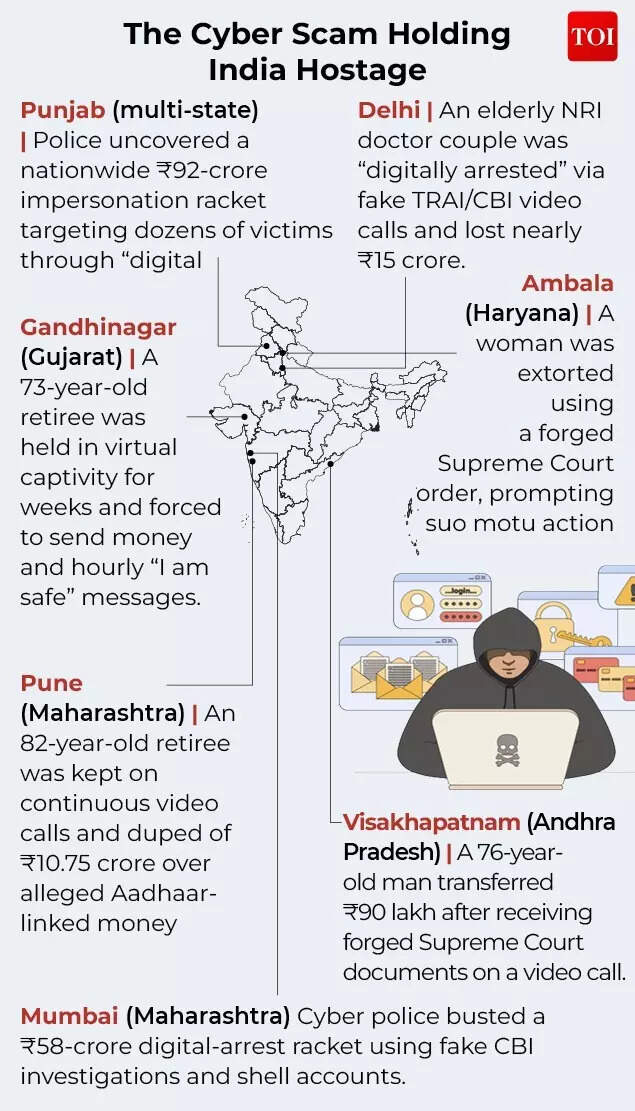
In many cases, fraudsters rely on psychological manipulation.Authority illusion: Scammers pose as senior officers from agencies such as the CBI, ED, or TRAI. They often display fake documents or conduct video calls while wearing uniforms or using official-looking backgrounds.Pressure and fear: By creating urgency — “act now or face arrest” — they induce panic, limiting rational thinking.Isolation: Victims are instructed not to consult family members, lawyers, or even local police, cutting off advice that could expose the fraud.Continuous control: Some victims are kept on video calls for hours or days, gradually losing clarity and becoming more compliant.DCP Datta Nalawade, a senior cybercrime official, once summed it up: “No such practice as digital arrest exists.” Yet these scams continue to succeed by exploiting fear and lack of awareness.Expert insights: Why even the savvy fall for itCyber psychologists and cybercrime lawyers say fear often overrides logic. When callers appear to possess personal information such as Aadhaar or bank details, panic sets in and even educated individuals act against their better judgement.Scammers also use real data obtained from leaks to construct believable narratives, complete with forged court seals and warrants. Experts stress that genuine law enforcement agencies never conduct investigations or demand money through random phone or video calls, especially under threat.Chilling cases from Times of India reportsSeveral cases reported by The Times of India highlight how convincing and devastating these scams can be.NRI doctor couple duped of nearly Rs 15 croreAn NRI couple Dr Om Taneja (81) and Dr Indra Taneja (77), residents of Greater Kailash-II in Delhi, were kept under so-called “digital arrest” for over two weeks after scammers posing as TRAI and police officials accused them of money laundering and circulation of obscene content. Through fake video calls, staged courtroom scenes and constant surveillance, the fraudsters coerced them into transferring nearly Rs15 crore before contact abruptly ended and the scam came to light.Pune senior loses Rs 10.75 croreAn 82-year-old retiree in Pune was told his Aadhaar was linked to money laundering and that authorities had placed him under digital arrest.

(Photo credit:AI)
He was kept on continuous video calls and convinced to transfer his entire retirement savings, including funds sent by his children from abroad. The total loss was Rs 10.75 crore.Rs 58 crore scam network uncovered

(Photo credit: AI)
Mumbai cyber police arrested suspects linked to a Rs 58 crore digital arrest racket. Victims were made to believe they were under investigation by agencies such as the CBI and were pressured into transferring funds. The scam was transnational and involved shell accounts and complex fund transfers.Elderly victim in Vizag duped of Rs 90 lakh

A 76-year-old man from Visakhapatnam received a video call with forged documents and fake Supreme Court seals, informing him that he was under digital arrest. Out of fear, he transferred nearly Rs 90 lakh to three different accounts before realising it was a scam.Gandhinagar retiree held digitally for weeks

(Photo credit: AI)
A 73-year-old man from Gujarat was kept in virtual captivity for nearly six weeks. Scammers forced him to send hourly “I am safe” messages and deprived him of sleep to maintain control — a form of psychological torture that the United Nations classifies as harmful.Nationwide Rs 92 crore racket bustedPunjab Police uncovered a widespread racket operating across multiple states, leading to several arrests. The scam targeted dozens of victims using impersonation and pressure tactics, and hundreds of bank accounts linked to fraudulent transactions were frozen.Precautions: How to stay safe
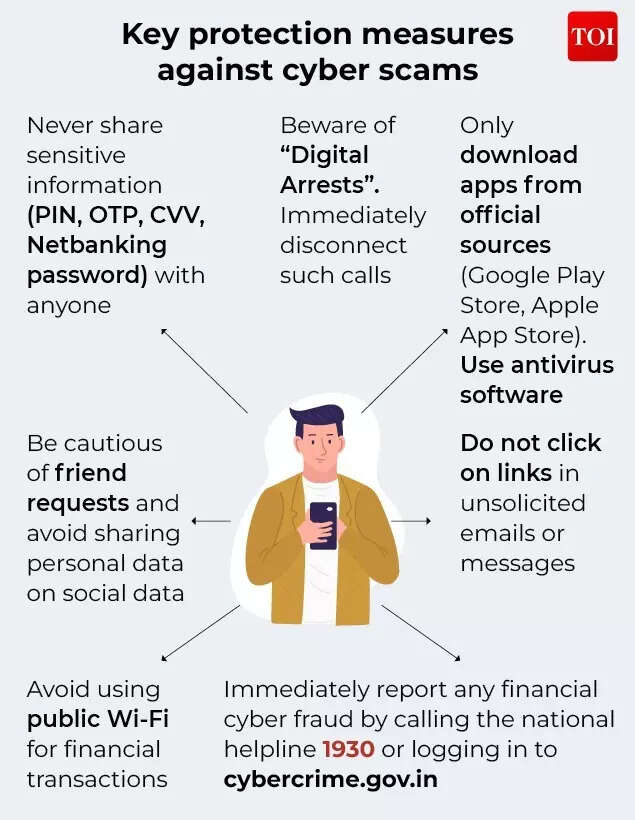
Even cautious individuals can fall prey without awareness.There is no such thing as “digital arrest”. No police officer, judge or law enforcement agency will call, video-call or demand money to verify innocence. Arrests take place in person with official documentation.Never share OTPs, bank details, Aadhaar information or personal data in response to unsolicited calls. If you receive a suspicious WhatsApp or video call from someone claiming to be an official, disconnect immediately.If in doubt, verify through official channels by contacting your local police station or calling the National Cyber Crime Helpline at 1930. Senior citizens are frequent targets, and families are urged to educate elders that no government agency threatens arrest over the phone.Beyond fear: Reporting and accountabilityThe Supreme Court of India has taken suo motu cognisance of digital arrest scams following multiple complaints, including a forged Supreme Court order used to extort over Rs 1 crore from a woman in Ambala. The court is examining whether stricter oversight or a central agency probe is required.Authorities have blocked thousands of fake WhatsApp accounts and spoofed SIP IDs used for such calls. However, cybercriminals continue to adapt their methods.Final wordDigital arrest scams are not merely financial frauds — they are psychological traps. They convert fear into compliance and social engineering into catastrophe. Awareness remains the strongest defence. Trust official procedures, stay informed, and never allow fear from a phone call to dictate your actions.








 English
  हिन्दी