 Sipu Jha
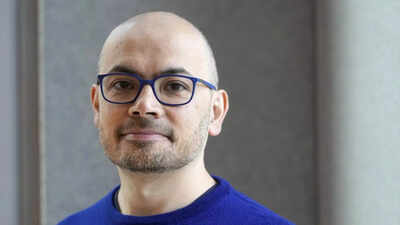
Google DeepMind CEO Demis Hassabis has said that one of the most important uses of artificial intelligence (AI) will be improving human health. In a post shared on X (formerly Twitter), Hassabis said AI is already helping speed up drug discovery and could change how new medicines are developed at Isomorphic Labs that he co-founded in 2021. His comments come amid wider debate over AI’s impact on jobs and automation, with Hassabis highlighting healthcare as a key area where AI could deliver long-term benefits for humanity.“One of the most important things we can use AI for is to improve human health,” Hassabis wrote in an X post. “A biotech startup might do one or two drugs its entire corporate life,” Hassabis told Fortune. “But we’re trying to build a system, a process, and all the technology to do maybe dozens of drugs each year. That seems crazy right now, but I think eventually, over the next 10 to 20 years, we could get to finding a solution to all disease…if we have a process that can find these needles in a haystack.”For those unaware, Isomorphic Labs is a Google-backed company that focuses on using AI to support the discovery and design of new medicines. Hassabis said the work aims to improve how quickly treatments move from research to development, with the goal of improving outcomes for patients worldwide.
Google DeepMind CEO Demis Hassabis on his sleep routine
During the same interview, Demis Hassabis admitted that his sleep routine is far from typical. Hassabis revealed that he sleeps ‘very little’ aiming for about six houses and added that he divides his waking hours into two distinct workdays. “I do try and get six, but I have unusual sleeping habits. I sort of manage during the day,” he explained. Hassabis added that his schedule includes packing his office hours with back-to-back meetings, then returning home for family time and dinner.Around 10 pm, Hassabis begins what he calls a ‘second day of work’, often continuing until 4 am. This late-night block is reserved for creative thinking and research. “I can’t imagine being creative at four in the morning. But, I come alive at about 1 a.m.,” he told Fortune.







 English
  हिन्दी