 Sipu Jha
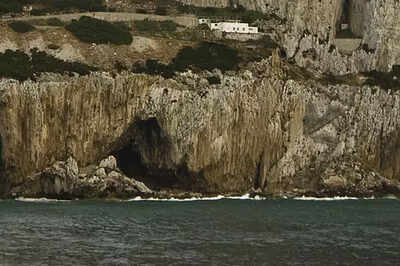
Neanderthals remained in southern Iberia far later than once thought, with evidence from Gorham’s Cave placing their occupation between roughly 33,000 and 24,000 years before present. The cave, set into the eastern face of the Rock of Gibraltar, preserves a sequence of sediment layers that separate late Neanderthal activity from later Upper Palaeolithic settlement. Radiocarbon dates taken from hearths and associated material in what archaeologists call Level IV point to one of the last confirmed Neanderthal populations in Europe. Above this layer sits Level III, linked to modern human cultures thousands of years later. The long gap between them has drawn attention to Gibraltar as a possible refuge during the closing stages of the Ice Age.
Gorham’s Cave records the last known Neanderthal occupation in Europe
Excavations inside the deeper chambers identified Mousterian stone tools typical of Neanderthals, and no evidence of modern human technology in Level IV. More than twenty AMS radiocarbon dates cluster within the same late window.
The separation from the overlying Upper Palaeolithic layer is clear in the sediment. There is no blending of industries. That absence matters. It suggests a break in occupation rather than a gradual transition at this particular site.
Ecological diversity supported late neanderthal survival in Gibraltar
Animal remains from Level IV show a wide spread of species. Researchers recorded amphibians, reptiles, large mammals, birds and marine molluscs. The coastline lay close to the cave during colder sea level phases, giving access to shellfish and shallow water resources.The surrounding hills also held varied plant life. Woodland, open ground and wet patches sat within a small area. It was not a single landscape but a mixture. That range may have eased pressure when climates shifted elsewhere across Europe.Food here appears broad rather than specialised. That flexibility is often mentioned in discussions about Neanderthal resilience.
Climate instability likely ended the final population
Marine core data from the western Mediterranean indicate a sharp deterioration in climate between about 25,500 and 22,500 years ago. The period aligns with Heinrich Event 2, known for intense cold and dry conditions.Some researchers argue that even Gibraltar’s relatively mild setting would have felt the strain. Water availability may have changed. Vegetation patterns could have thinned. Small populations are vulnerable in such moments. There is no clear sign of violent replacement at the cave. Instead, the record simply stops. After several thousand years, modern human groups appear in the layers above. The reasons remain discussed, sometimes quietly. Climate is one explanation. Isolation may be another. The cave keeps its sequence, and little else.






 English
  हिन्दी