 Sipu Jha
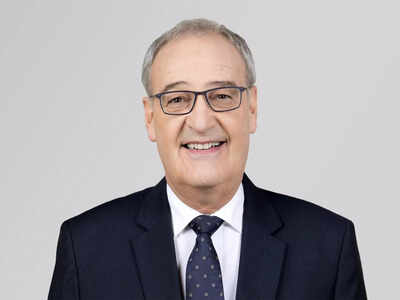
Swiss President Guy Parmelin backs a governance framework for AI that does not rely on a single instrument and calls for societal norms that guide users. Excerpts from an interview with TOI’s Sidhartha:How should countries deal with AI regulation? Is there a need to have a new agency? Will a regulatory set-up stifle innovation and development of AI and how do you deal with challenges such as deep fake?Over the past 200 years, mankind has established thousands of legal, technical and societal norms to “regulate” the development and use of engines in a vast number of different machines and vehicles, with different levels of harmonisation, based on the specific context of use. Like engines, we think AI also cannot be “regulated” by a single instrument, but we will need to develop a governance framework consisting of many instruments to cover different aspects of the development and use of AI. Switzerland is actively contributing to the development of technical standards for AI, of binding and non-binding legal instruments, like the recommendations of Unesco or Global Partnership on AI and Council of Europe framework convention on AI, which has been elaborated among 55 countries from all around the world and is the first binding international treaty on AI. But we also need societal and cultural norms that guide us when using AI in our specific contexts. Switzerland is chairing the OSCE for the third time this year. In that capacity, what are you proposing to do to end the Russia-Ukraine war? Also, what do you make of India’s efforts to reach out to both sides for ceasefire and return to dialogue?Under the first priority of its OSCE chairpersonship (‘Helsinki Principles – for lasting peace’), Switzerland is committed to a just peace in Ukraine. In his capacity as OSCE chairman-in-office, federal councillor Ignazio Cassis visited Kyiv (Feb 2) and Moscow (Feb 5-6) along with the OSCE secretary general to offer dialogue and to make sure all relevant actors know what the OSCE could contribute in the context of a negotiated settlement. Ultimately, it is up to the states to decide whether to make use of it. Last one year has been turbulent for trade. How much cushion have deals such as those with India provided?FTAs such as the Trade and Economic Partnership Agreement are a key tool, especially in challenging times for trade policy. They enable the Swiss export industry to tap into new markets and diversify. Given unilateral tariff actions over the last 10 months, what is the way forward as WTO’s powers are completely undermined and there is a raft of bilateral trade agreements?WTO has long been under severe stress, but despite institutional paralysis, around 74% of global trade still takes place on MFN terms. It remains the only institution that monitors members’ trade measures and offers a forum for dialogue among 166 economies. Switzerland will continue to champion multilateralism and support WTO reforms to preserve rules-based trade.




 English
  हिन्दी